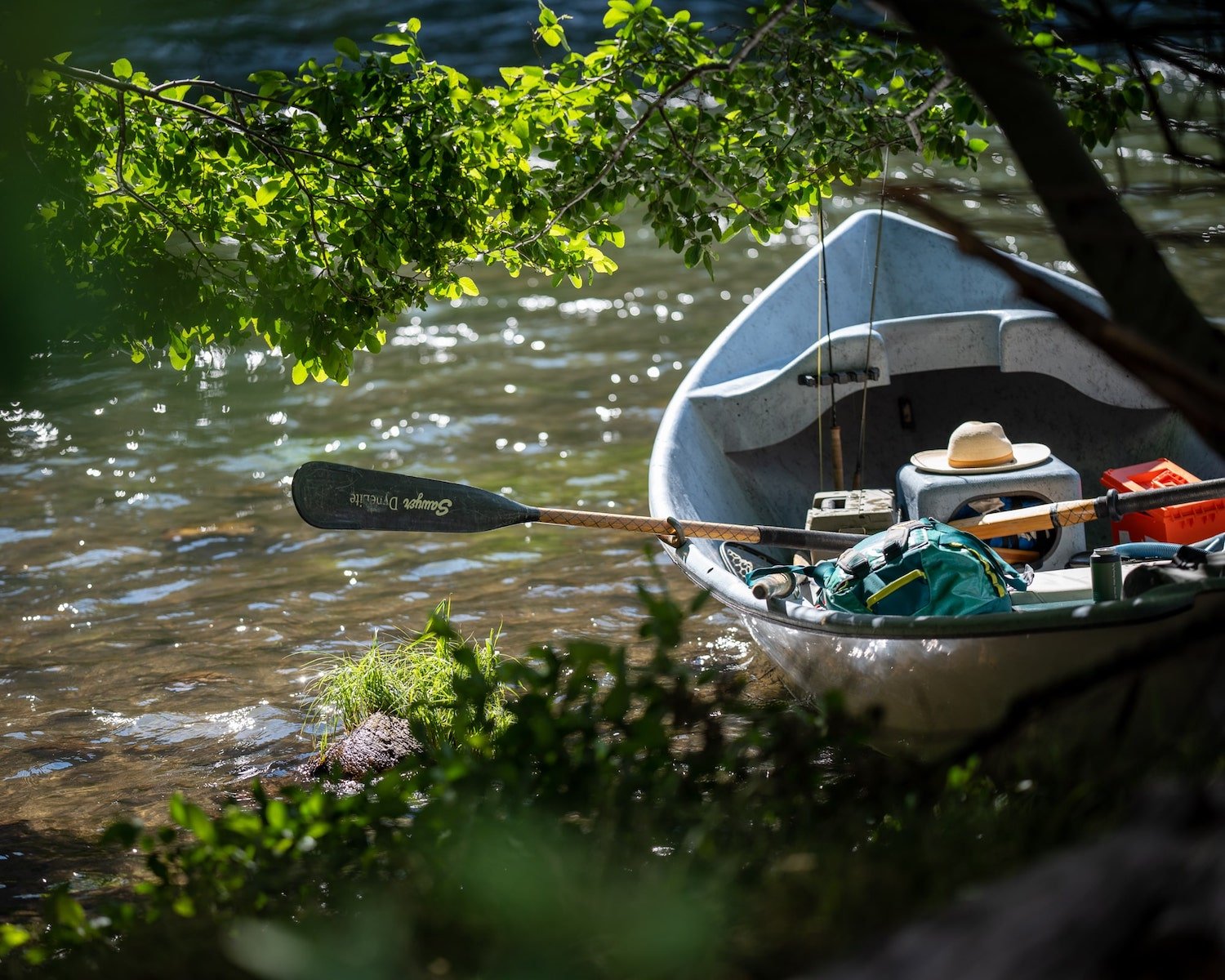
2026 River Champion Award: Rick Hafele, Larry Marxer, Steve Pribyl
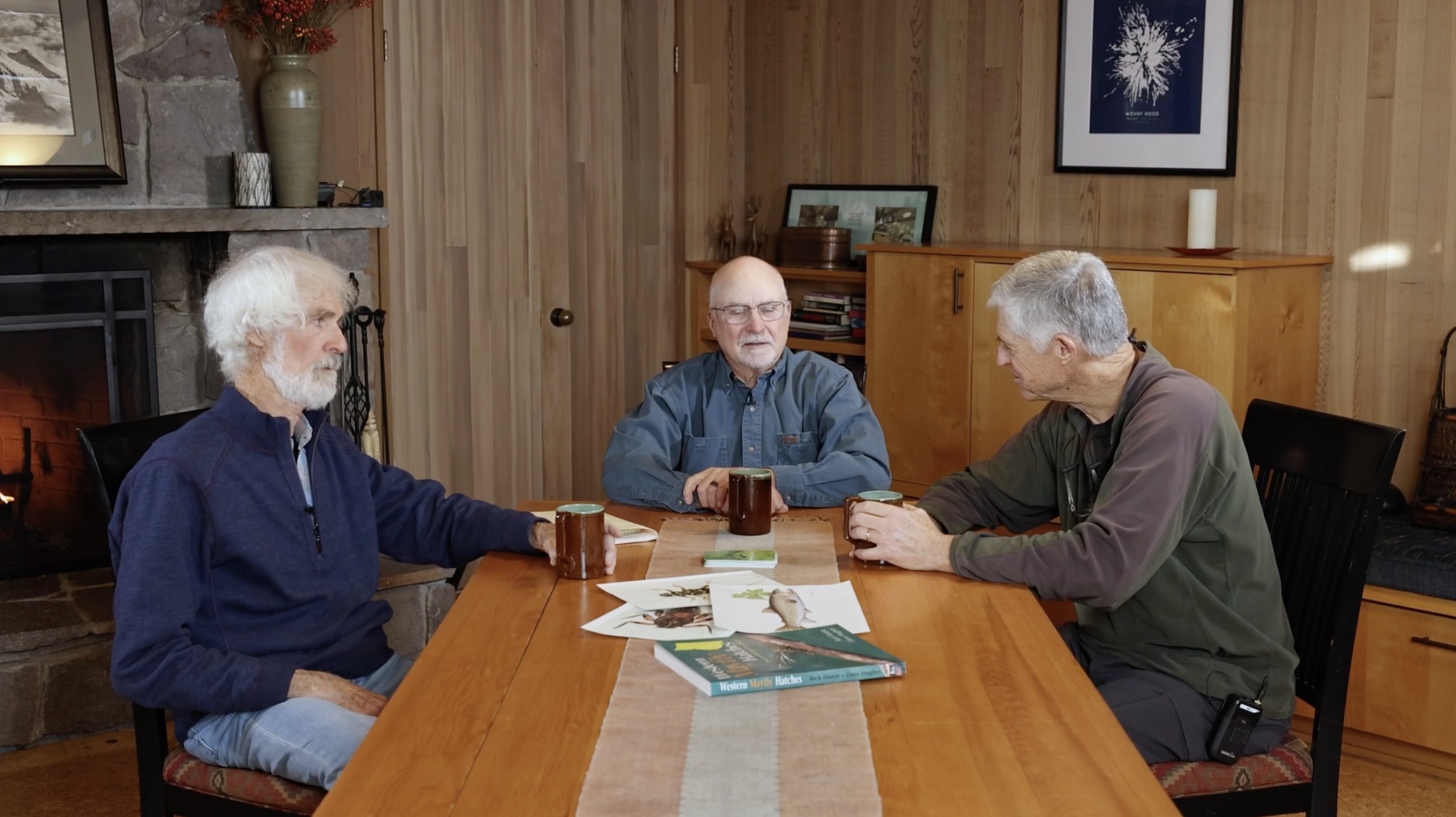
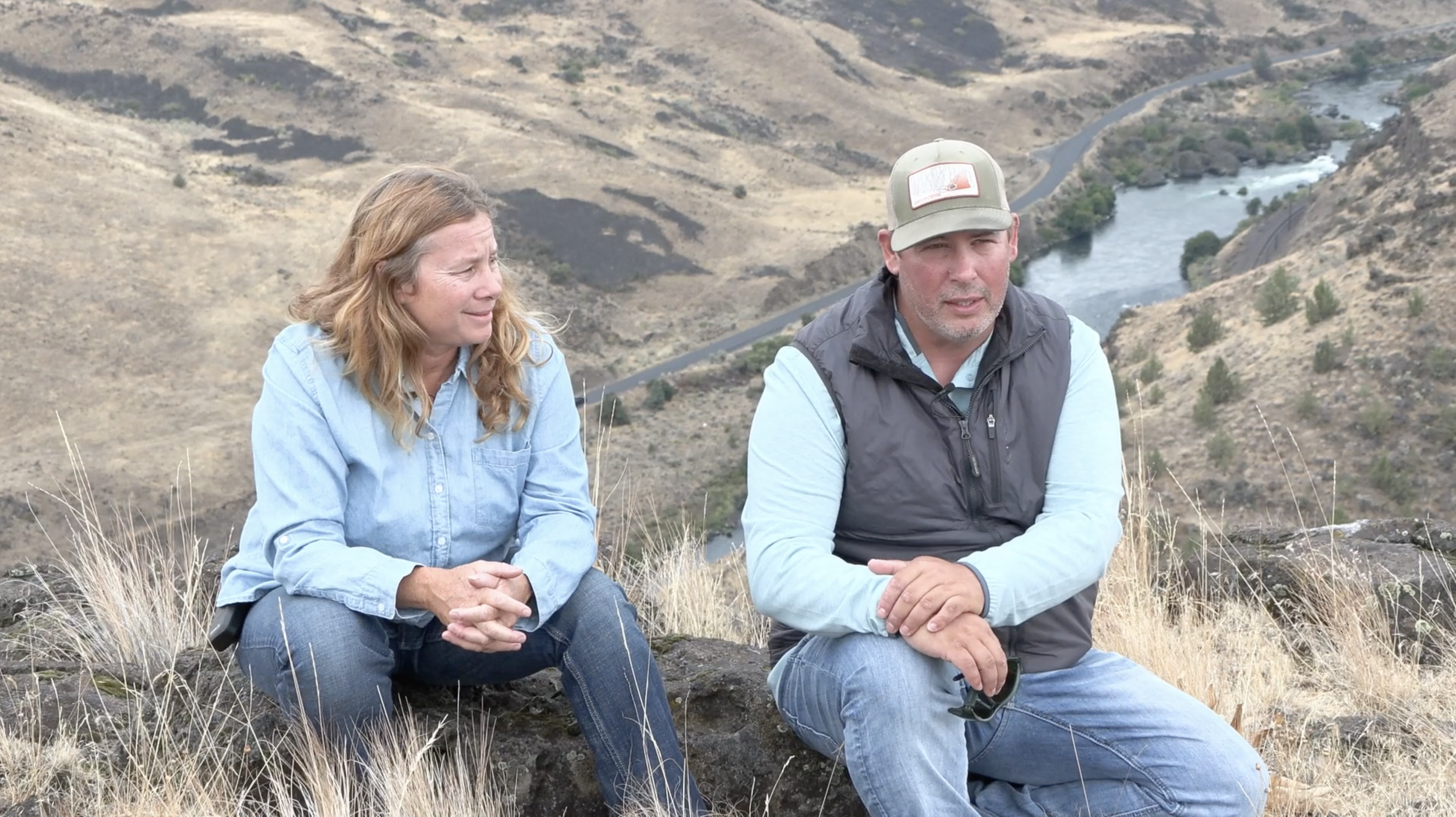
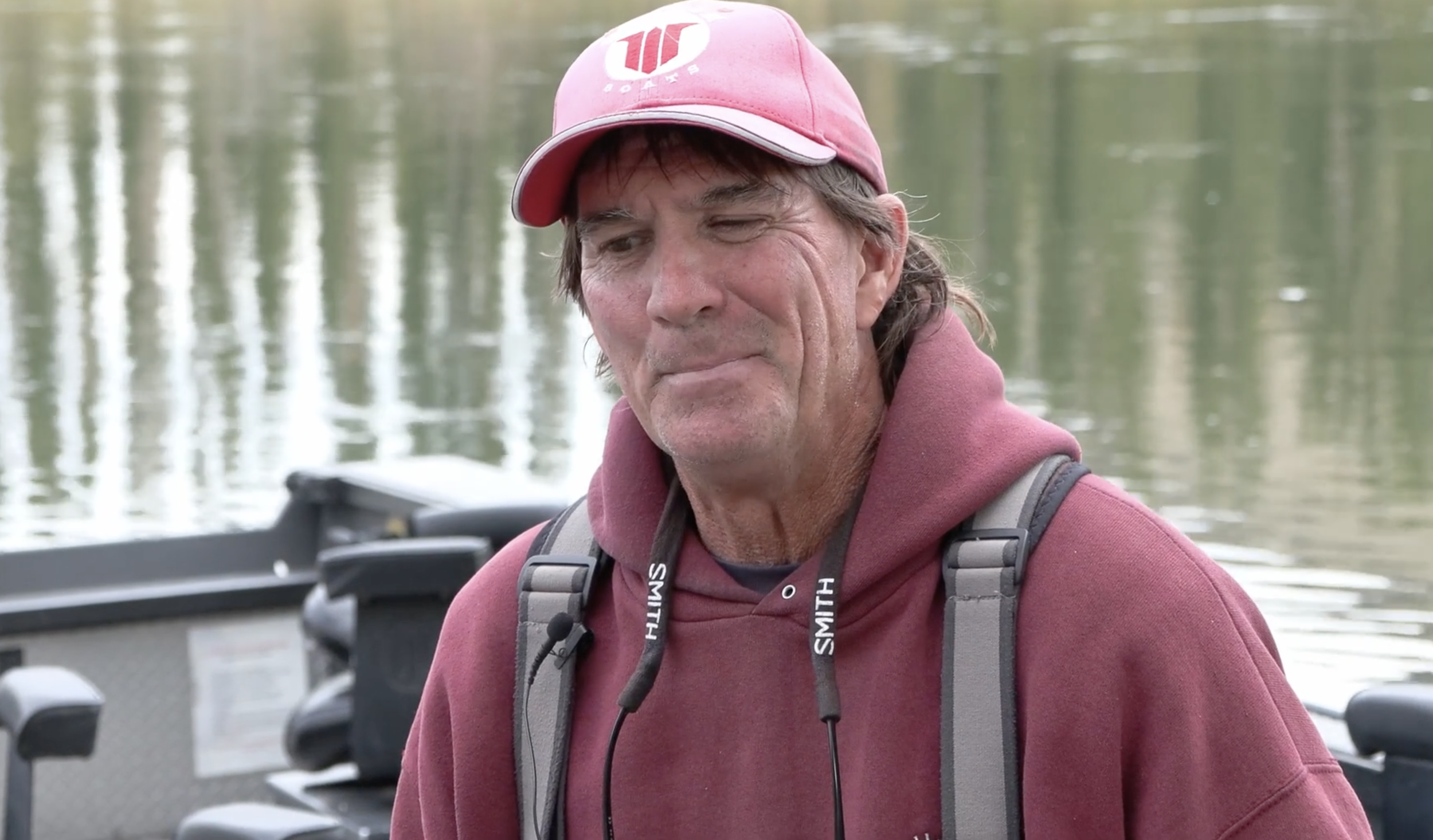
An august trio, from left to right: Larry Marxer, Steve Pribyl, and Rick Hafele. Collectively, they’ve donated tens of thousands of hours to the DRA, establishing the best science program any conservation outfit could wish for.
Recalling a River that Was—and Still Could Be
The Deschutes River Alliance 2026 River Champions award goes to Rick Hafele, Larry Marxer and Steve Pribyl. All three are long-standing board members of the DRA. All three had stellar science careers serving the Oregon Department of Environmental Quality and the Oregon Department of Fish and Wildlife. More importantly, over the past dozen years, the trio collectively has donated somewhere between 25,000 and 30,000 hours to the DRA. Their pro bono efforts have focused intensely on establishing, maintaining and expanding the science program that is the backbone of the DRA’s advocacy campaign.
To put the value of their work in perspective, if the DRA had to hire this kind of expertise, it would easily double the annual budgets on which we operate. Their generosity and dedication is a primary reason why the DRA has been able to punch above its weight, becoming the region’s best advocate for restoring colder, cleaner water for the lower Deschutes River.
The interview that follows offers perspective, inspiration, and the joyful wisdom of a combined century and a half of working and recreating on the lower Deschutes River.
DRA: If you’re willing, speak some words of inspiration about each of your vast experiences on the lower Deschutes River.
Larry Marxer (LM): My family moved out in the late 1960’s. Dad and I were spin fishermen back then. I knew I loved it right away. But my intense affection for it really began in the 1980’s, when I got into fly-fishing. Trout at first, and then the allure of steelhead. And those first memories of catching that first steelhead. We are of a generation that remembers the river the way it was, which means we know what it can be.
Steve Pribyl (SP): All three of us were professional [scientists] on the river. My first day with ODFW on the Deschutes was April 1, 1977. And there was hardly a day in the next 22 years when I wasn’t thinking about the Deschutes, analyzing data, or planning to get more. Of course we fished a lot too. The opportunity to steelhead fish in this awe-inspiring desert environment on this huge, beautiful river, that’s alive with all kinds of life. That’s so special.
Rick Hafele (RH): When I first saw the lower Deschutes [in 1974] the Deschutes in my mind represented everything a western river meant. It checked every box. Great trout, but you could also fish for salmon and steelhead. All the iconic hatches in abundance. Every kind of habitat–back eddies, riffles, challenging places to wade. It was fantastic and it was right in our backyard. Now having fished it for 50 years, I can’t step into the river without having flashbacks to memories of previous trips. Those memories are of abundance in the river that is not the same right now. But [those memories] just won’t let go.
The Role of Science in Advocacy
DRA: What is the role of science in advocacy?
RH: Science has the critical role of establishing a sound basis for our position. But it’s best if that information is also used to educate the public. Most science done in institutions gets stuck in the institution. It’s not presented in a way that the public can grasp. An important role with my science background is to use that knowledge to help educate the public. We need public input to really help move the needle. So it has that dual role, education, and providing a sound basis for moving forward.
SP: There’s the old adage, “without data you’re just another clown with an opinion.” If we think we see something wrong, we can’t advocate for change if we don’t have the data. As Rick pointed out, we can collect and analyze data, but we have to get that data out into the public sphere to back up what we’re saying. You can’t trust the agencies to make the data available to the public in a clear and timely enough fashion for the public to grasp. And you certainly can’t trust PGE to present that data.
LM: I’ve always loved the scientific method: coming up with a question, developing an investigative plan that’s documentable and repeatable, gathering the data and information and objectively analyzing the results. It establishes the truth. It’s one of the best weapons we have to combat all the various forms of “fake news” we’re inundated with these days. So if we continue what we’re doing, establishing truth, we can stand on that for a long time.
DRA: What are some of the challenges facing the agencies where you three spent your careers?
RH: Agencies are always going to take the path of least resistance. It’s kind of human nature. It’s certainly true of these agencies. The resistance they face comes from politics, and the entities they are supposed to regulate. That’s why it’s critical to have public involvement. If there’s no resistance from the public, [the agencies] path is always going to benefit the regulated, the regulators, and not the environment.
SP: We [ODFW] don't have statutory or administrative authority over as much as DEQ. We always looked to DEQ, because our fish live in their water. Having said that, ODFW, like DEQ, is subject to political pressure. I know there was political pressure applied to ODFW on reintroduction above the Pelton-Round Butte Complex. There were fish decisions that were highly controversial, and didn’t follow the best science. Thinking back, I would like to think that if I were still working, I would be screaming bloody murder to my bosses over what has been well-documented as being wrong. And what’s wrong is coming at the cost of the lower Deschutes River ecosystem.
LM: Rick and I both had the pleasure of working with staff at DEQ that were well-educated, dedicated and did their jobs well. What’s challenging to the agencies is two things: resource availability, and the politics that Rick described so well. The department where Rick and I worked was at that time staffed with 8 and I think at one point even 12 people. Right now, last I heard, it’s down to four. Consistent funding for these agencies is part of the political problems they face.
Find Answers, Influence Decision-Makers
DRA: All three of you now have had 15 years of experience on the advocacy front. What have you learned?
SP: It’s hard work, and time consuming. It’s a rare day that I’m not spending 2-6 hours a day working on DRA matters. We have fewer staff, fewer resources. But what we do have is this grinding desire to correct a problem. My whole career, maybe I’m not that smart a guy, but I’m a hard worker, a grinder. So if you have to keep at it to find the answers, and then influence the decision-makers, that’s what you have to do. None of the three of us will have trouble going to sleep at night, wondering if we did enough for the Deschutes.
RH: Well, the front of my head is flatter from beating it against the wall. It’s been an eye-opener, how difficult it is to get answers, and to get the agencies to take something seriously. I understand all the issues DEQ is juggling. It’s just been way harder than I thought it would be to get serious attention from the agencies. For non-profits, the difficulty is sometimes that fundraising is the backdrop to everything. It can usurp the purpose of the group if you’re not careful. The DRA has done a great job of not getting sidetracked. But I’ve seen other organizations get sidetracked by fundraising that’s diluting the mission. It’s been a pleasure working with the DRA, but especially with Steve and Larry. We all have this great passion for this river and for doing good things for it. It’s been easy to be involved, and a pleasure to be connected to this group.
LM: Often, over the past couple of years, I’ve thought back on the days I spent doing this work for the DRA, and on the Deschutes. I’ve had warm, sunny days with the pleasure of good company, doing good work. And I’ve had days freezing my ass off, cold as hell, wondering what the hell I’m doing. But I would do it all again if I could. I am proud of what we have accomplished as a group. And I hope this work continues.
More From The Blog
Subscribe the the DRA Newsletter
The Deschutes River Alliance is your focused voice to protect the lower Deschutes River, its cold water flows and the fish and wildlife that are sustained by them. We send regular emails with important data and news about the lower Deschutes River. We will not sell your contact information to others.
How to Support the DRA
Everyone wants clean, healthy water in the Deschutes River. Oregonians cherish our clean and healthy waterways to provide drinking water, wildlife habitat and recreational activities. The lower Deschutes River is a federally designated Wild & Scenic River, and a national treasure. It must be protected for the environmental and economic health of Central Oregon. By working together we can return the lower Deschutes River to full health.