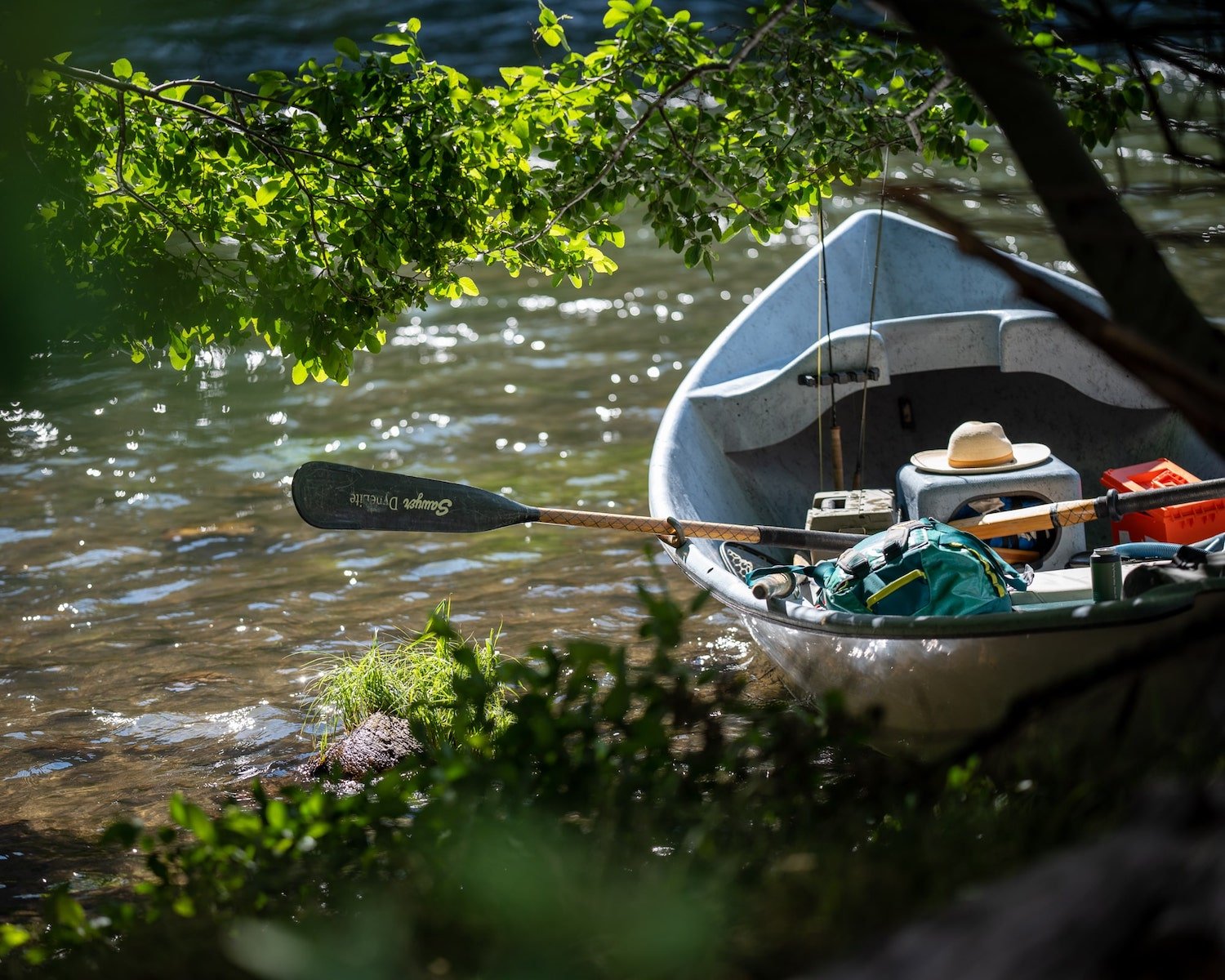
Bug of the Month: Blue Winged Olive
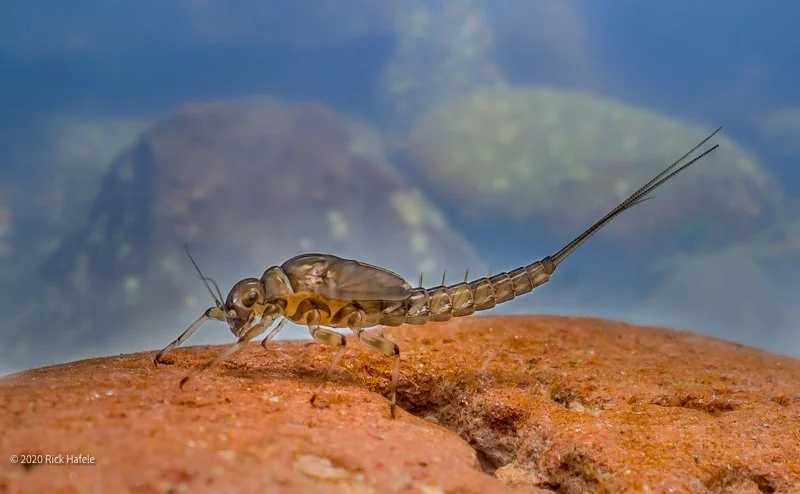
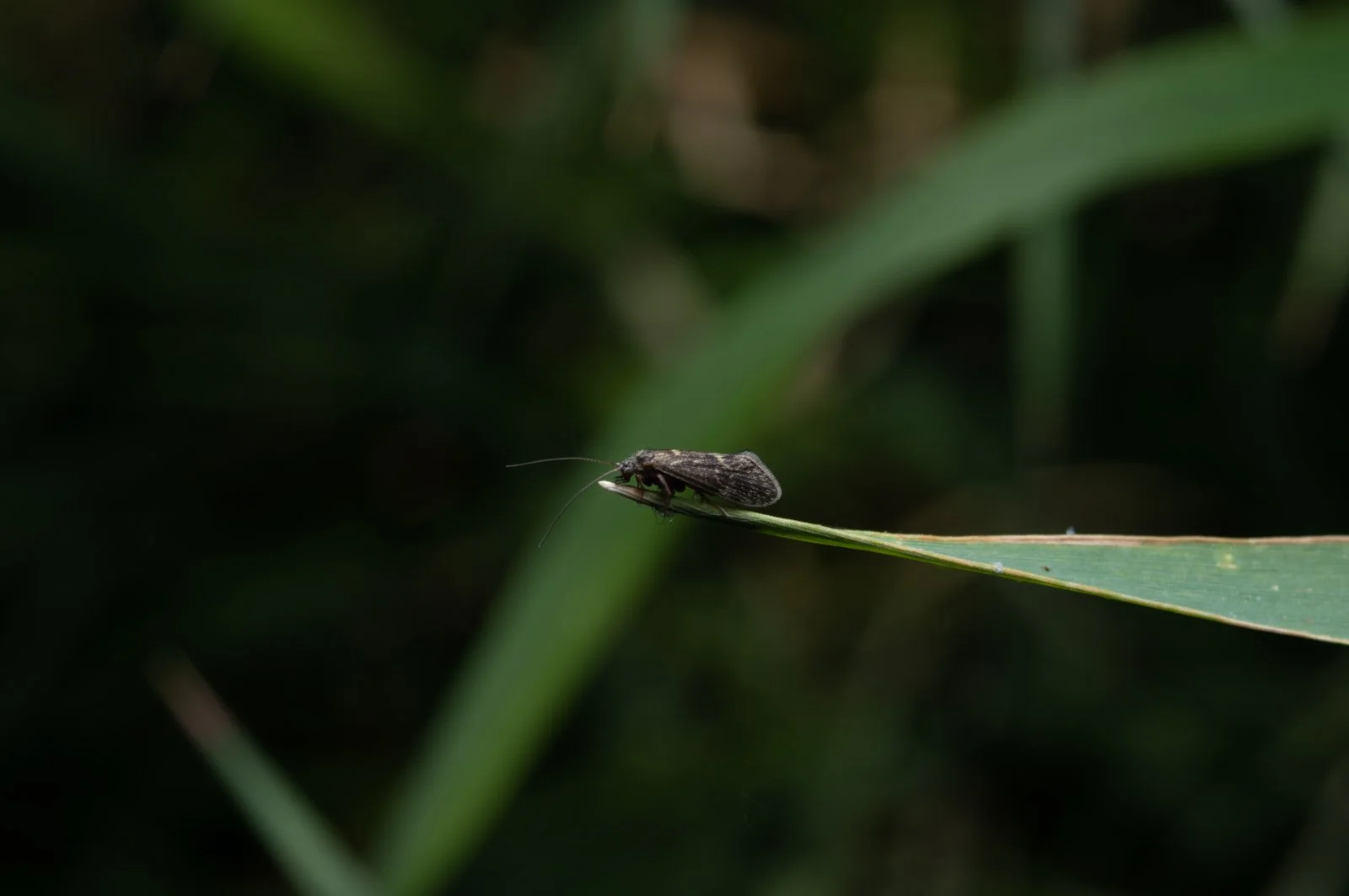
Three tails and the truth: Blue-Winged Olive nymphs, like the one pictured here, are a staple of a trout’s diet. Photo courtesy of Rick Hafele.
Beta on the BWO
By Hannah Camel
Welcome to the Deschutes River Alliance’s new blog series, Bug of the Month. Each month throughout 2026, we’ll spotlight an aquatic insect that plays a key role in the lower Deschutes River ecosystem. Every feature will dive into the bug’s life history, preferred habitat, abundance, and seasonal presence, paired with insights from our water quality and macroinvertebrate monitoring data. For anglers, we’ll also include guide-approved fly patterns and practical tips on when, where, and how to fish both dry flies and nymphs that imitate each featured insect.
This month, we’re diving into the blue-winged olive, a classic and much-loved aquatic insect that’s a familiar sight to anyone who spends time along the river.
Life History and Habitat
The blue-winged olive (Baetis sp.) belongs to the family Baetidae, one of many families in the order Ephemeroptera or mayflies. In the western United States alone, there are sixteen genera and more than 60 species within the Baetidae family. Because of this diversity—combined with their wide distribution and the challenge of distinguishing one species from another—entomologists have, in a sense, created a bit of taxonomic chaos within the group. As a result, the mayflies anglers call blue-winged olives belong to a variety of genera and species. The major genera associated with BWOs include Baetis, Acentrella, Diphetor, and Plauditus. For the purposes of this blog, we’ll keep things simple and refer to this insect by its common name: the blue-winged olive, or BWO.
BWO hatches can occur throughout the year, with several species producing two to three generations annually. Adults typically emerge in winter or spring, often again in summer, with a final emergence in fall. On the lower Deschutes River, BWO hatches occur nearly year-round and are especially common during winter and early spring. Depending on the season, emergence usually takes place during the warmer parts of the day. The most prolonged and dense hatches are well documented to occur during cool, overcast, or even rainy conditions. On sunny days, hatches still occur but are often compressed into a much shorter timeframe.
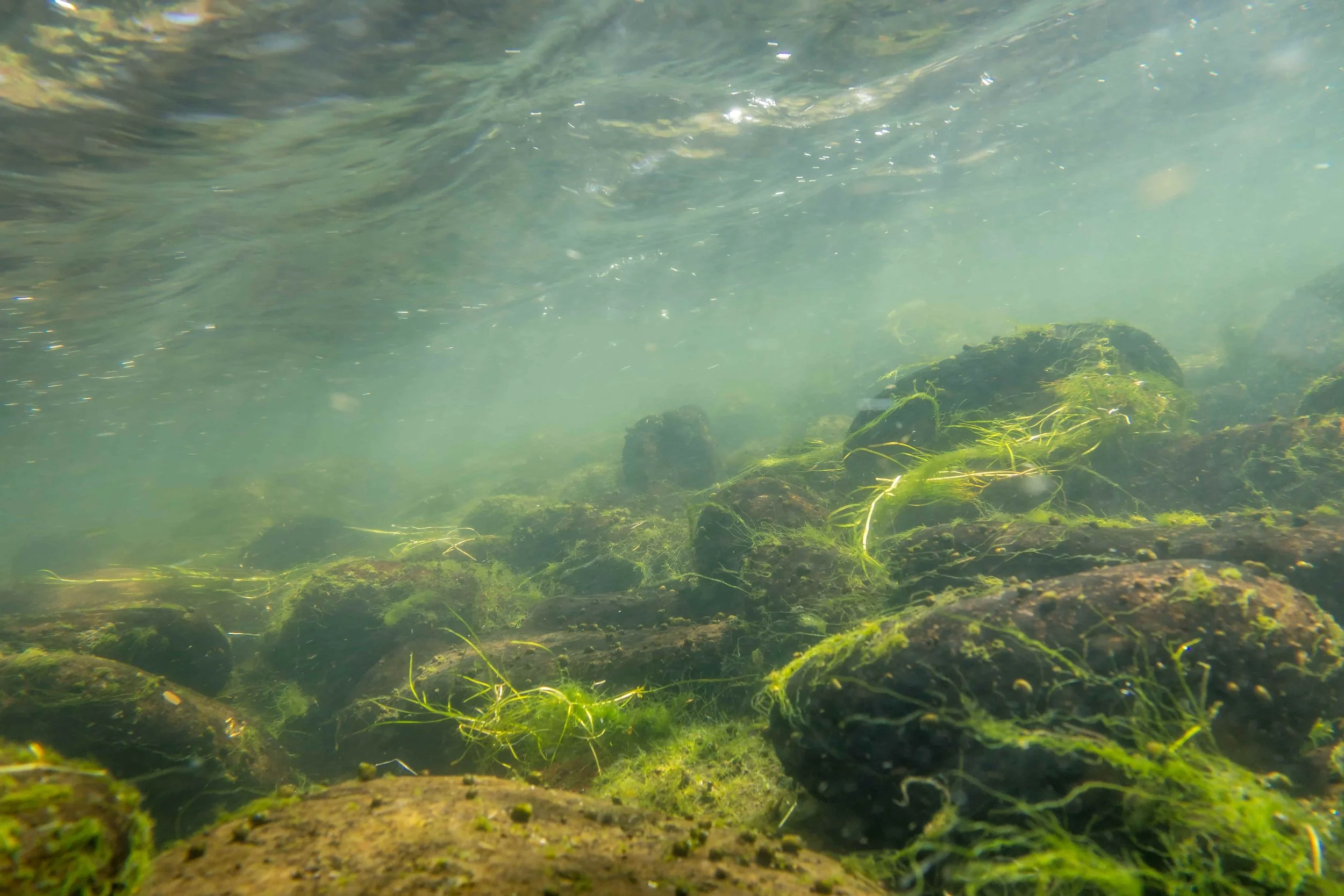
Like all mayflies, BWOs have three distinct life stages: nymph, dun, and spinner. During the nymph stage, BWOs are classified as swimmers, meaning they are highly active and often dart between submerged vegetation and streambed structure. BWO nymphs occur in most flowing-water habitats but are most abundant in shallow, sunlit riffles where algae and diatom growth is common. Their active behavior makes them a frequent component of stream drift and an important food source for trout.
BWO nymphs can be identified by their long antennae (roughly twice the width of their head), two or three fringed tails, olive to olive-brown or tan to dark brown coloration, and small size, typically ranging from 1/8 to 3/8 inch (excluding tails). After several months of development, the nymph releases from the substrate and swims or drifts to the surface to begin emergence into the dun stage.
Once emergence begins, many duns quickly take flight. However, BWOs are especially prone to becoming trapped in the surface film, particularly in slow or smooth currents. These partially emerged insects, often still stuck in their nymphal shucks, are known as cripples and are prime targets for feeding trout. On colder days, even successfully emerged duns may sit on the water longer as they wait for their wings to dry. The dun stage represents the mayfly’s first winged, but still immature, form.
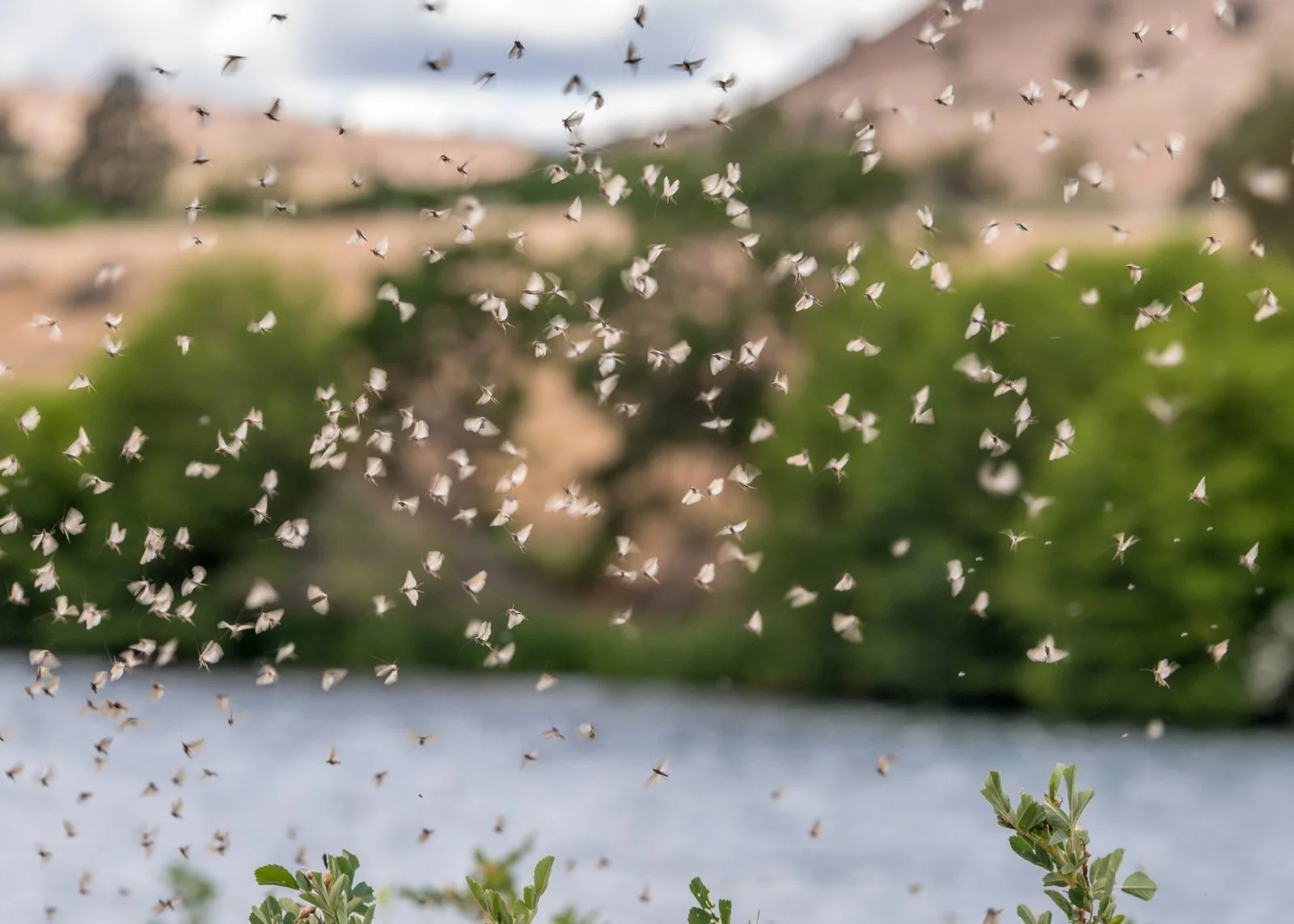
Seven to twelve hours after emergence, duns molt into their final life stage: the spinner. At this point, mayflies are sexually mature and ready to reproduce. Mating flights typically occur mid-day, after which females either land on the water to release their eggs, or find protruding rocks or sticks and crawl underwater to lay their eggs in rows on submerged surfaces. This submerged egg-laying behavior is unique to members of the Baetis genus. After egg-laying, submerged females either crawl back to the surface or release themselves into the current and are swept downstream. Either way, the females die soon after laying her eggs.
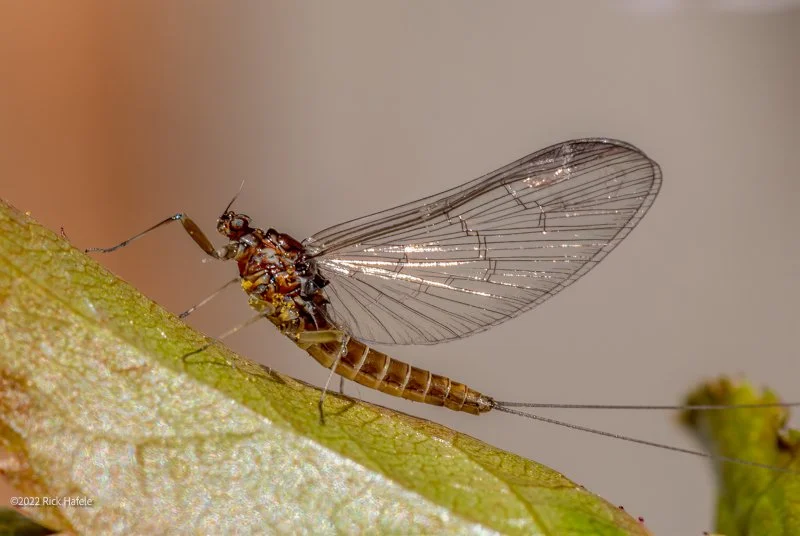
I can fly: female BWO spinner, in the prime of her short life. Photo courtesy of Rick Hafele.
Digging Into the Data: DRA Macroinvertebrate Monitoring
Now that we’ve covered the basics of blue-winged olive life history, let’s take a closer look at what DRA’s macroinvertebrate monitoring data reveals about their presence, abundance, and trends in the lower Deschutes River.
Our sampling has identified five types of BWOs in the lower Deschutes: Acentrella (identified to genus only), Acentrella insignificans, Acentrella turbida, Baetis notos, and the Baetis tricaudatus complex. The “complex” designation reflects the fact that Baetis tricaudatus includes multiple enigmatic species that are visually indistinguishable during the nymph stage but may be genetically distinct. Species within the genus Acentrella are also commonly referred to as tiny blue-winged olives.
The Baetis tricaudatus complex is by far the most abundant BWO identified in our sampling. In 2025, spring samples averaged 2.13% relative abundance (126.1 individuals/m²), while fall samples averaged 2.55% (199.2 individuals/m²), based on data from four monitoring sites.
For context, Fluminicola, a common pebble snail in the lower Deschutes, had an average relative abundance of 20.19% (1,098.0 individuals/m²) in spring and 21.35% (1,698.9 individuals/m²) in fall. These figures represent just one snail species; when all snail species are considered, total snail abundance is substantially higher. This contrast highlights a broader trend observed in the lower Deschutes: relatively low numbers of sensitive taxa, such as mayflies, alongside a proliferation of more pollution-tolerant species like snails.
Mayflies, including BWOs, thrive in cold, clean water. While they are more tolerant than some other sensitive aquatic insects, BWO nymphs are still strongly associated with good water quality. Their relatively low abundance in our sampling underscores the urgent need for improved water quality management to reduce stressors on benthic macroinvertebrate communities and support the overall health of the lower Deschutes River ecosystem.
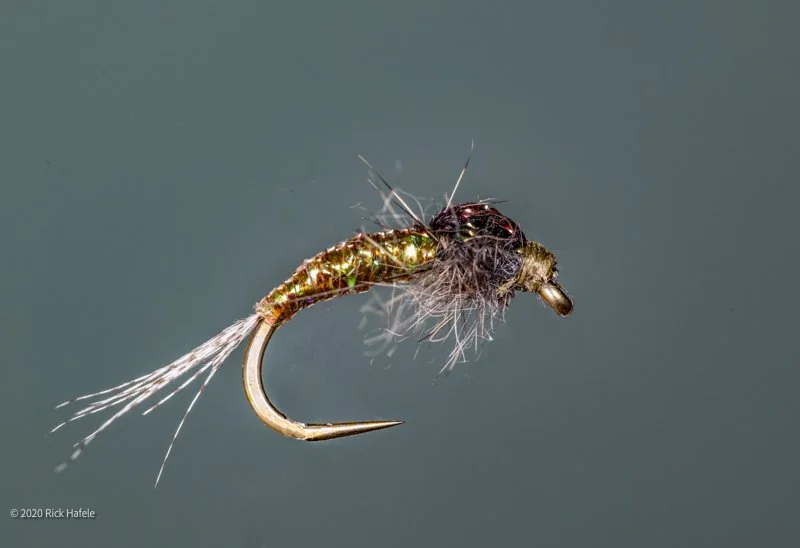
Trout fly box must-have: BWO nymph pattern. Photo courtesy of Rick Hafele
Fly Patterns and Fishing Tips
Understanding BWO habitat preferences, behavior, and life stages is key when choosing the right fly—and knowing how, when, and where to fish it to maximize success.
Nymph Imitations
When surface activity is limited or hatches are sparse, nymphs are an excellent option. BWO nymphs typically range from size 14 down to 24, and smaller patterns often prove more effective with 18’s and 20’s often preferred. Fish nymphs deep and slow near the bottom using an indicator or tight-line approach. Tungsten-beaded flies help achieve a quick sink rate and a natural, drag-free drift. Proven patterns include pheasant tails (flashback) and olive perdigons.
Emerger Imitations
Because BWOs are small and hatch frequently, many become trapped in the surface film, making emergers a key food source for selective trout. Emerger patterns should ride low in the film and incorporate both the emerging dun and trailing shuck. Fish these patterns in slow-moving, glassy water where trout are actively rising. Olive sparkle duns and parachute emergers are reliable choices.
Dun Imitations
When hatches are strong and trout are feeding confidently on the surface, dun patterns can be highly effective. Use finer tippet, typically 5X or 6X, and target fish rising in smooth, consistent currents. Effective patterns include olive quill duns and olive hairwing duns.
Spinner Imitations
Due to the BWO’s unique egg-laying behavior, both dry and wet spinner patterns can be effective. Spinner falls often occur in mid to late afternoon, though early-morning spinner falls of tiny BWOs along grassy banks have also been observed on the lower Deschutes primarily during warmer weather. During spinner falls, trout often sip nearly invisible insects. Start with a dry spinner pattern; if that fails, try a wet fly swung slowly through the feeding lane. Effective patterns include red or blue quill spinners and the blue quill wet fly.
That wraps up this month’s Bug of the Month. Thanks for reading—we hope you not only learned more about the blue-winged olive, but also gained insights into how to fish it more effectively. Stay tuned for our next feature, coming in February.
More From The Blog

Subscribe the the DRA Newsletter
The Deschutes River Alliance is your focused voice to protect the lower Deschutes River, its cold water flows and the fish and wildlife that are sustained by them. We send regular emails with important data and news about the lower Deschutes River. We will not sell your contact information to others.
How to Support the DRA
Everyone wants clean, healthy water in the Deschutes River. Oregonians cherish our clean and healthy waterways to provide drinking water, wildlife habitat and recreational activities. The lower Deschutes River is a federally designated Wild & Scenic River, and a national treasure. It must be protected for the environmental and economic health of Central Oregon. By working together we can return the lower Deschutes River to full health.