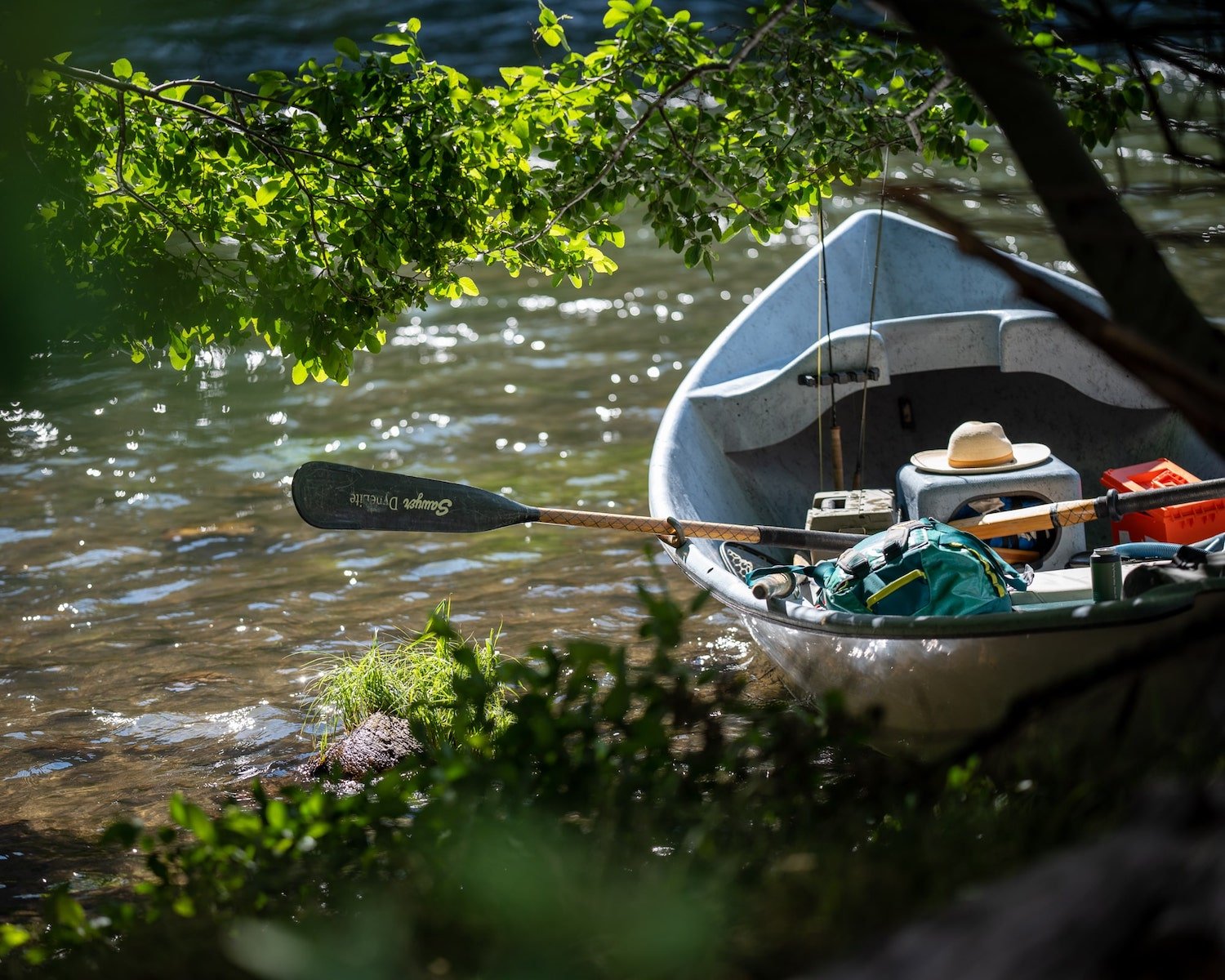
Bug of the Month: Skwala
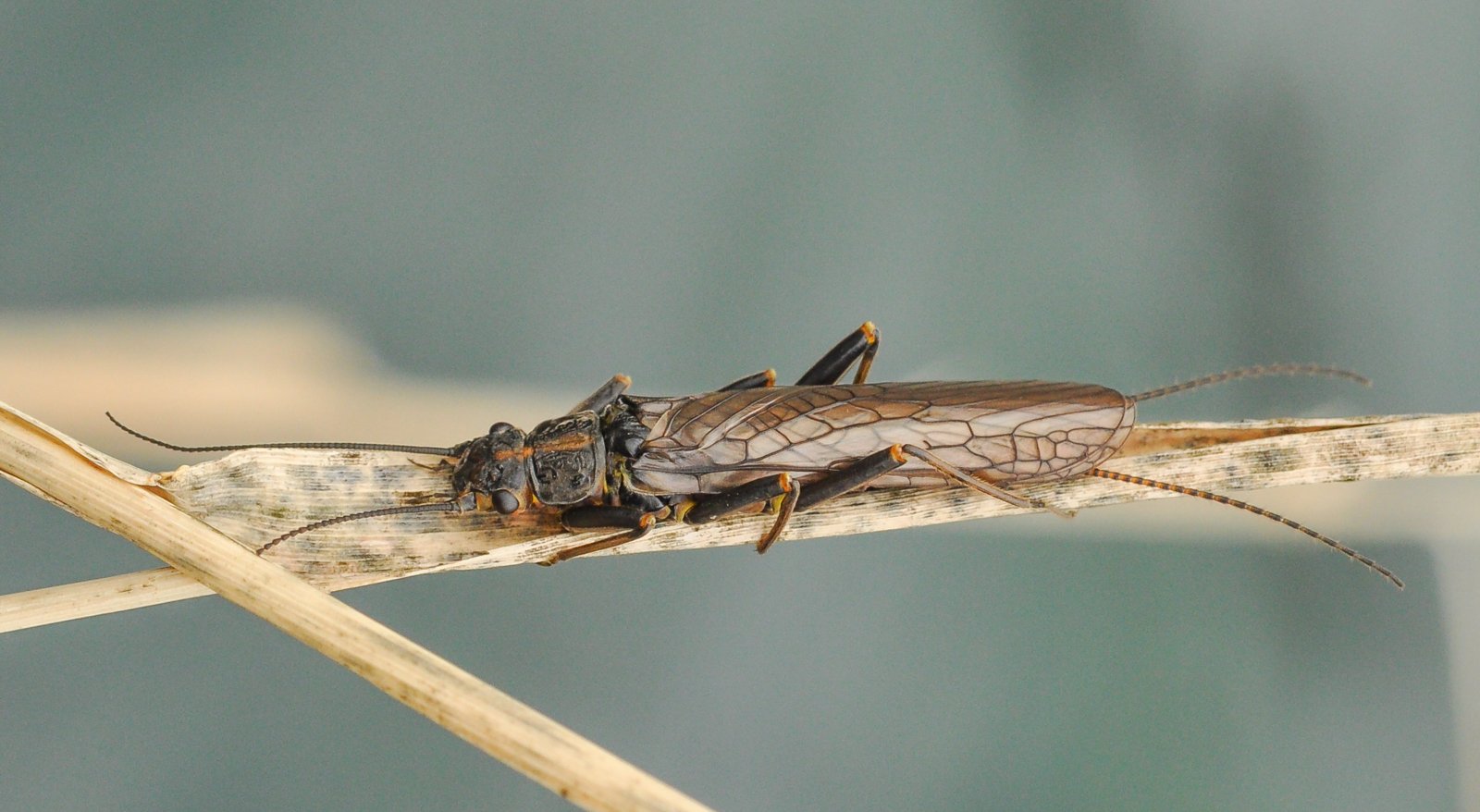
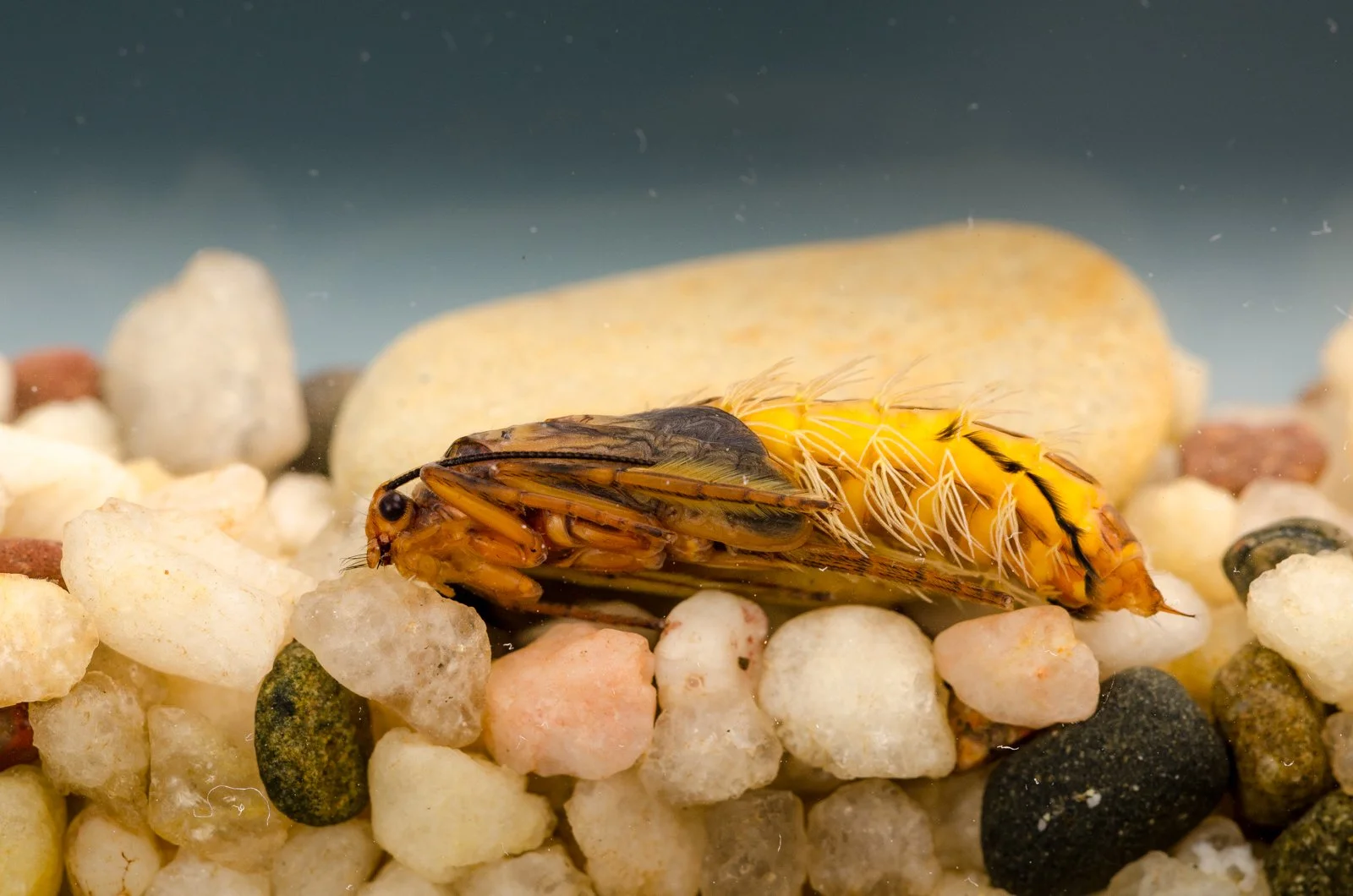
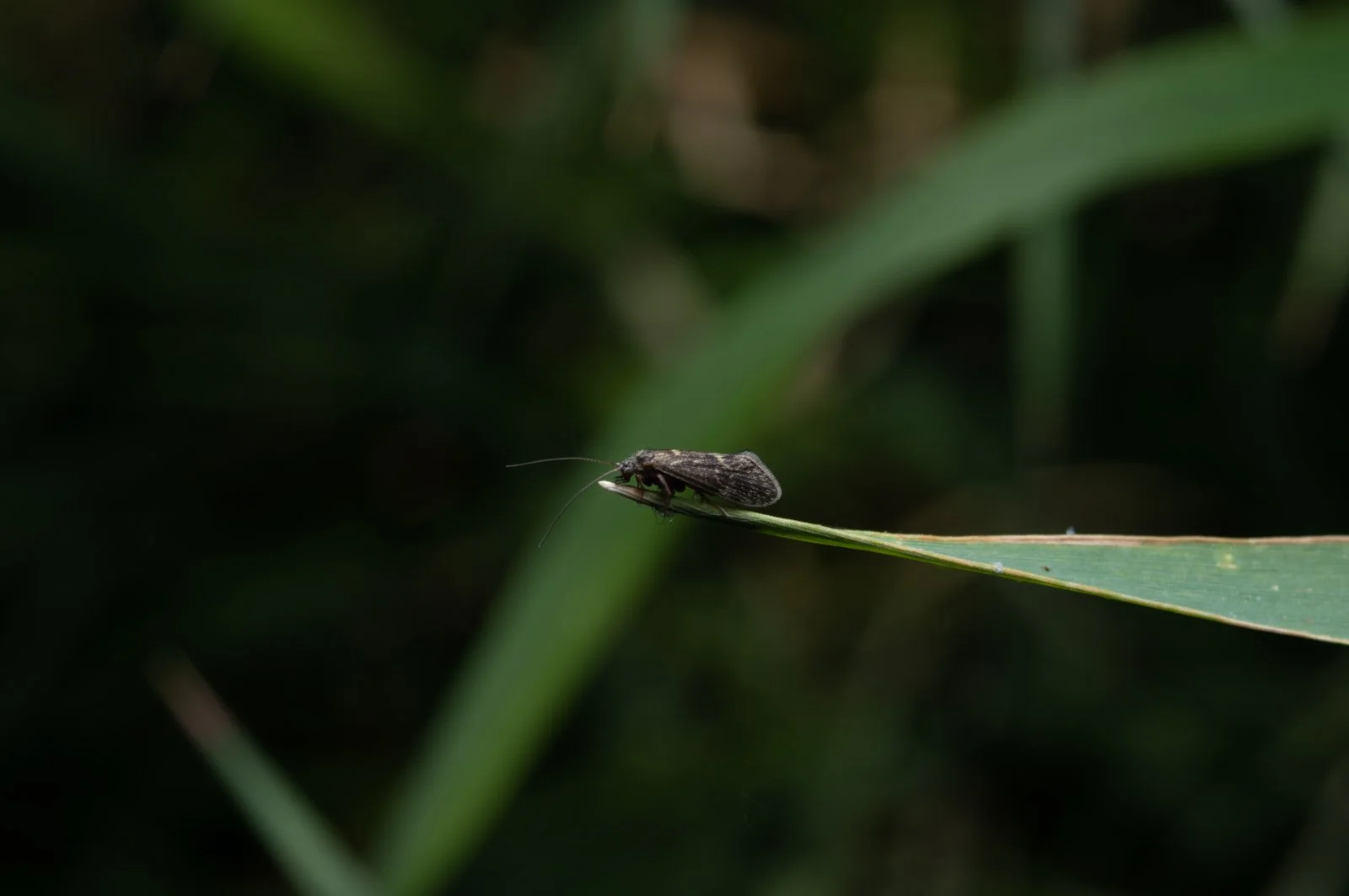
Skwala female: Trout say yum to this insect, the first big stonefly meal of the year. Photo by Rick Hafele.
The Why Behind the DRA’s Bug-of-the Month
By Hannah Camel, Water Quality Coordinator, DRA
Welcome back to the Deschutes River Alliance’s Bug of the Month blog series. Each month throughout 2026, we’re spotlighting an aquatic insect that plays a critical role in the lower Deschutes River ecosystem. Every feature explores the insect’s life history, preferred habitat, seasonal timing, and abundance, alongside insights from DRA’s water quality and macroinvertebrate monitoring data. For anglers, we also include guide-approved fly patterns and practical tips on when, where, and how to fish both nymphs and dry flies that imitate each featured insect.
This month, we’re diving into the Skwala stonefly, the first truly large insect hatch of the year and a much-anticipated signal of spring. For hungry trout emerging from winter, Skwala’s represent one of the first substantial meals of the season, often drawing big fish to the surface when few other insects are active.
Stonefly of Early Spring: Life History and Habitat
The Skwala stonefly (Skwala sp.) belongs to the family Perlodidae, one of approximately sixteen extant (currently living) families within the order Plecoptera, commonly known as stoneflies. In North America, the Perlodidae family includes roughly 30 genera and more than 130 species. Fortunately for anglers and biologists alike, Skwala’s are relatively straightforward from a taxonomic standpoint. While about five species have been described within the genus Skwala, two are most commonly recognized: Skwala americana and Skwala curvata. For the purposes of this blog, we’ll simply refer to them as Skwalas, also commonly known as American Springflies, Large Springflies, or Brown Willow Stonefly.
Skwala hatches occur once per year in early spring. On the lower Deschutes River, adults are typically observed from late March through early April. Emergence is closely tied to water temperature, with activity beginning when temperatures range between 40–47°F., peaking around 43°F. Lower-elevation rivers tend to see earlier hatches, while colder, higher-elevation systems may experience delayed emergence into late spring. Variable spring conditions, such as cold snaps or early runoff, can shift hatch timing from year to year. Most Skwala activity occurs during the warmest parts of the day, typically from midday into late afternoon. On colder or overcast days, the hatch may still occur, though surface activity often begins later and can be more subdued.
Like all stoneflies, Skwalas have three life stages: egg, nymph, and adult. Unlike insects that undergo complete metamorphosis, stoneflies experience incomplete metamorphosis, transitioning directly from an aquatic nymph to a winged terrestrial adult. During the nymph stage, Skwalas are classified as clingers or crawlers, characterized by flattened, elongated bodies and strong claws adapted for gripping rocks and debris in fast-moving water. They are most commonly found beneath rocks in cold, well-oxygenated rivers with coarse, cobble-dominated substrates.
Skwala nymphs spend an entire year underwater, making them an important and consistent food source for trout even outside of the hatch period. Because they lack strong swimming ability, Skwala nymphs are especially vulnerable when dislodged by high flows or disturbance, tumbling helplessly in the drift and becoming easy targets for feeding fish.
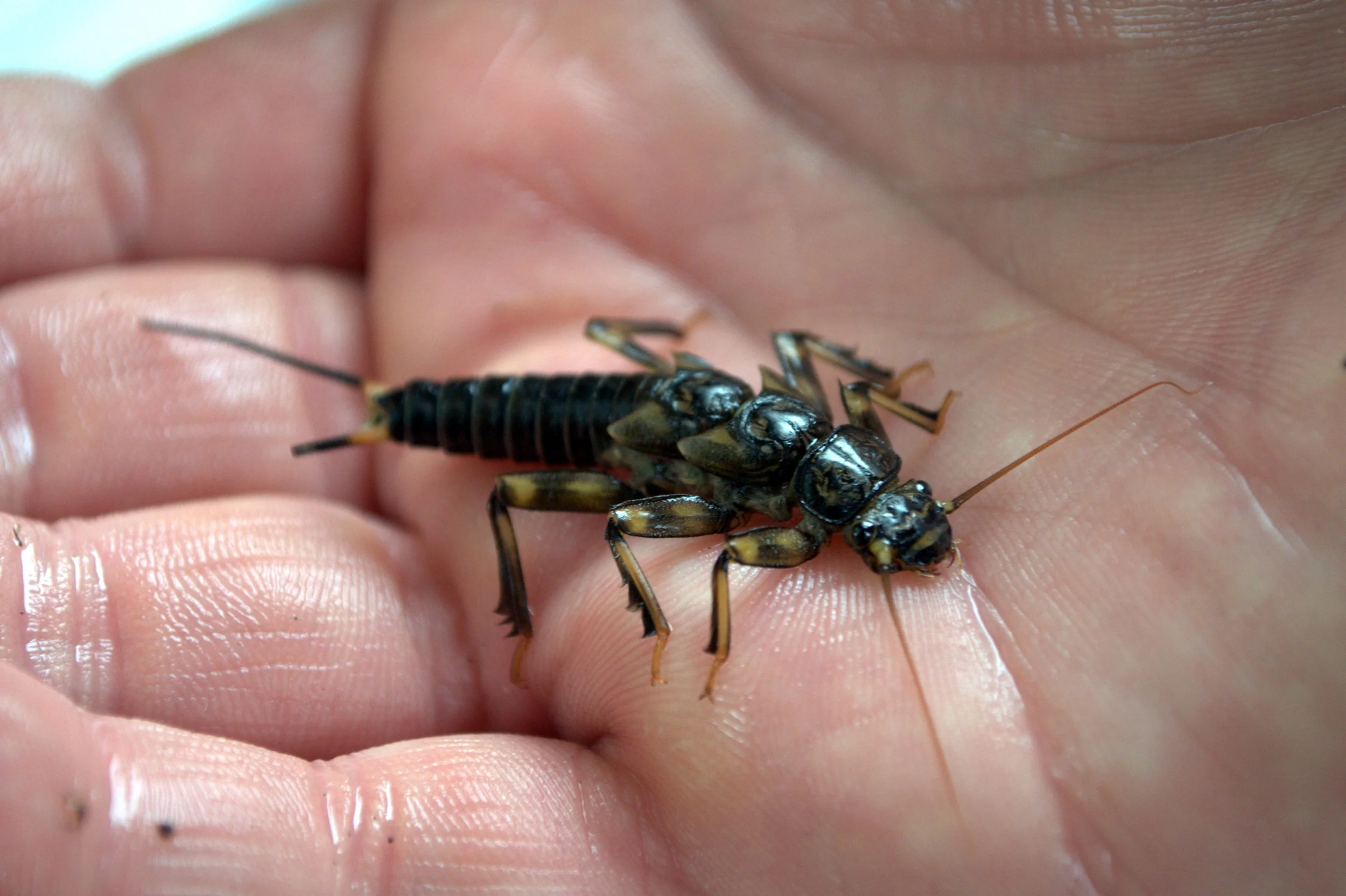
Skwala nymphs can be identified by their large size (typically ½ inch to 1¼ inches including antennae and tails), two long tails roughly equal in length to the abdomen, a broad, flattened head, and mottled dark olive, brown, or reddish-brown coloration along the back with a paler yellow-olive or tan underside. One key feature that distinguishes Skwala’s from other large stoneflies, such as golden stones, is gill placement. Skwala nymphs lack obvious abdominal or thoracic gills; instead, their gills are located in the neck region and can be difficult to see without close inspection. Additionally, Skwalas have a distinctive “M”-shaped marking on the head, whereas the common golden stonefly species on the lower Deschutes (Hesperoperla pacifica) displays a “keyhole”-shaped pattern and has well-developed filamentous gills at the base of each leg and between the tails.
Skwalas are univoltine, meaning they produce one generation per year. Eggs are deposited in spring and settle into the streambed, incubating for several weeks before hatching. Nymphs grow and molt through summer and fall, continuing to develop through winter. They are carnivorous, feeding on smaller aquatic insects such as midges and mayflies. As they mature, nymphs migrate toward the bank in late winter. When water temperatures reach approximately 43°F, mature nymphs crawl out of the water onto rocks, vegetation, or woody debris to emerge. Skwala emergence is notably discreet. Rather than clinging to exposed rocks or leaves, newly emerged adults often hide in crevices among cobble or vegetation along the banks. This behavior may be linked to early-season conditions, when shoreline substrates have not yet warmed significantly. As a result, Skwalas often go unnoticed until mating flights begin, seemingly appearing all at once to observant anglers.
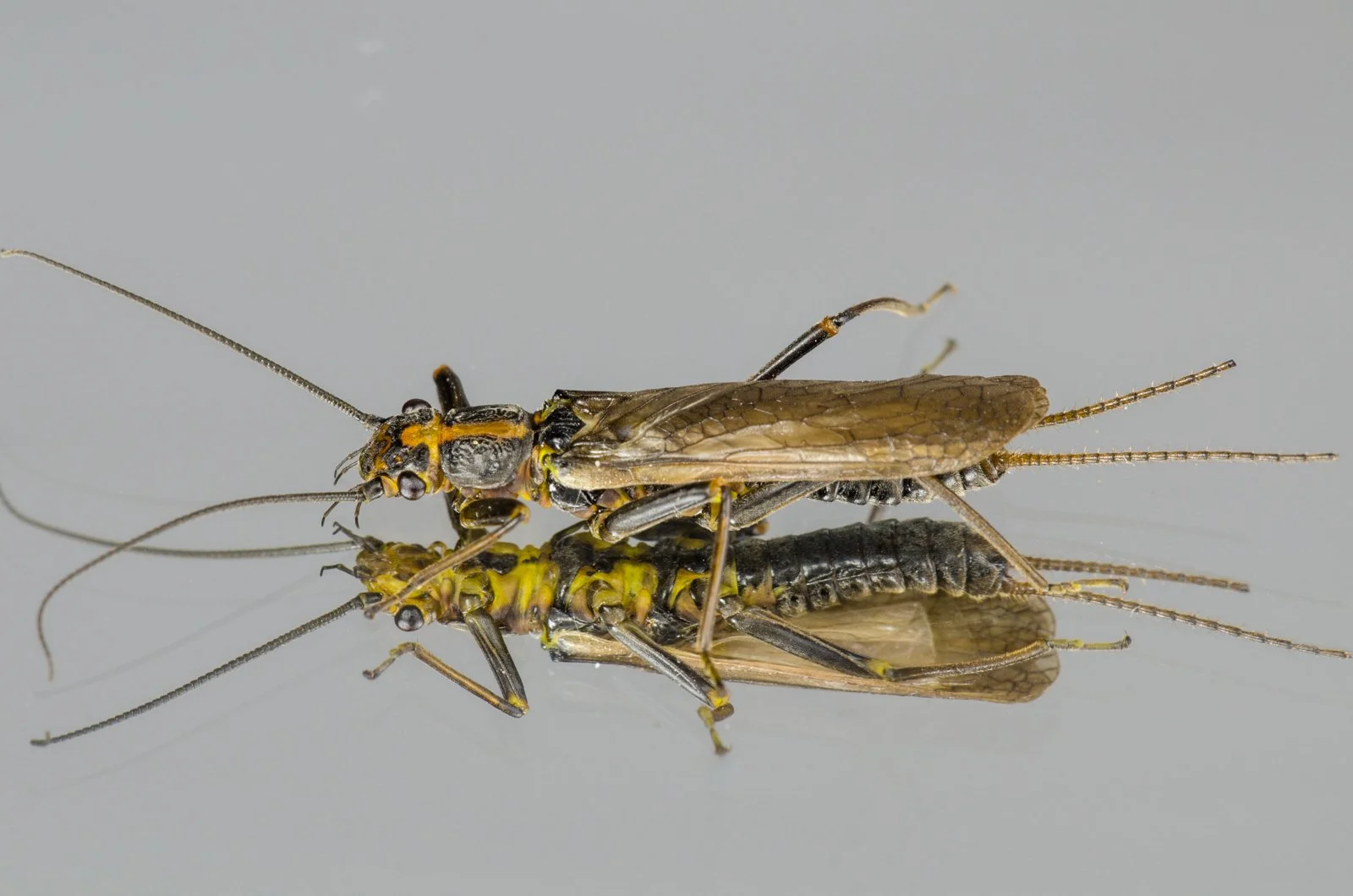
Skwala, and skwala reflection. Photo by Rick Hafele.
Once emerged, Skwalas enter their final adult stage. Adults are large insects, measuring roughly ½ to 1 inch in length, with smoky brown wings, brown legs, dark olive-brown to nearly black bodies, and a lighter-colored underside. Males are brachypterous, meaning their wings are short and underdeveloped, rendering them flightless. Females are typically larger, with fully developed wings and distinctive black, pea-shaped egg sacs visible at the tips of their abdomens. Males roam streamside vegetation searching for females and may mate multiple times. They are known to form aggregations, those familiar clusters of stoneflies often seen piled up along riverbanks. When conditions are right, females undertake ovipositing (egg-laying) flights, returning to the river to deposit their eggs. This is often accomplished by landing on the water and drifting briefly or by slapping the surface to release the egg sac. Females die shortly after egg-laying, and males typically die soon after mating.
Tower Takeaway: Fewer Skwalas
Now that we’ve covered the basics of Skwala life history, let’s examine what DRA’s macroinvertebrate monitoring data reveals about their presence and abundance in the lower Deschutes River.
Lab sampling identifies Skwalas to the genus level only, though Skwala americana is the species most likely present in the lower Deschutes. In 2025, no Skwala individuals were collected during either spring or fall sampling. The only documented Skwala occurrence in DRA’s dataset occurred in summer 2016 at the Kaskela monitoring site, with 0.17% relative abundance (10.76 individuals/m²). The absence of Skwala’s in spring sampling from 2015–2025 is not unexpected, given their one-year life cycle and early emergence timing, which likely occurs prior to sampling. However, their absence from fall samples is more notable, as nymphs would be expected to be present at that time of year.
For comparison, pre-SWW Tower macroinvertebrate data from sites similar to Kaskela (river miles 84-88) showed a low but more consistent Skwala presence, with averages of 20.86 individuals/m² in October 1999 and 12.11 individuals/m² in October 2001. While limited pre-tower data makes it difficult to draw firm conclusions about long-term trends, Skwalas are well known to be sensitive to poor water quality. Elevated water temperatures can impair development or cause mortality, and excessive nuisance algae can smother the rocky, gravel-bottom habitats that Skwala nymphs depend on. While abundance may currently be sparse on the lower Deschutes, trout will target nymphs and adults where and when available.
Fly Patterns and Fishing Tips
Understanding Skwala habitat preferences, behavior, and life stages is essential when choosing the right fly—and knowing how, when, and where to fish it can make all the difference.
Nymph Imitations
When surface activity is limited or hatches are sparse, nymphs are often the most effective option. Skwala nymph patterns typically range from size 8 to 12. Fish them deep and slow near the bottom using either an using an indicator or tight-line approach. Tungsten-beaded flies are especially useful for achieving a quick sink rate and a natural, drag-free presentation.
The most classic and proven Skwala nymph pattern is the Jimmy Legs (Pat’s Stone). One of its strengths is versatility; by adjusting size and color, it can imitate several stonefly species. Olive/black and tan/black are reliable color combinations. Later in March, when trout have seen plenty of Jimmy Legs, the 20-Incher Stone can be an effective alternative, especially when nymphs are still present in the drift but fish have become more selective.
Adult Imitations
Skwalas behave differently than many other stoneflies, and adults are often present even when you don’t see much surface activity. Unlike strong-flying stoneflies, Skwalas tend to stay close to the banks and vegetation. Be on the lookout for empty nymph shucks as this is a good indicator that emergence has begun and it’s time to consider switching to a dry fly. Females are more likely to crawl onto the water from the bank to lay their eggs rather than take extended flights, making afternoons and evenings the most productive time for dry fly fishing. Focus on fishing close to the banks, along grassy edges, and beneath overhanging vegetation, where trout often sit waiting for a spent or drifting adult to fall onto the water.
Two reliable patterns include the Chubby Chernobyl in olive or tan or a Stimulator in brown or yellow. These flies are highly visible, float well, and are effective at drawing aggressive surface eats during the Skwala hatch.
That wraps up this month’s Bug of the Month. Thanks for reading—we hope you not only learned more about the Skwala, but also picked up some useful tips for fishing this early-season hatch. Stay tuned for our next featured bug, coming in April.
More From The Blog


Subscribe the the DRA Newsletter
The Deschutes River Alliance is your focused voice to protect the lower Deschutes River, its cold water flows and the fish and wildlife that are sustained by them. We send regular emails with important data and news about the lower Deschutes River. We will not sell your contact information to others.
How to Support the DRA
Everyone wants clean, healthy water in the Deschutes River. Oregonians cherish our clean and healthy waterways to provide drinking water, wildlife habitat and recreational activities. The lower Deschutes River is a federally designated Wild & Scenic River, and a national treasure. It must be protected for the environmental and economic health of Central Oregon. By working together we can return the lower Deschutes River to full health.