Bug(s) of the Month: Salmonfly, Golden Stone

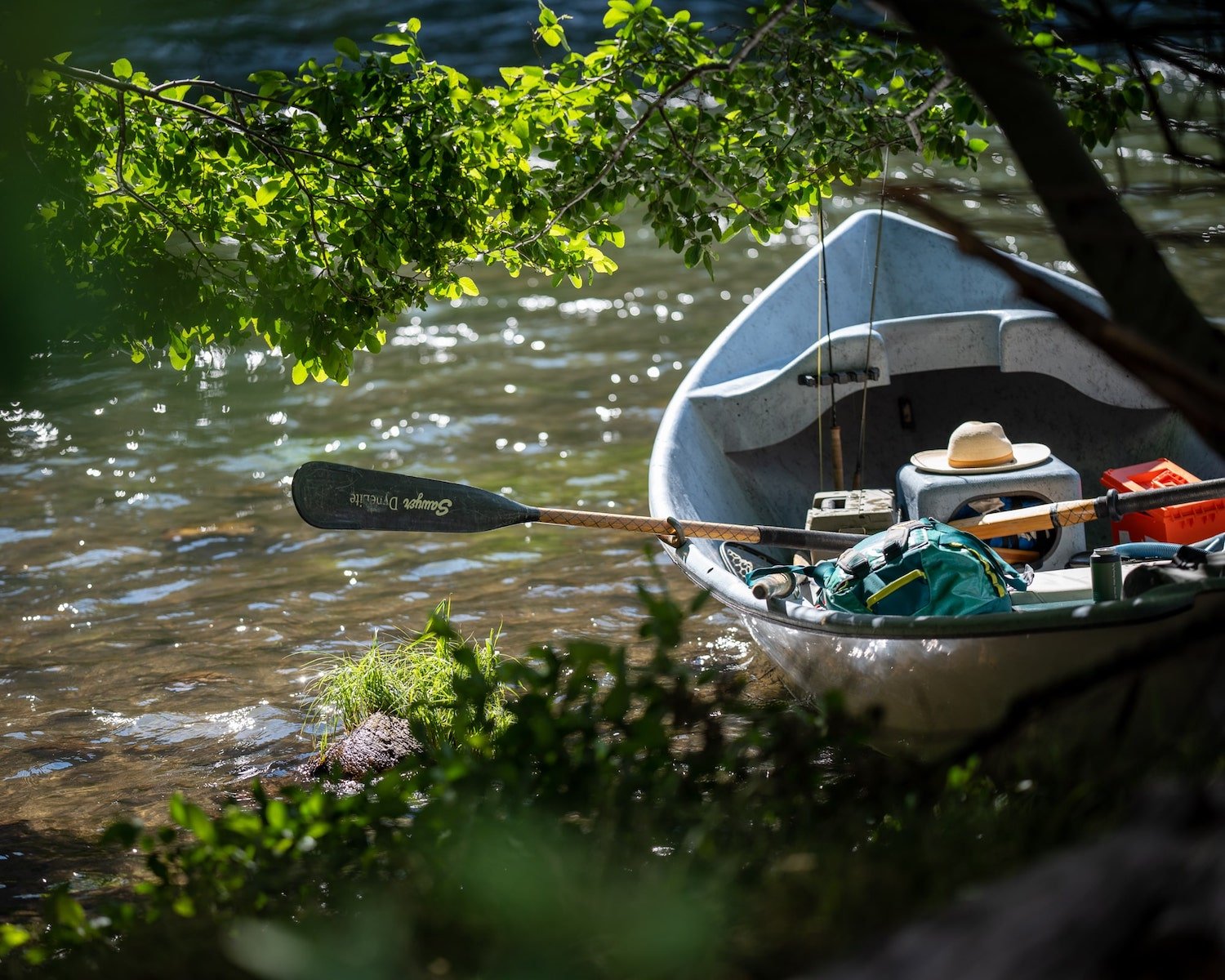
Deschutes salmon fly, the prize meal for hungry trout.
Plecoptera Parade
By Hannah Camel, Science Program Lead, Deschutes River Alliance
We’re back with another installment of the Deschutes River Alliance’s Bug of the Month blog series. Throughout 2026, we’re highlighting the aquatic insects that play an essential role in the ecology of the lower Deschutes River. Each month’s feature explores the insect’s life history, habitat preferences, seasonal timing, and abundance, while also incorporating insights from DRA’s water quality and macroinvertebrate monitoring efforts. For anglers, we also include guide-approved fly patterns and practical tips for fishing both nymph and adult imitations during each hatch.
This month, we’re taking a closer look at two of the most iconic insects on the lower Deschutes River: the salmonfly and the golden stone. These legendary stoneflies are famous among anglers and river enthusiasts alike, with many planning late spring trips around the chance to experience one of the West’s most celebrated hatches.
A Tale of Two Stones: Life History and Habitat
Although salmonflies and golden stones are often grouped together when discussing the lower Deschutes’ late spring “big bug” season, they belong to different stonefly families. The salmonfly (Pteronarcys californica) belongs to the family Pteronarcyidae within the order Plecoptera, commonly known as stoneflies. This family contains only two genera and roughly ten species, with the salmonfly belonging to the genus Pteronarcys, which includes the largest stoneflies in North America.
The golden stone (Hesperoperla pacifica) also belongs to the order Plecoptera, but falls within the family Perlidae. This is a much larger and more diverse family, containing roughly 50 genera and over 1,000 described species. Hesperoperla pacifica is one of the most recognizable members in western rivers.
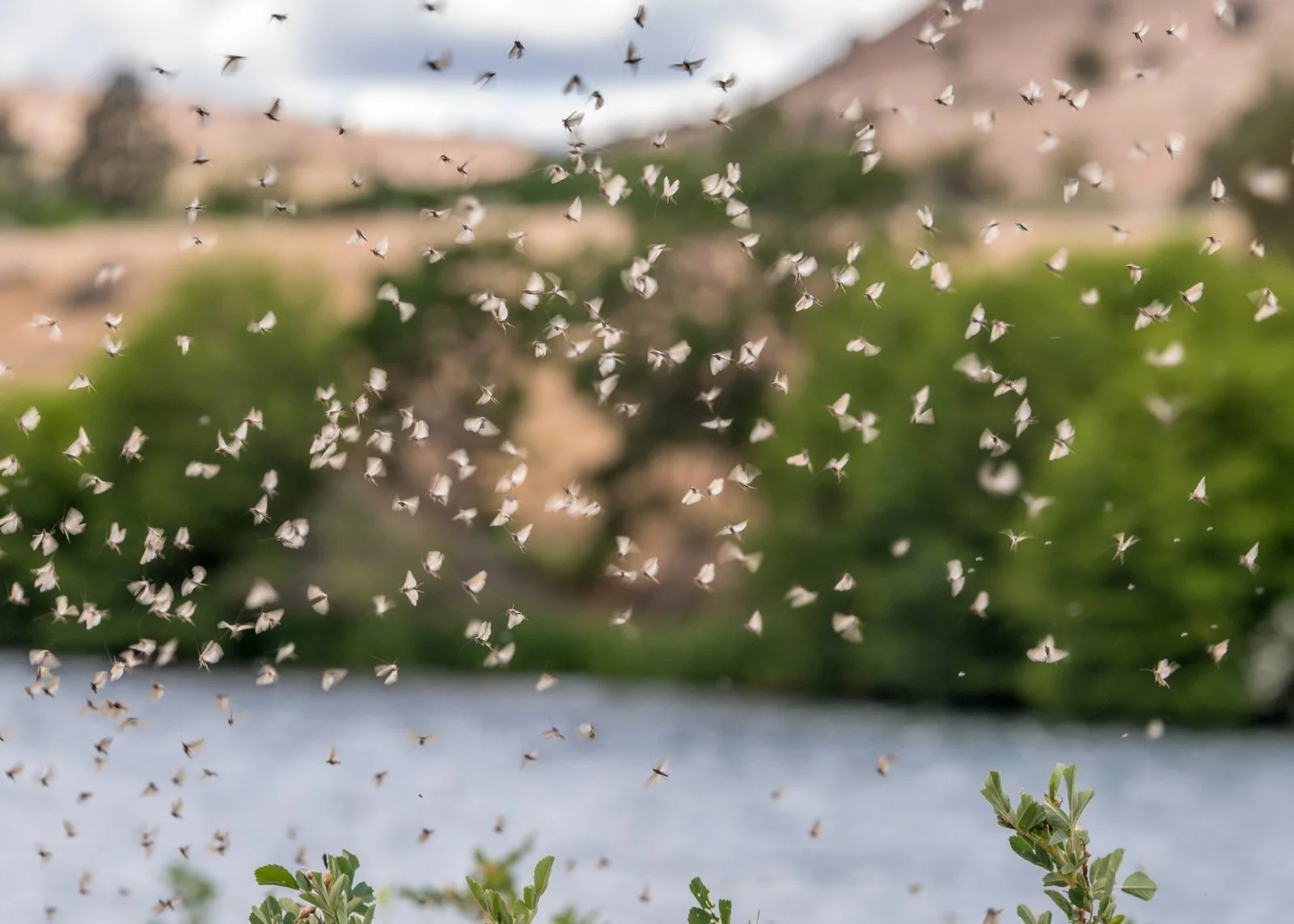
Despite these taxonomic differences, salmonflies and golden stones often emerge during similar periods. On the lower Deschutes, salmonflies typically begin hatching first, with golden stones following one to two weeks later. Fortunately for anglers, these hatches frequently overlap, creating weeks of exciting fishing from May through early June. Like many aquatic insects, emergence is strongly tied to water temperature, with activity generally beginning once temperatures reach approximately 56°F. However, unlike many aquatic insect hatches that appear briefly and disappear within hours, salmonflies and golden stones linger for weeks, with adults capable of living for up to a month.
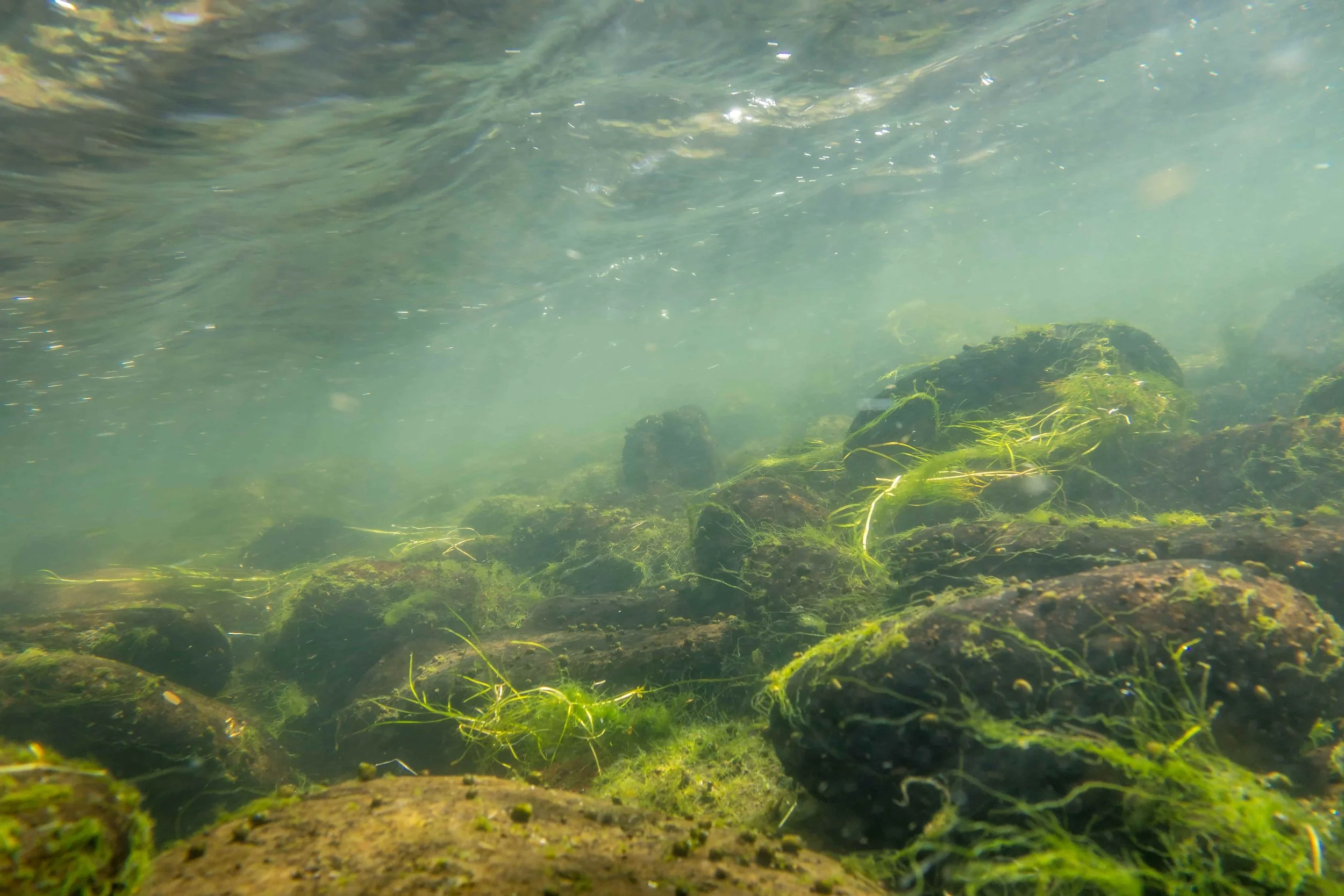
Like all stoneflies, both species undergo incomplete metamorphosis, meaning they skip the pupal stage and transition directly from aquatic nymphs into winged terrestrial adults. During their nymph phase, both species are classified as “crawlers,” possessing robust bodies, two tails, strong claws, and segmented thoraxes adapted for clinging to rocks in fast-moving water. They are most commonly found beneath rocks in cold, well-oxygenated rivers with coarse, cobble-dominated substrates.
Salmonflies typically spend three to four years as nymphs before emerging, while golden stones usually spend two to three years underwater. Because of this long aquatic life stage, both species provide an important and consistent food source for trout long before and after the hatch itself. They are often easy targets for feeding fish, because despite their affinity for crawling and their strong gripping claws, both species are poor swimmer. This makes them especially vulnerable when dislodged by high flows or disturbance.
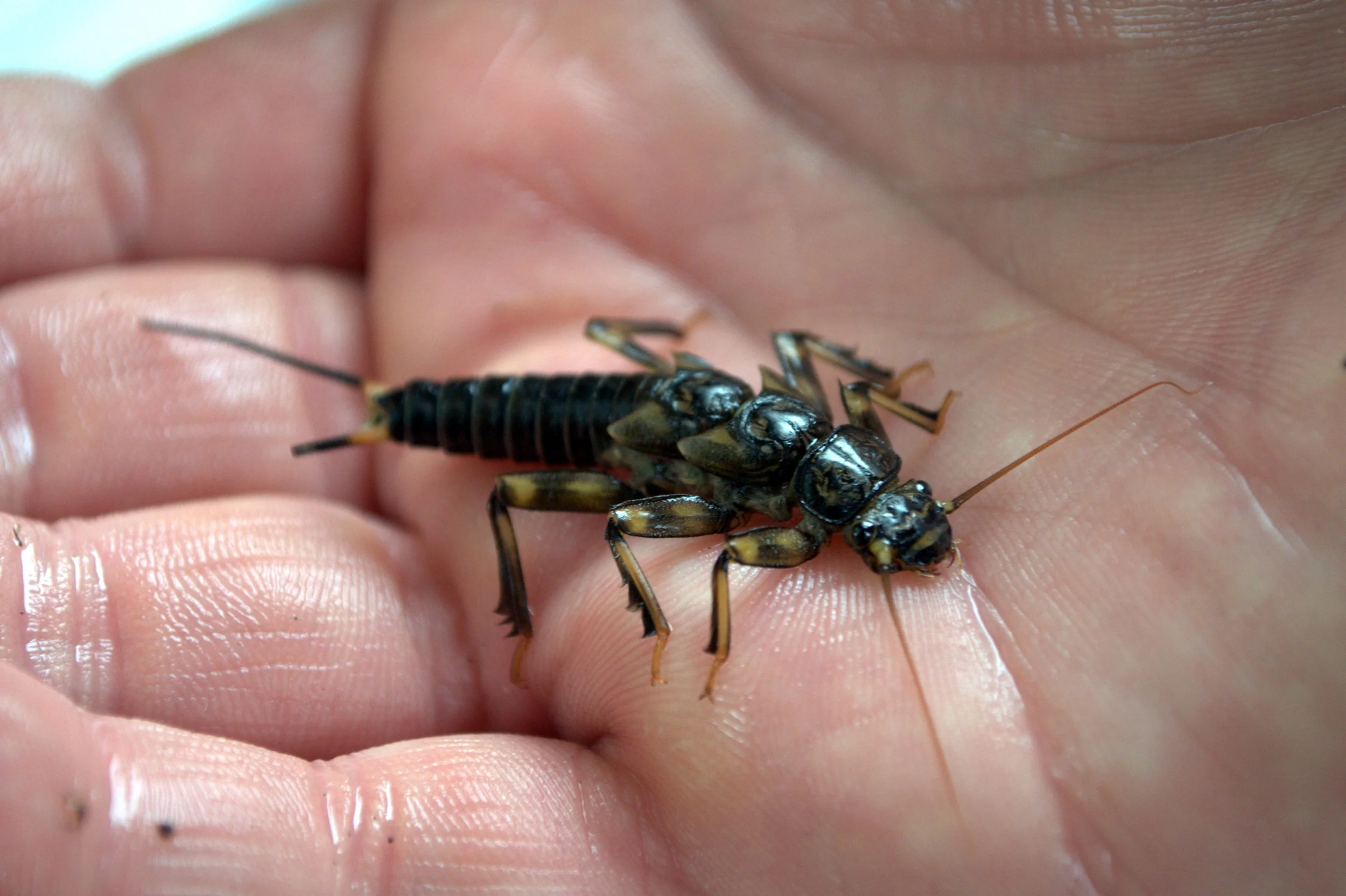
While the two species share many similarities, they can usually be distinguished by several key characteristics. Salmonfly nymphs are extremely large, sometimes approaching three inches in length, with dark bodies, orange coloration along the underside, and prominent spikes on the thoracic plates behind the head. Golden stone nymphs are slightly smaller, generally topping out around 2.5 inches, and are golden-brown to dark brown in coloration. One of the easiest ways to tell the two apart is by examining the head: goldenstones display a distinctive “keyhole” pattern, while salmonflies lack these markings.
Both species are semivoltine, meaning they require multiple years to complete a single generation. Eggs are deposited in late spring and settle into the streambed, where they may enter a dormant state known as diapause until conditions are favorable for hatching. Once they finally emerge, the nymphs spend several more years developing underwater, molting roughly 20 times along the way. Salmonflies are classified as shredders, spending their days munching on leaves and other plant detritus drifting through the river. Golden stones, however, want nothing to do with that vegetarian lifestyle. Instead, they are aggressive predators, stalking and feeding on other aquatic invertebrates living among the rocks.
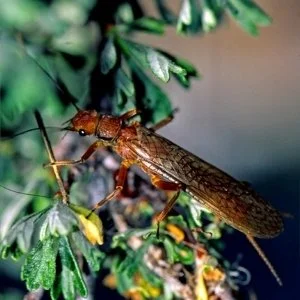
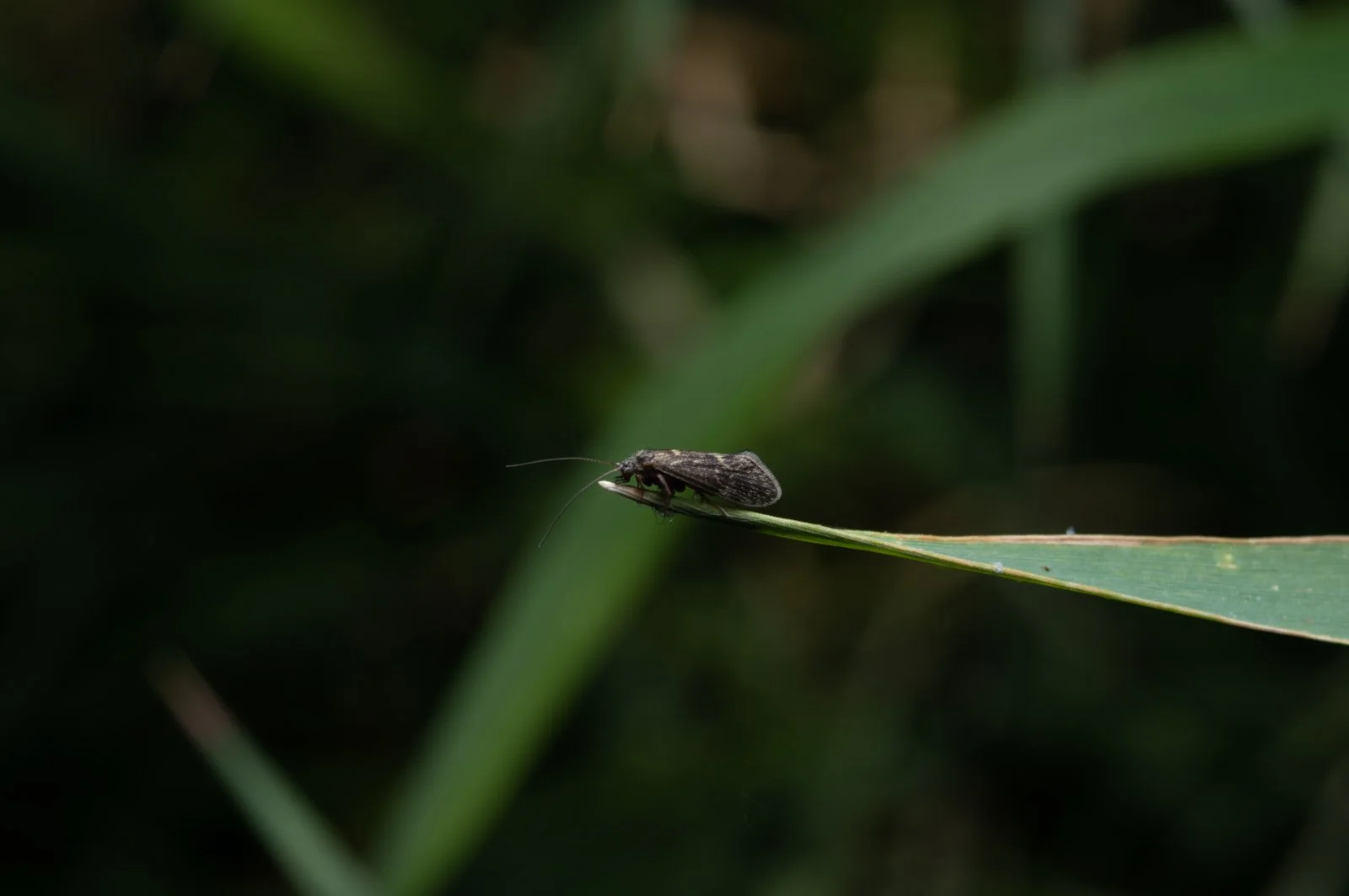
We’re golden: Hesperoperla pacifica at home on the lower Deschutes River.
As water temperatures rise in spring, mature nymphs begin migrating toward shore, often several weeks before emergence begins. Once near the banks, they crawl out onto rocks, vegetation, logs, or bridge pilings to complete their final molt into adults. The empty exoskeletons left behind, commonly called shucks, are one of the clearest signs that the hatch has started.
Adult salmonflies and golden stones are difficult to miss because of their impressive size. Adult salmonflies commonly measure between two and three inches long, while golden stones are only slightly smaller. Salmonflies are generally gray to dark brown with bright orange coloration behind the head and underneath the body. Golden stones, as their name suggests, display golden-yellow to orange coloration with darker markings. Both species possess long wings that extend beyond the body and two prominent tails.
The mating behavior of these stoneflies is particularly fascinating. Males communicate through a behavior known as “drumming,” where they rhythmically tap their abdomen against rocks or wood to create vibrations. Nearby females respond with their own signal, allowing the insects to locate one another. Each stonefly species has its own unique tapping pattern, essentially creating its own little percussion-based love language. Unfortunately for us, these tiny drum solos are usually too subtle for human ears, and specialized recording equipment is needed to hear them. Thankfully, other people have already done the hard work. The Stonefly Sound Archive through the University of North Texas is a fantastic resource if you want to listen to these unique mating rituals for yourself.
After locating one another, adults often form large aggregations along riverbanks and streamside vegetation. Females eventually return to the water to lay eggs, either by briefly landing on the surface or striking the water while in flight to release egg masses. Shortly after reproducing, adults die, completing their life cycle.
Stone-Cold Facts: Fewer Salmonflies and Golden Stones
Stoneflies are among the most sensitive groups of aquatic insects because of their dependence on cold, well-oxygenated water. For this reason, they are widely recognized as important indicators of river health. Their presence, abundance, and diversity can provide valuable insight into both short- and long-term water quality conditions.
Macroinvertebrate monitoring conducted by the DRA has identified concerning trends in stonefly abundance within the lower Deschutes River following installation and operation of the Selective Water Withdrawal Tower. For Pteronarcys californica, abundance estimates from pre-tower sampling at sites comparable to DRA’s Warm Springs monitoring location averaged approximately 81 individuals/m2 during spring and fall sampling periods. In post-tower years, those estimates declined to an average of 33 individuals/m2. A similar pattern has been observed for Hesperoperla pacifica. Pre-tower abundance estimates averaged approximately 98 individuals/m2, compared to only 29 individuals/m2 during the post-tower period.
Although the limited amount of pre-tower data makes it difficult to draw definitive long-term conclusions, the apparent decline in both salmonflies and golden stones raises concerns about whether current river conditions continue to adequately support these sensitive aquatic insects.
Tie One On: Some Effective Patterns for Stones
Understanding the habitat preferences, behavior, and life stages of salmonflies and golden stones is key to choosing the right fly. Just as important, though, is knowing when, where, and how to fish those imitations once the hatch gets rolling.
Nymph Imitations
As water temperatures begin to rise and spring fishing starts ramping up, stonefly nymphs quickly become one of the most important food sources in the river. Several weeks before the actual hatch, mature nymphs begin their migration toward shore, and you can bet the trout are fully aware that the annual “big bug buffet” is underway.
Stonefly nymph patterns are most commonly fished in sizes 4–10, with larger size 4s and 6s imitating salmonflies and size 8s and 10s better matching goldenstones. Look for weighted patterns, especially those tied with tungsten beads, that can get down deep and drift slowly along the bottom of fast riffles, runs, and rocky pocket water where these insects naturally live.
One of the most classic and proven patterns is the Jimmy Legs, also known as Pat’s Stone. Its biggest strength is versatility. By simply adjusting size and color, it can imitate several different stonefly species. A black version with a copper bead has long been a favorite on the Deschutes. The Kaufmann Stonefly Nymph is another reliable choice and pays homage to Randall Kaufmann, whose influence on Deschutes River fly fishing is hard to overstate. For many anglers, his name is practically synonymous with classic Deschutes stonefly fishing.
Adult Imitations
Once adults begin emerging, it’s time for the main event. Salmonfly and golden stone hatches create some of the most explosive dry-fly fishing of the year, and when conditions line up, trout can become downright reckless.
The hatch itself is hard to miss, but one of the best early indicators is spotting empty nymph shucks clinging to rocks, grasses, or streamside vegetation. When you start seeing shucks, the action is usually close behind. Adult imitations are generally tied in sizes 4–12, again with larger flies imitating salmonflies and slightly smaller patterns better matching golden stones.
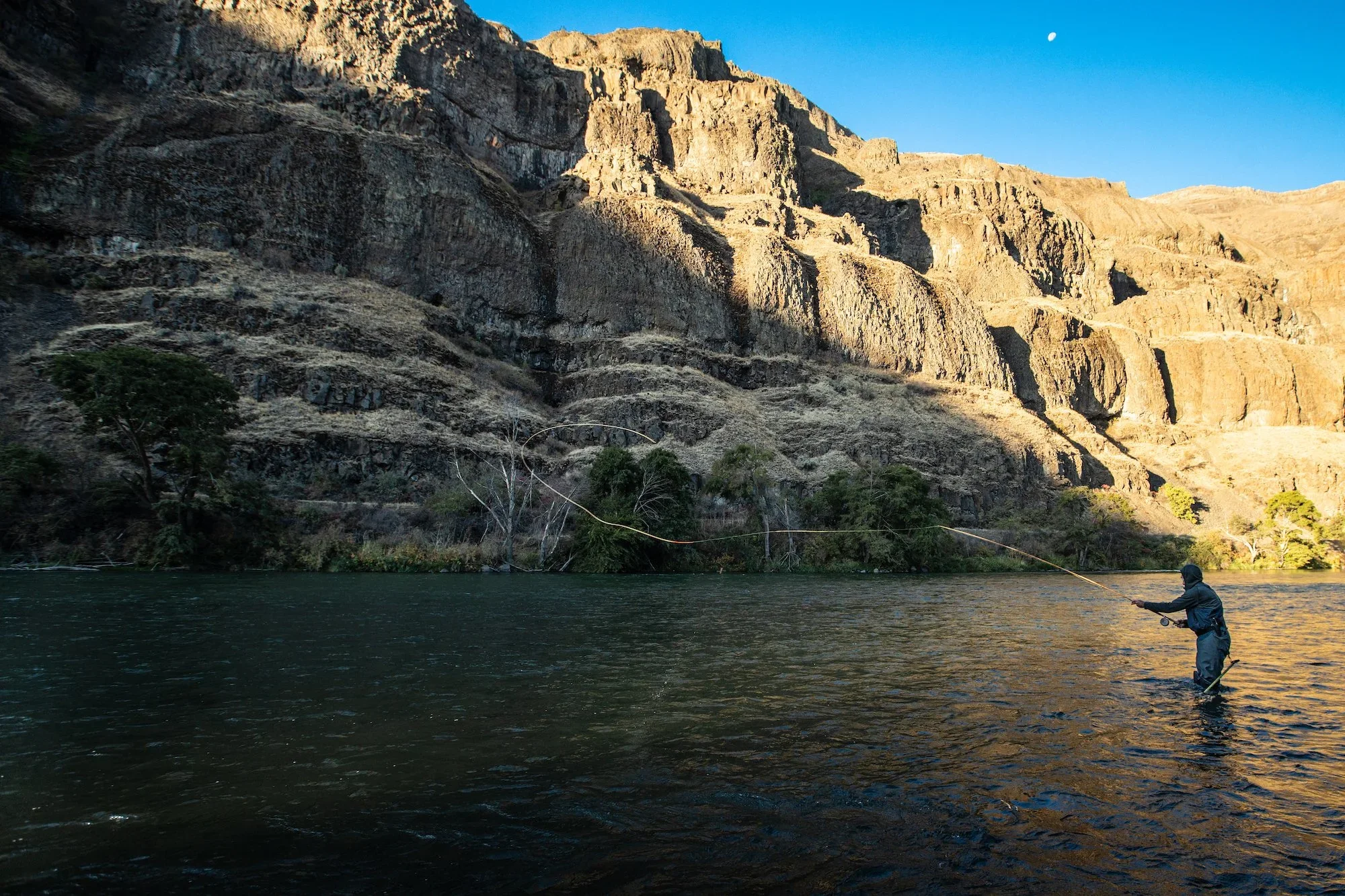
When fishing dries, cast tight to the banks, especially near overhanging grass, brush, and trees. Don’t baby the presentation either. Real stoneflies are clumsy insects and rarely land gracefully on the water. If fish are keyed in on the hatch, it’s usually only a matter of time before a big Deschutes redside makes an appearance. And when it happens, be ready. Trout in the lower Deschutes during stonefly season have a reputation for pulling far harder than they should. Keep fairly short, controlled drifts and avoid feeding out unnecessary line. Fortunately, during a good salmonfly hatch, you usually don’t need much line anyway because the fish are already waiting along the bank.
The Chubby Chernobyl has become one of the most popular and dependable adult patterns thanks to its high-floating foam body and excellent visibility. Tan, yellow, brown, and orange color combinations are all solid choices for matching the hatch, although experimenting can pay off too. Oddly enough, purple often works surprisingly well. The Stimulator is another classic option, offering a more natural silhouette that sits lower in the water. This makes it particularly effective at imitating struggling or partially drowned adults. Brown and yellow variations are reliable colors.
That wraps up this month’s Bug of the Month. Even though we’re already approaching the end of May, the big bugs are still around, and the hatch continues to work its way upstream. Reports from around Maupin suggest there’s still plenty of action happening in the area. Thanks for reading, and stay tuned for next month’s featured bug in June. But for now, enough reading. Get out there and experience for yourself what makes this hatch so special.
More From The Blog


Subscribe the the DRA Newsletter
The Deschutes River Alliance is your focused voice to protect the lower Deschutes River, its cold water flows and the fish and wildlife that are sustained by them. We send regular emails with important data and news about the lower Deschutes River. We will not sell your contact information to others.
How to Support the DRA
Everyone wants clean, healthy water in the Deschutes River. Oregonians cherish our clean and healthy waterways to provide drinking water, wildlife habitat and recreational activities. The lower Deschutes River is a federally designated Wild & Scenic River, and a national treasure. It must be protected for the environmental and economic health of Central Oregon. By working together we can return the lower Deschutes River to full health.