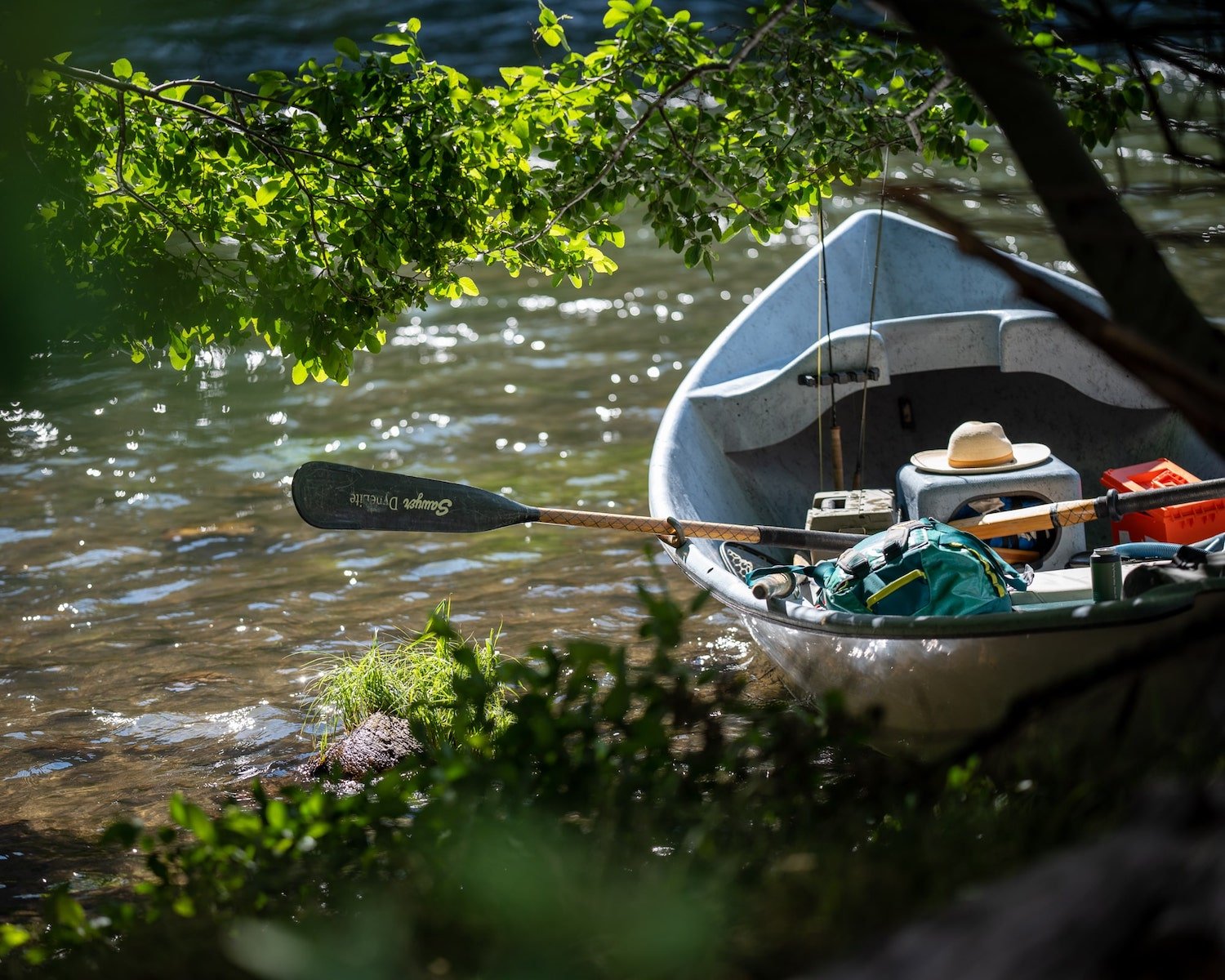
Playing the Long Game: Deschutes River Conservancy’s Good Trout Creek Work
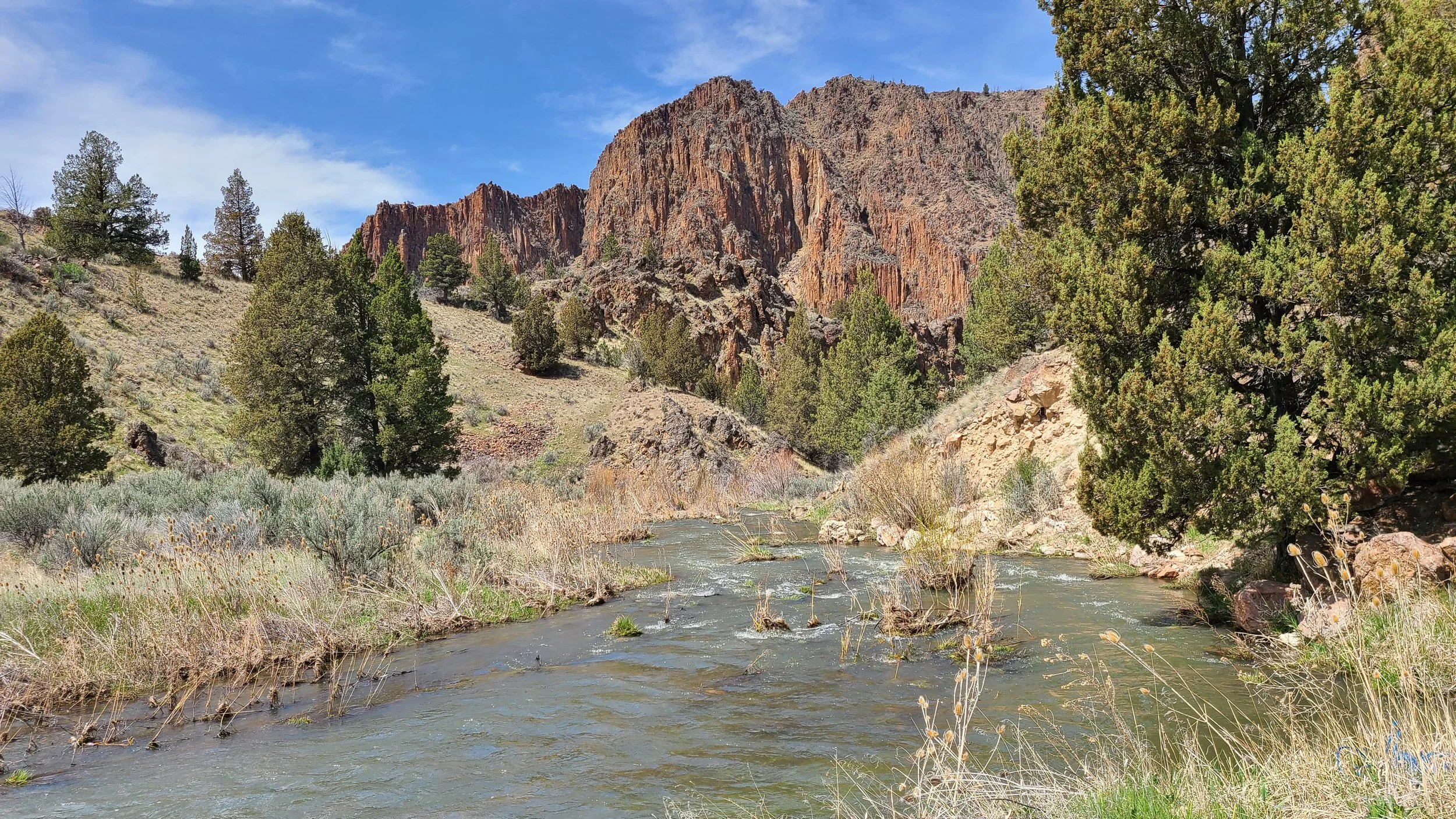
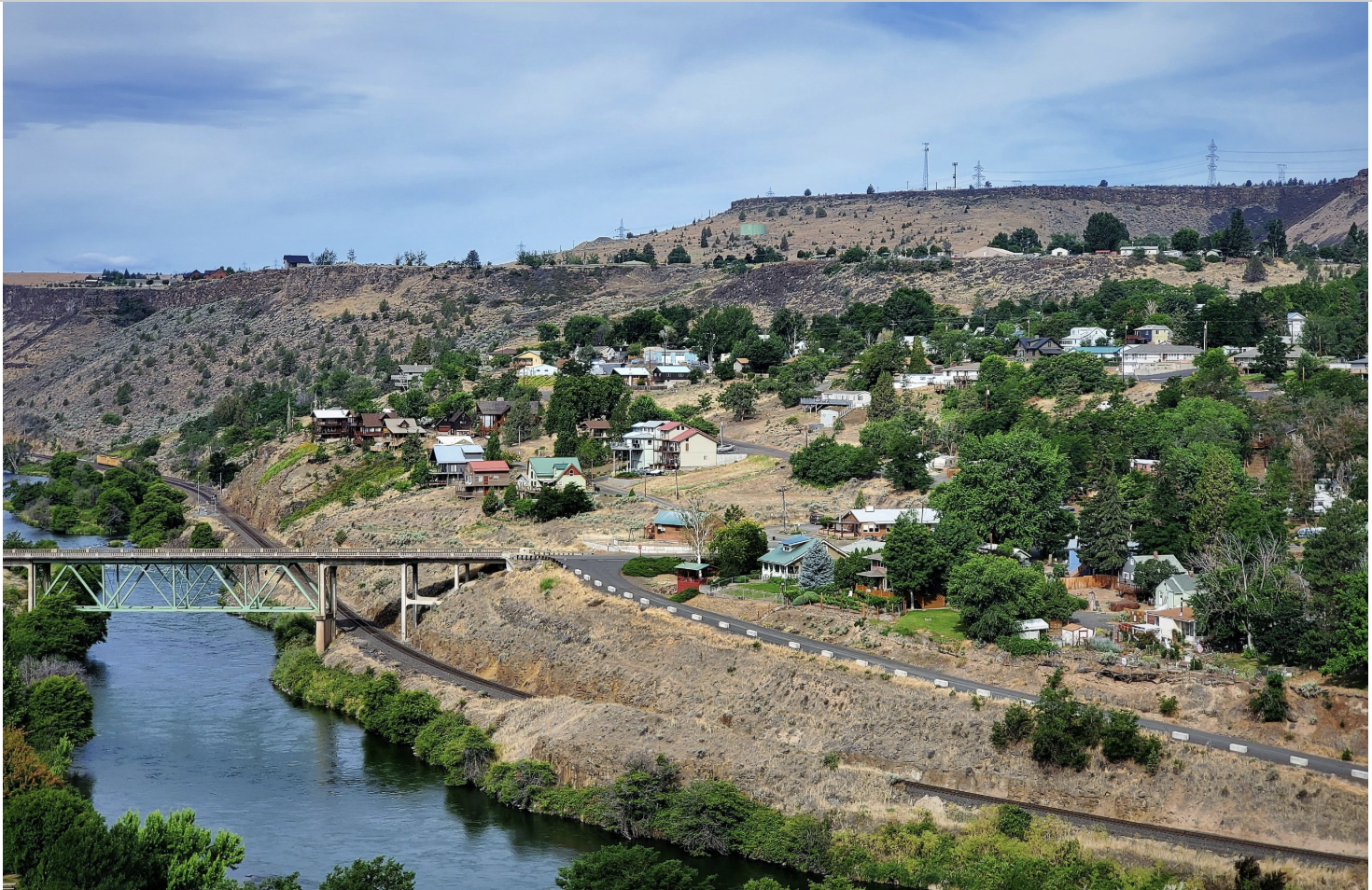
Near Degner Canyon on Trout Creek, a steelhead stronghold. Deschutes River Conservancy’s engagement with landowners helps keep water in Trout Creek, where nearly a third of Deschutes River wild steelhead spawn.
Keep them Wet: Steelhead Benefit from Good Neighbors
By DRC staff
Trout Creek begins in the Ochoco National Forest, and winds northwest through high desert rangeland, passing through Degner Canyon before emptying into the Deschutes River about three and a half miles north of Gateway. It is a small creek by most measures, but in late spring, something outsized happens here. Wild steelhead return from the ocean to spawn, and nearly one-third of all wild steelhead returning to the Deschutes Basin choose this creek. The creek sits downstream of the Pelton Round Butte dam complex, where an active fish passage program aims to restore anadromous fish to the upper basin, making healthy tributary habitat like Trout Creek's an essential part of that larger effort.
Flows during April and May are especially important for steelhead lifecycle stages, and later-season flows through Degner Canyon are critical for supporting viable habitat. Yet the creek's flow duration is highly variable from year to year. Irrigation withdrawals in the upper reach reduce flows at precisely the moment when juvenile steelhead depend on them most, and the creek also naturally loses flow during the summer months, in some places going sub-surface before re-emerging downstream. Pools persist through the summer in some areas, including within Degner Canyon. The result is a dynamic and sometimes fragile system, where the timing and duration of usable habitat can shift considerably depending on the year.
The Deschutes River Conservancy (DRC) has been working to improve conditions in this system. Founded in 1996 by the Confederated Tribes of Warm Springs, environmental, and irrigation interests, DRC's mission is to restore streamflow and improve water quality in the Deschutes Basin through collaborative, consensus-based strategies. On Trout Creek, that work has centered on building relationships with landowners in the upper watershed, the people who hold the water rights and make the decisions that determine how much water stays in the creek each summer.
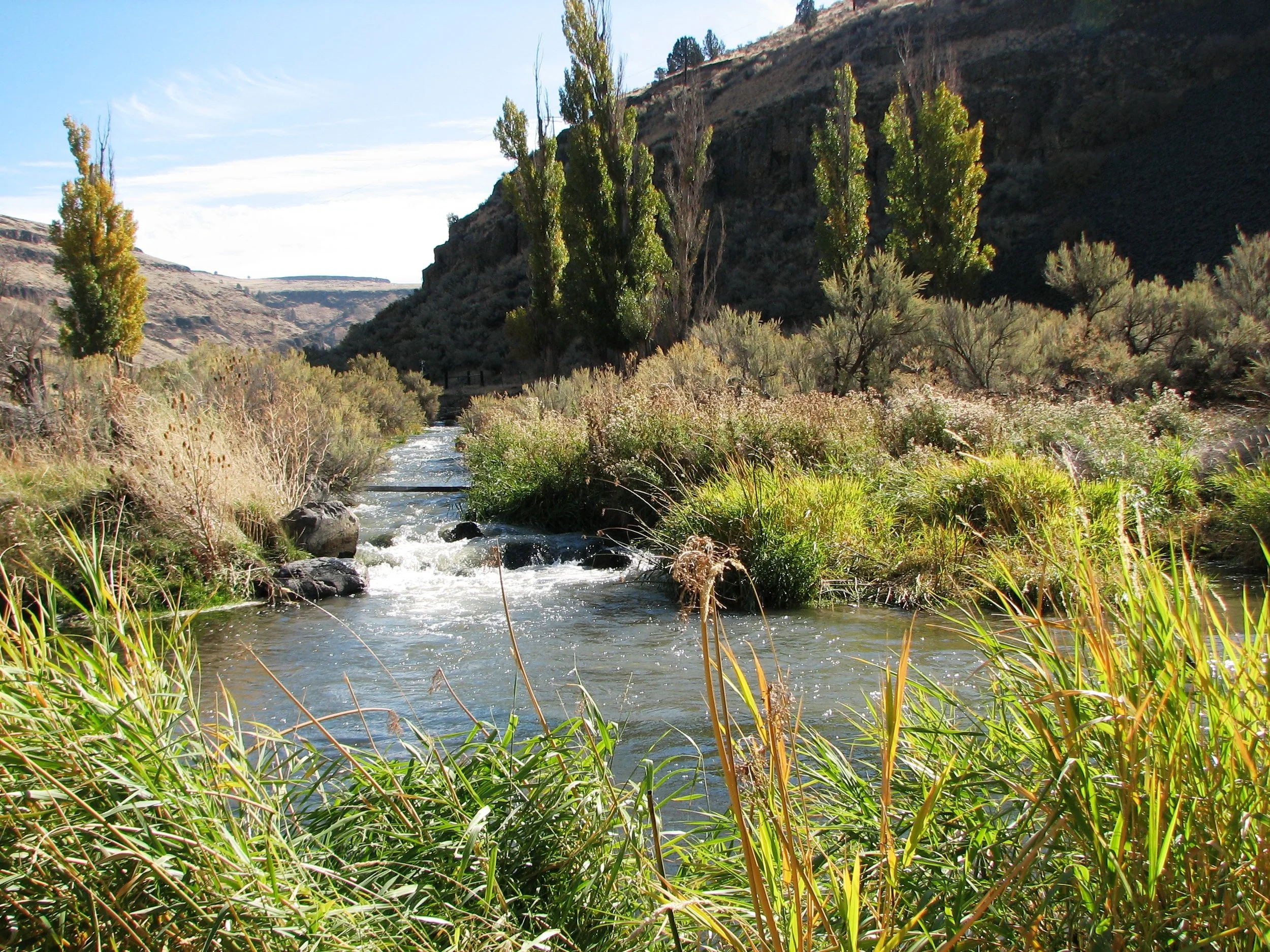
Mud Springs Creek, part of the 51-mile-long Trout Creek watershed.
Building Relationships for Water’s Sake
That relationship-building takes time. It also works. Over six years of consistent engagement with landowners in the upper Trout Creek watershed, DRC has worked to develop agreements that balance in-stream flow needs with ranch operations, adapt approaches as conditions and trust have developed, and build new connections with additional landowners and partners, including Deschutes Land Trust and Portland General Electric, both of which hold or have held water rights in the basin. DRC and Deschutes Land Trust are also working to improve coordination among the conservation groups and agencies active in the watershed.
That kind of progress doesn't come from contracts alone. It reflects trust built over years of showing up, following through, and demonstrating that conservation agreements can work for agricultural landowners, not just around them.
Trout Creek is one of the few Deschutes tributaries where the steelhead population is currently classified as stable, a designation that reflects more than two decades of work by the Jefferson County Soil and Water Conservation District, ODFW, Deschutes Land Trust, Portland General Electric, the DRC, and other partners who have invested in habitat improvements across the watershed. DRC's work to protect and extend in-stream flows is designed to be complementary to that foundation.
More fish returning to a stream that cannot hold them is not a conservation success. It is a vulnerability. DRC's role on Trout Creek is to address one piece of that challenge, keeping water in the creek during the periods when it matters most for fish, while building on the longer arc of restoration work that partners have sustained here for years.
Looking ahead, DRC is expanding its outreach across the watershed. Of the 34 landowners in the Trout Creek basin, nine responded to a recent survey with active engagement, a strong signal of openness to conservation work. Additional agreements with landowners and partners could incrementally increase in-stream flows and extend habitat protection further downstream.
DRC is also working to install and upgrade live flow monitoring equipment on targeted reaches of the creek and coordinate more closely with other organizations that have also monitored temperature and flow on their restoration projects. Real-time data on stream flow and temperature conditions allows DRC to verify that protected flows are reaching the creek when and where they are needed, track ecological response over time, and identify future opportunities for expanding protections in the basin.
The work on Trout Creek is a long game, one measured not in single seasons but in generations of fish and relationships with the people who steward this land. The progress so far reflects what patient, adaptive, and collaborative conservation can produce. The next chapter depends on sustaining that momentum.
More From The Blog
Subscribe the the DRA Newsletter
The Deschutes River Alliance is your focused voice to protect the lower Deschutes River, its cold water flows and the fish and wildlife that are sustained by them. We send regular emails with important data and news about the lower Deschutes River. We will not sell your contact information to others.
How to Support the DRA
Everyone wants clean, healthy water in the Deschutes River. Oregonians cherish our clean and healthy waterways to provide drinking water, wildlife habitat and recreational activities. The lower Deschutes River is a federally designated Wild & Scenic River, and a national treasure. It must be protected for the environmental and economic health of Central Oregon. By working together we can return the lower Deschutes River to full health.