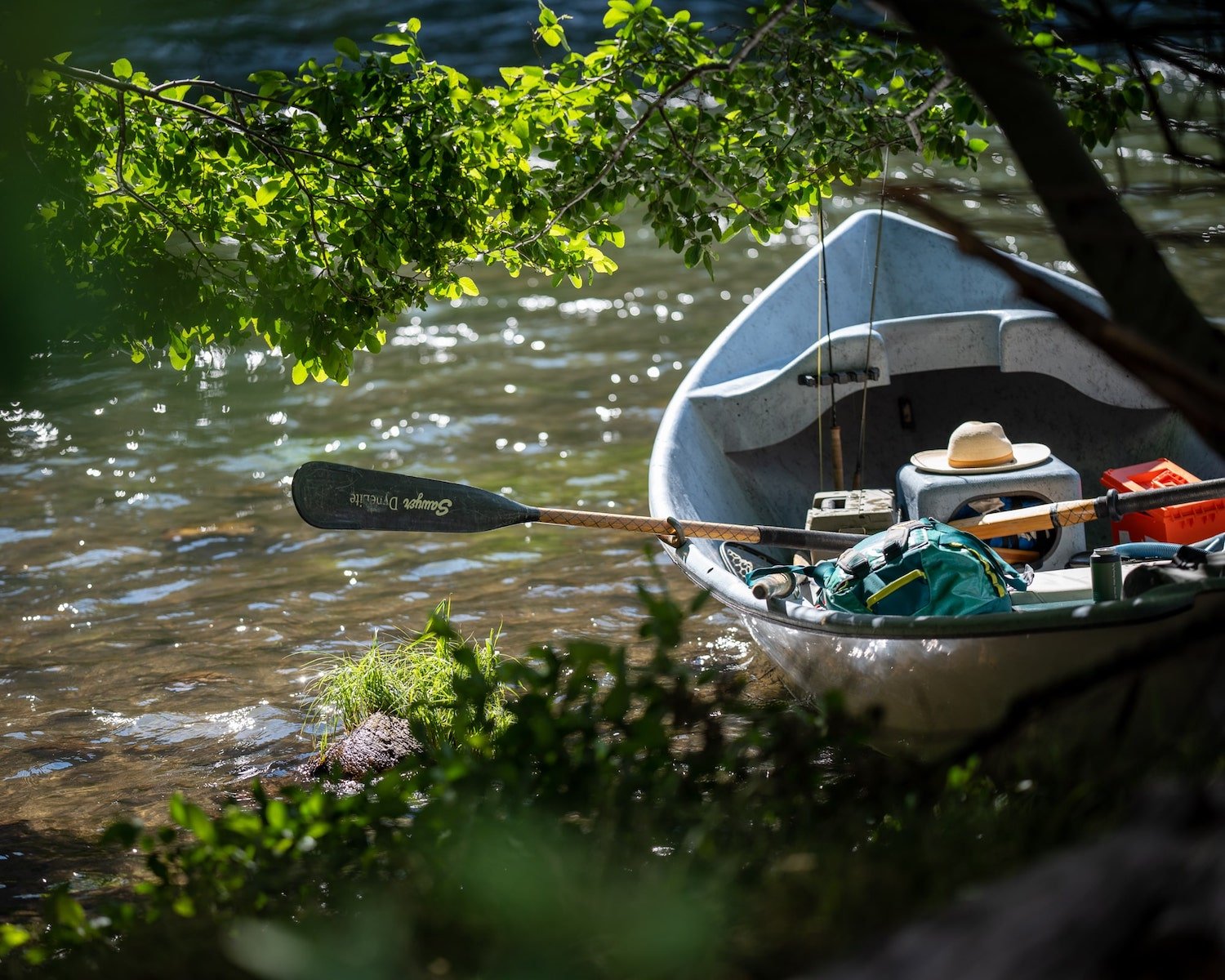
Restoring A Steelhead Sanctuary
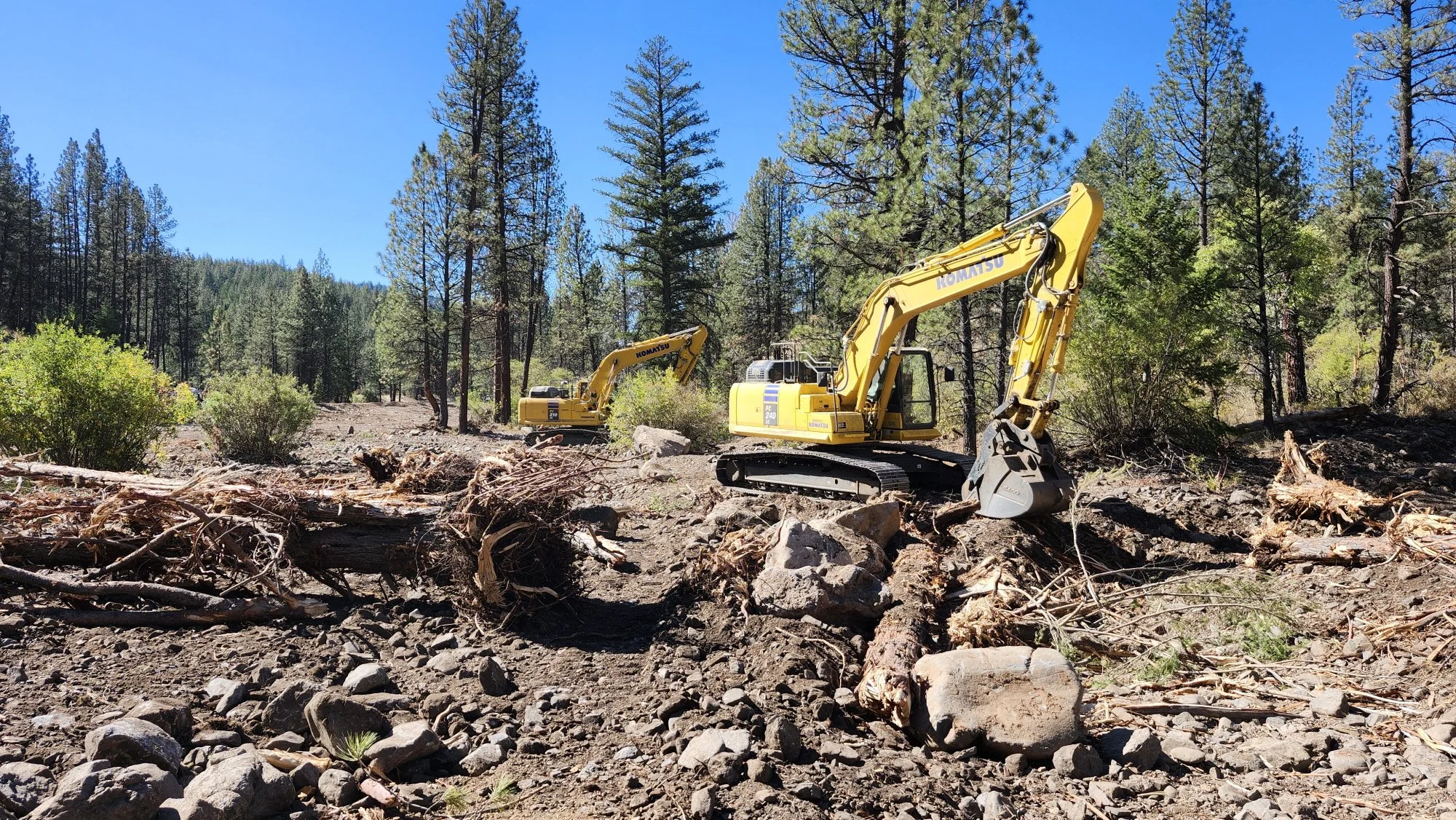
Steelhead habitat, just add water: channel reconstruction on Trout Creek, part of a long-term effort by Jefferson County Soil and Water Conservation District to make a key lower Deschutes tributary better for fish.
All in Good Time
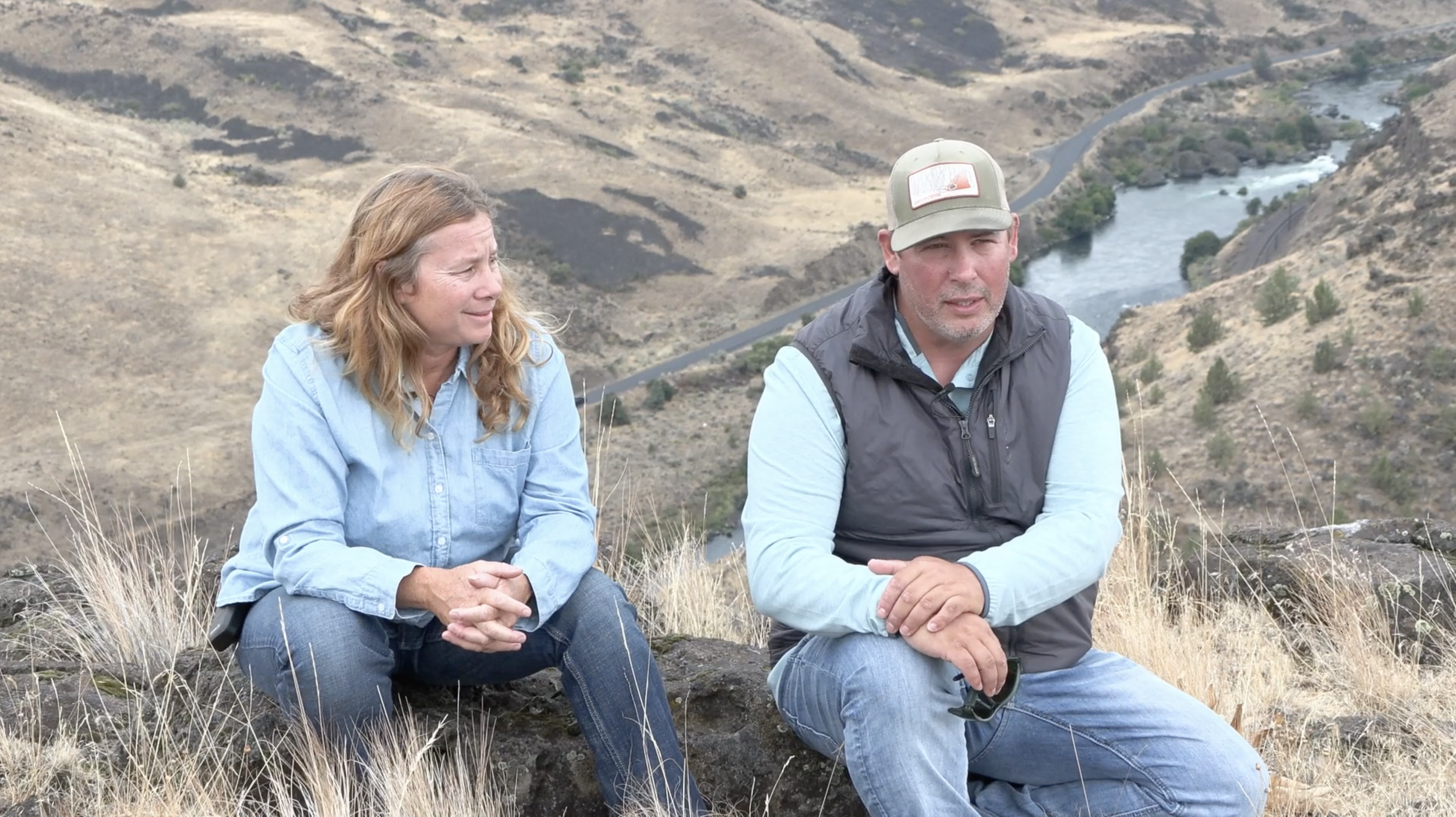
Adam Haarberg would like to travel back in time. “If I could do time travel, I would go back 500 years to see the Deschutes,” says Haarberg. “It would be good if the time machine could fit a drift boat too.” Part of what inspires Haarberg’s sci-fi wishes is a love of steelhead. Once upon a time, he was a guide on the lower Deschutes. But for the past 28 years, Haarberg has been overseeing the Jefferson County Soil and Water Conservation District’s efforts to rehabilitate Trout Creek. Rewinding the clock on this important Deschutes tributary has been a career-long journey.
In the mid-1990’s, the Oregon Department of Fish and Wildlife identified Trout Creek as the most important steelhead spawning and rearing habitat in the lower Deschutes. Then, somewhere between a quarter and a third of all the wild steelhead in the lower river swam into this creek, with its headwaters 50 miles east of the Deschutes in the Ochoco Mountains. “It’s super critical,” says Haarberg.
Trout Creek’s Particular Challenges
It’s also challenging. Fish need water, and the very geomorphology of Trout Creek makes that difficult. Porous volcanic sediment and soil absorb run-off. “Most of the water disappears high up in the basin, up in the forest,” says Haarberg, “and then reappears lower down.” He notes with cautious optimism that steelhead seem to prefer somewhat marginal habitat where, at certain times of the year, it might be hard to believe that any fish would venture to swim there. “It’s kind of their jam,” says Haarberg. His job is to ensure that jam isn’t any more difficult than it needs to be.
Another challenge of working in Trout Creek: it runs mostly through private land. A healthy proportion of Haarberg’s work has gone into establishing solid relationships with many of the 34 landowners whose property lines the creek. “We want them to want the project,” says Haarberg. “It’s years and years of building trust. They see the riparian coming back, they see beaver work, the elk enjoying some new cover, and sometimes they’ll ask if we can do more.”
Early on, the work began with some new ways of conceiving of water allocation. Back then, Haarberg saw lots of makeshift earthen “push-up” dams. “Irrigators would just take a dozer into the creek, pile up dirt and rocks, and irrigate for the season with the pool they created,” Haarberg recalls. The need to deliver water to irrigators while delivering on fish-friendly environs led to the installation of infiltration galleries, an ingenious solution to irrigating from a low-volume creek. It consists of a perforated pipe submerged in the creek, directing water to a sump, from which irrigation water can be pumped. “It’s a free pass for fish,” says Haarberg.
More water and some young trees are also a free pass for beavers, an unforeseen development that was initially greeted with concern. “ We’d finish a project, and come back to check on it, and we’d see they’re out there eating all our expensive trees,” says Haarberg. “But in the long run, it’s a good thing. Their dams create rearing habitat for fish, and they also rehydrate the flood plain.”
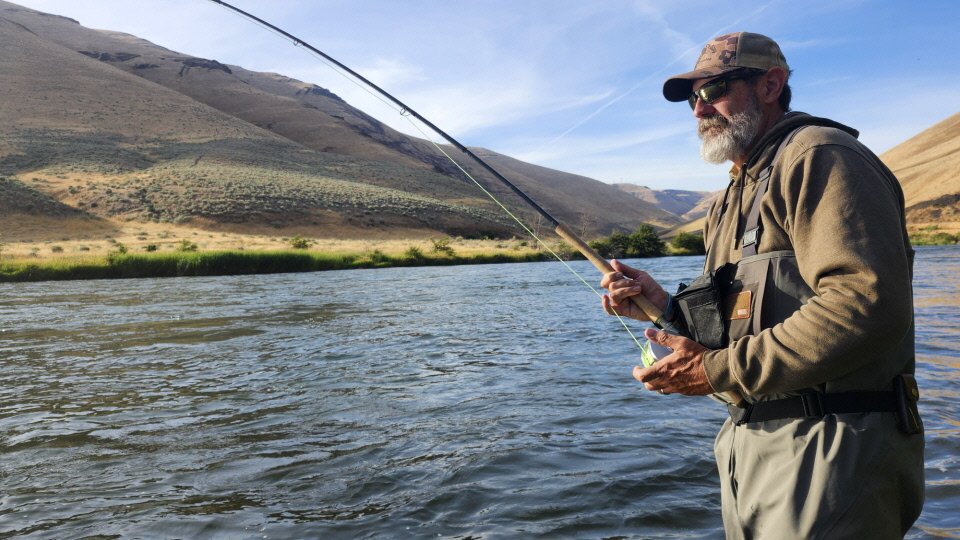
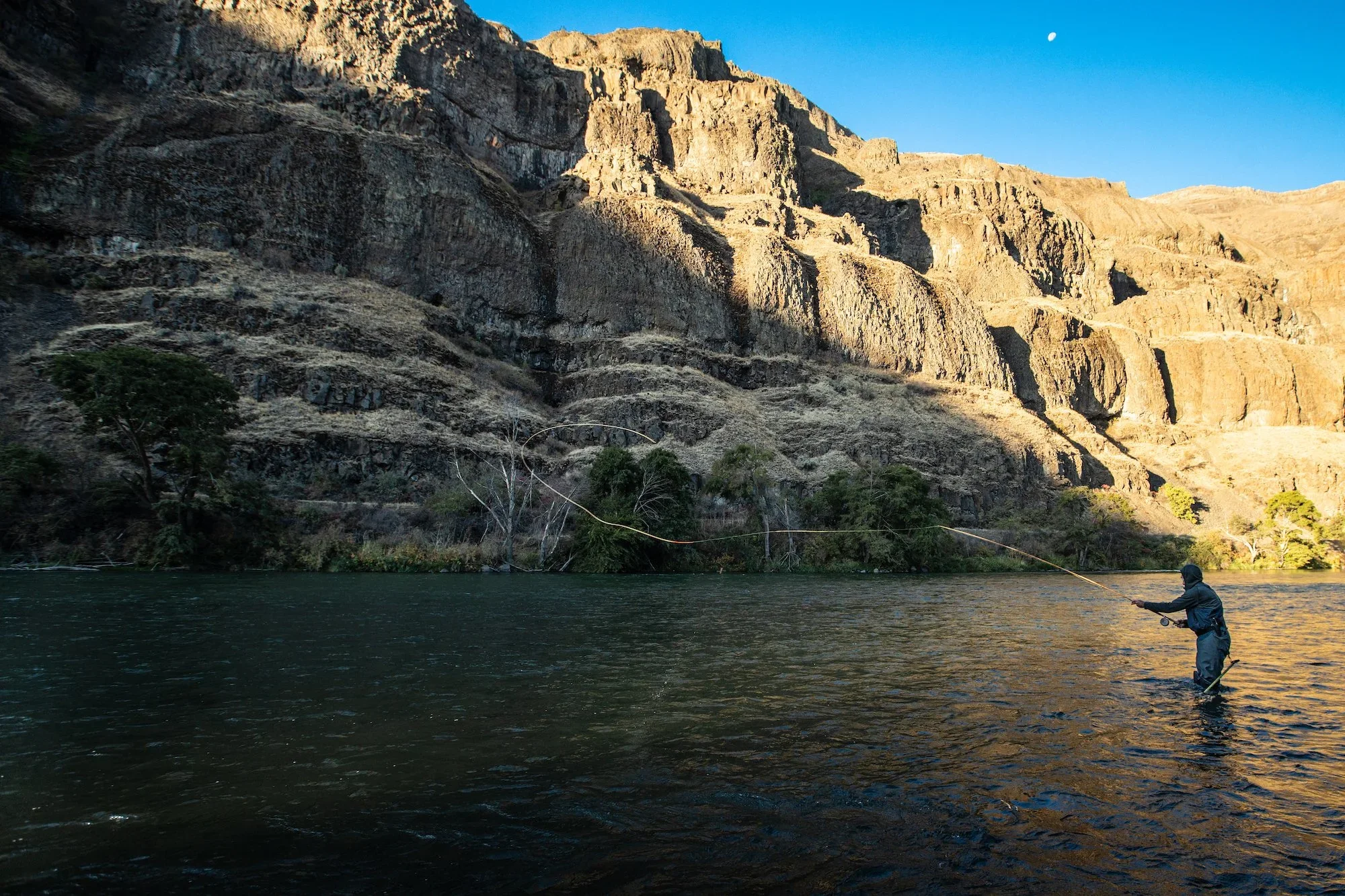
Enjoying the fruits of his labor: Adam Haarberg casts a fly in search of Deschutes steelhead. Some spawn in the creek he’s spent the last three decades restoring.
Some Rain Would Help
This season, Haarberg and his crew have secured funding to reduce the number of junipers over a wide swath of the Trout Creek basin. Junipers are a native species, but their numbers have proliferated, probably due to changes in the natural, historic fire regime. Wildfires are generally put out before they have the chance to thin the junipers. Wildfires that overcome suppression efforts have helped the cause. “I’ve seen little draws that ran dry, and post-fire, there’s a trickle of water in them,” he observes. In the Trout Creek basin, he contends, a little water can go a long way. “Every half-cfs matters,” says Haarberg.
One way to track the effectiveness of watershed restoration work is to witness the return of fish. “It's satisfying to go back and see these little zeros [juvenile steelhead] darting around in a pool,” says Haarberg. Yet the total number of returning steelhead remains something of a vexing challenge. Numbers haven’t approached the bounty of the late 1990’s and early 2000’s. “I’ve seen a 25-inch hen spawning with a seven-inch trout, because that was the only mate available,” he recalls. “ODFW just did a survey of some of our spots, and they found more redds than in the past few years,” Haarberg reports. “So there’s a glimmer of hope.”
Haarberg describes specific places in Trout Creek that buoy his hopes. “We try to focus on the places that fish will get the most out of,” he says. “Degner Canyon is a gem, a rugged corridor, no ag, just a little grazing. “Wild, amazing, the best habitat. And Little Trout Creek. That’s a fish factory.”
Unlike many careers where accomplishments can be hard to quantify, Haarberg can point to 17-18 miles of a vital tributary that look far better than when he started: channel reconstruction completed, riparian areas replanted, and a variety of wildlife taking advantage of new habitat.
His wish-list to help boost his work on Trout Creek? “Rain,” he says. If we could have two or three years of weather like we had in the late 90’s, Trout Creek would be full of fish.” He notes that historically, steelhead were present throughout the Trout Creek basin.
With a little more water, the work of Haarberg and the Jefferson County Soil and Water Conservation District could mean that traveling back in time can be a reality on Trout Creek.
More From The Blog
Subscribe the the DRA Newsletter
The Deschutes River Alliance is your focused voice to protect the lower Deschutes River, its cold water flows and the fish and wildlife that are sustained by them. We send regular emails with important data and news about the lower Deschutes River. We will not sell your contact information to others.
How to Support the DRA
Everyone wants clean, healthy water in the Deschutes River. Oregonians cherish our clean and healthy waterways to provide drinking water, wildlife habitat and recreational activities. The lower Deschutes River is a federally designated Wild & Scenic River, and a national treasure. It must be protected for the environmental and economic health of Central Oregon. By working together we can return the lower Deschutes River to full health.