12th Year of DRA Water Quality Monitoring Underway, Familiar Pattern Already Here
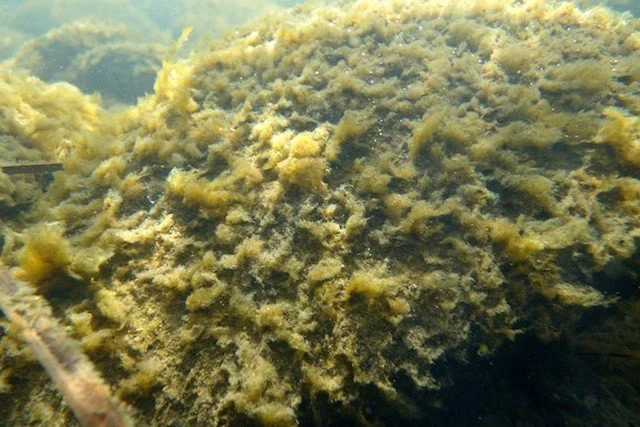
Algae proliferates on rocks in the lower Deschutes. pH levels in excess of state standards, a sign of excessive aquatic plant growth, have been measured every day so far this monitoring season at all three stations.
Monitoring Equipment Yielding Data Since Early April
By Hannah Camel, DRA Science Lead
The 2026 water quality monitoring season is officially underway, with all three monitoring sites up and running as of early April. This marks the 12th year the Deschutes River Alliance has tracked water quality in the lower Deschutes River.
A core part of DRA’s mission is data transparency. We are committed to providing the public with high-quality, accessible, real-time data, because an informed community is one of the most powerful tools in advocating for responsible river management. You can view conditions at all three sites on our WQ Data Live portal, where data updates every 10 minutes.
As in previous years, our monitoring sites near Warm Springs, Maupin, and the mouth of the Deschutes are equipped with YSI data sondes that continuously measure key water quality parameters, including pH, temperature, dissolved oxygen, and turbidity. These sensors transmit data via solar-powered cellular systems, allowing us to track river conditions in real time.
Early Season Observations
With about three weeks of data collected, several patterns are already emerging:
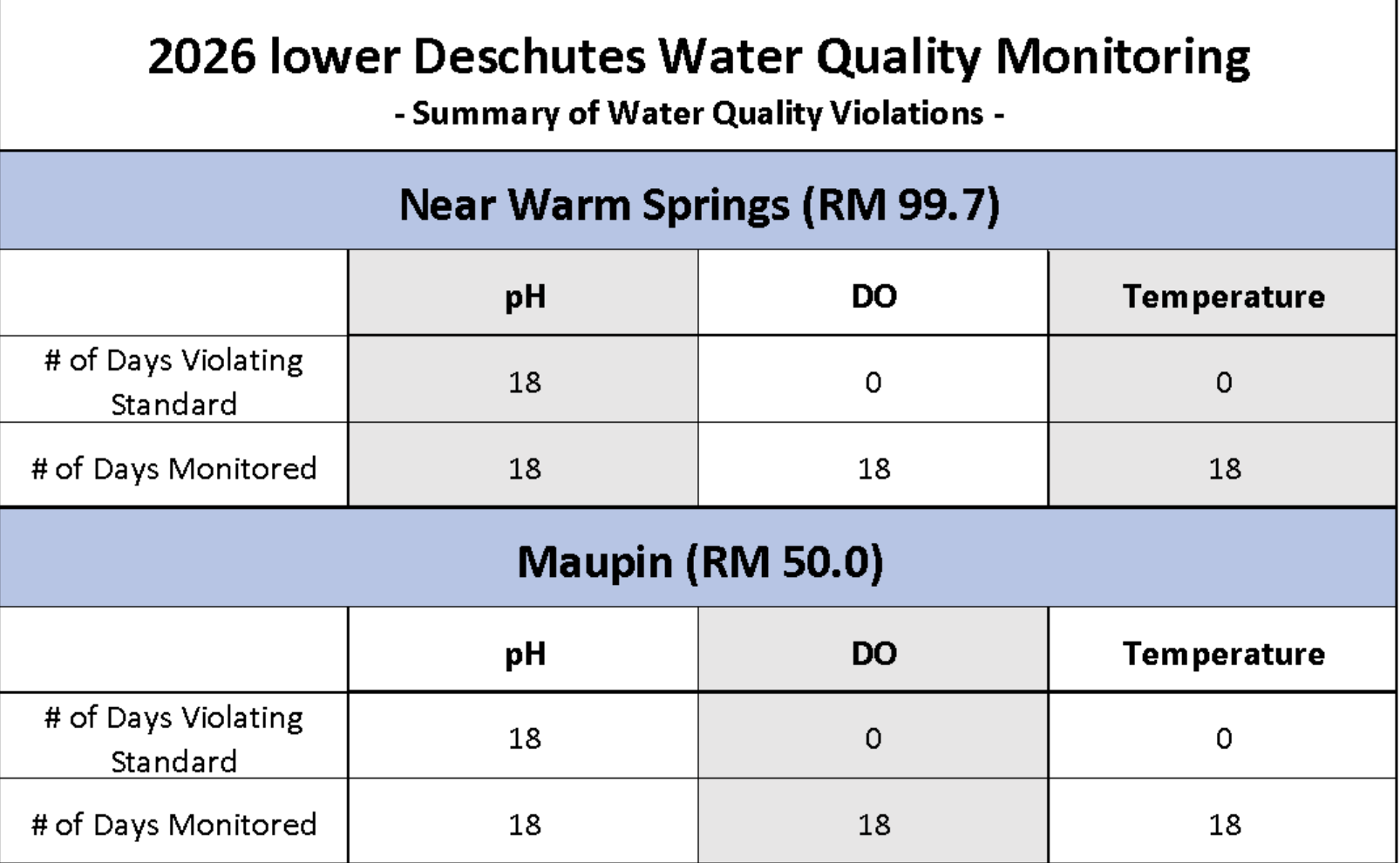
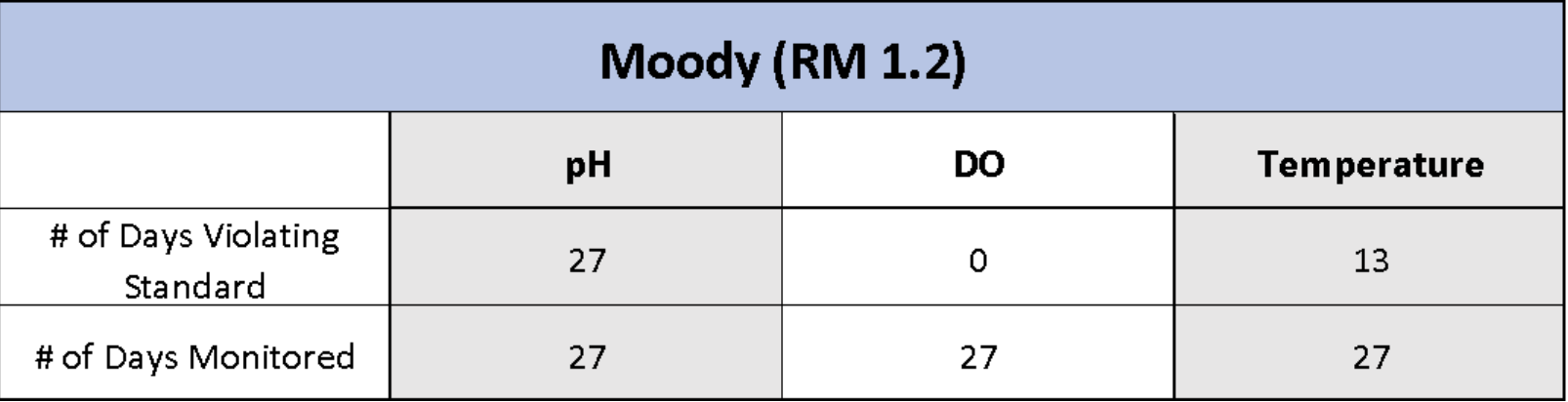
Water quality measurements from all three sites reflect daily violations of the state pH standard. Water temperatures at the Moody site are also in violation of the state standard, 13 of 27 days.
pH
pH remains the most pressing concern so far, with all three sites recording daily exceedances since monitoring began. While the basin standard sets a maximum pH of 8.5, values have consistently exceeded this threshold, with some days reaching as high as 9.2. Although the change from pH 8.5 to 9.2 may appear small, it actually represents a substantial shift in water chemistry. Because pH is measured on a logarithmic scale, this increase means the water is roughly five times more basic.
The exact cause is still unclear. Potential drivers include low flows reducing dilution of upstream inputs, increased algal growth, or a combination of both. Regardless of the cause, elevated pH, especially during spawning season, can stress aquatic organisms, reduce reproductive success, and in severe cases, lead to mortality. Dissolved Oxygen (DO)
Dissolved oxygen levels have remained in compliance across all sites so far. Current standards are more protective during this time of year due to salmon and steelhead spawning, requiring:
A minimum of 9 mg/L at Warm Springs
A minimum of 11.0 mg/L (7-day rolling average minimum) at downstream sites
Maintaining adequate DO levels during this critical window will be important in the coming weeks.
Temperature
Water temperatures are currently within state standards at the Warm Springs and Maupin sites. However, the Moody site has already exceeded the 13°C (55.4°F) spawning standard for a total of 13 days since monitoring began on March 25. These early-season exceedances are concerning, as elevated temperatures during spawning can stress fish and reduce reproductive success. Continued monitoring will be important to track how conditions evolve as air temperatures increase.
Stay Connected
Follow us on social media and sign up for our email list to receive weekly water quality updates throughout the 2026 monitoring season.
In the meantime, explore the data, stay informed, and speak up for the Deschutes River. Protecting this river is a shared responsibility, and together we can ensure it continues to be the blue-ribbon stream so many have come to know and cherish.
Make sure to follow us on social media and sign up for our emails to receive weekly updates on conditions throughout the 2026 monitoring season. Untill then, stay informed, look at the data, and speak up for Deschutes. Let’s keep this river beautiful and healthy now and for forever.
More From The Blog


Subscribe the the DRA Newsletter
The Deschutes River Alliance is your focused voice to protect the lower Deschutes River, its cold water flows and the fish and wildlife that are sustained by them. We send regular emails with important data and news about the lower Deschutes River. We will not sell your contact information to others.
How to Support the DRA
Everyone wants clean, healthy water in the Deschutes River. Oregonians cherish our clean and healthy waterways to provide drinking water, wildlife habitat and recreational activities. The lower Deschutes River is a federally designated Wild & Scenic River, and a national treasure. It must be protected for the environmental and economic health of Central Oregon. By working together we can return the lower Deschutes River to full health.