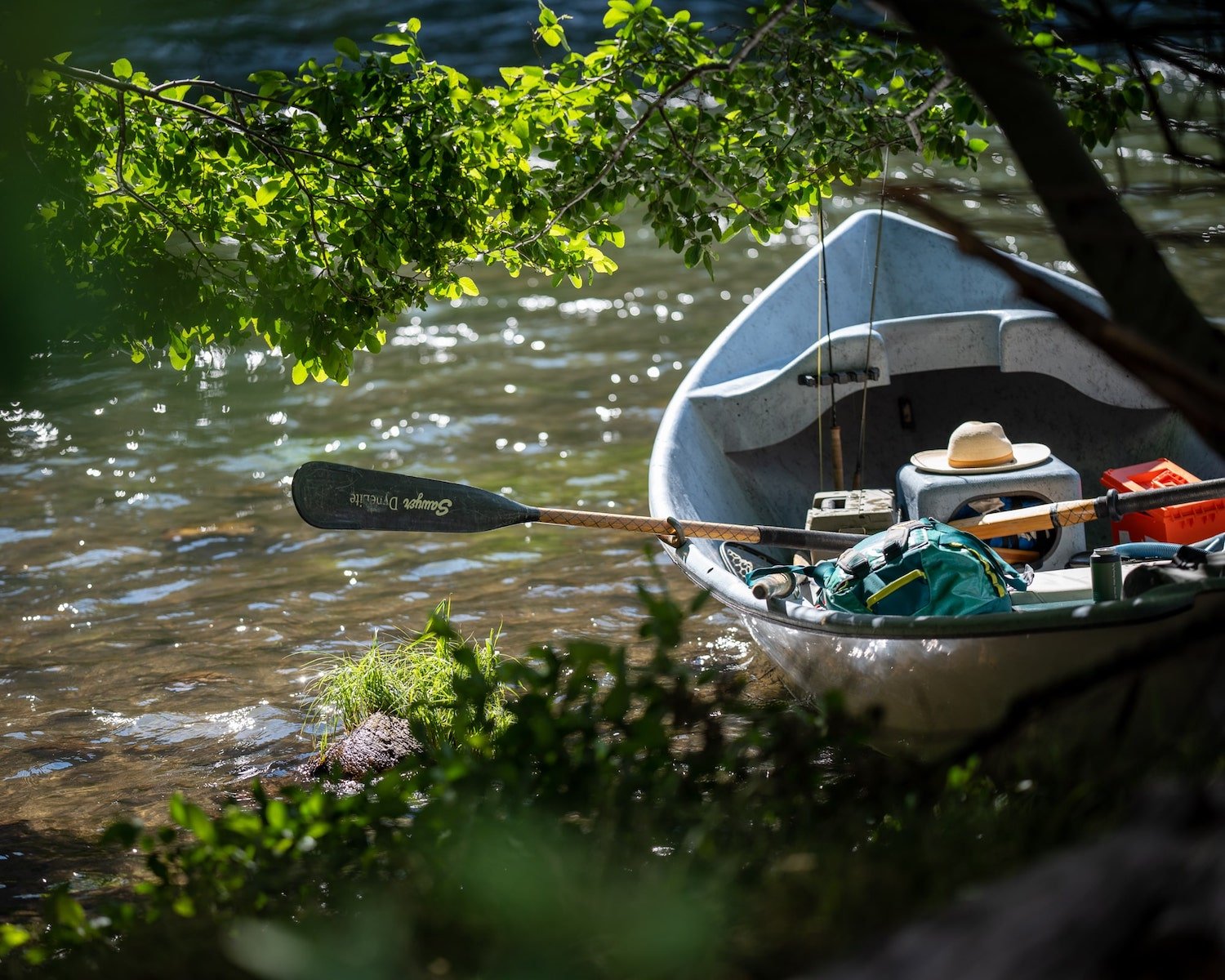
Know Your Deschutes Fish: Spring Chinook
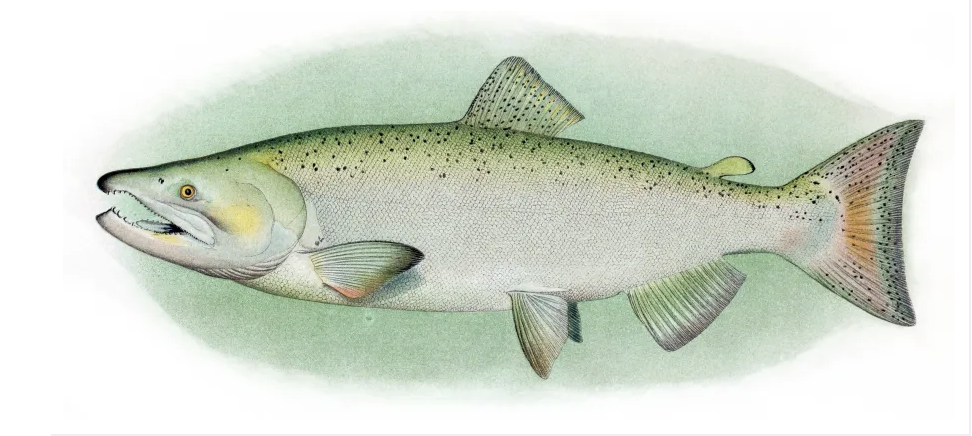
Spring Chinook are still found in the lower Deschutes River, but face an uncertain future.
DRA Fish of the Month: Onchorhynchus Tschawytscha
By Steve Pribyl
Editor’s note: This is the first installment in a series profiling fish found in the lower Deschutes River. According to Oregon State University, at least 26 species have been identified in the LDR. Thanks to DRA Science Team and Board Member Steve Pribyl for spearheading this project.
DRA Fish of the Month
Spring Chinook salmon (Oncorhynchus tshawytscha)
Salmonid type – Salmonidae
Native species
Federal Endangered Species Act – not listed
Oregon Sensitive Species List – Sensitive
Challenging Times for LDR Springers
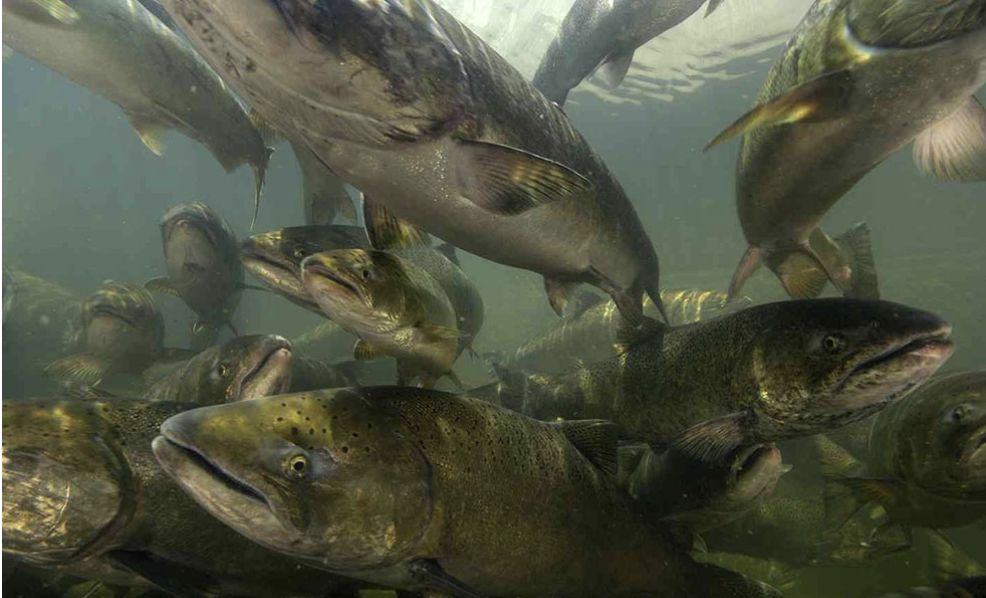
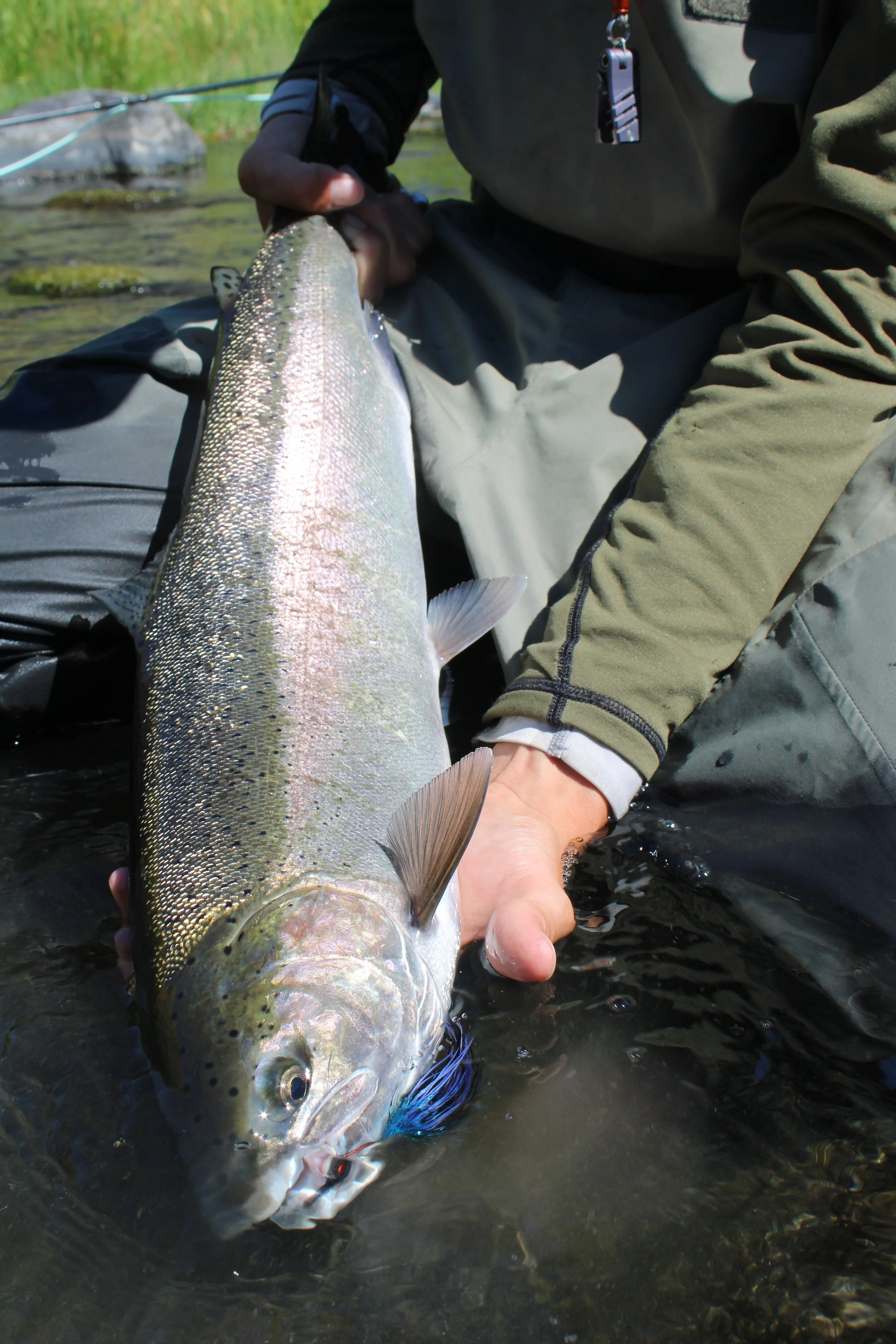
Spring Chinook salmon are native to the Deschutes River. While they share many visual characteristics with the fall-run Chinook in the Deschutes (13 or more individual fin rays in the anal fin, large tri-lobed black spots against a light background, somewhat sickle-shaped tail, spots generally in the upper and lower lobes of the tail, and a black gum line where the teeth emerge) they exhibit a different life history pattern, time of adult return and spawning behavior.
Adult Deschutes Spring Chinook, as their name suggests, migrate through the Columbia and into the lower Deschutes in April through early June each year. They move relatively quickly through the Deschutes to their ultimate spawning destination. Both wild and hatchery-origin spring Chinook swim in the lower Deschutes. Most of the wild adults return to the Warm Springs River and are counted with precision at the US Fish and Wildlife Service Warm Springs National Fish Hatchery (WSNFH) several miles upstream from Kah-Nee-Ta Resort. Shitike Creek, a small tributary on the Confederated Tribes of Warm Springs Reservation that enters the Deschutes at the town of Warm Springs, receives a small number of wild adult returns each year. Returning adults push quickly through their natal tributary into upper reaches with good water quality to hold and mature prior to spawning around September. The Oregon Department of Fish and Wildlife has identified a goal of 1,200 returning adult spring Chinook as counted at the Warm Springs National Fish Hatchery barrier dam as the minimum spawning escapement to maintain a healthy and diverse population. This escapement has not been met since 2015.
Present at Sherar’s Falls for Millennia
Adult spring Chinook in the Deschutes mostly return from the ocean after two years at a total age of four years. They tend to be small, averaging less than 12 pounds with many individuals less than 10 pounds. Angling from a boat is banned in the lower 100 miles of the lower Deschutes and the use of bait is also banned except for a three-mile reach immediately downstream from Sherars Falls. The three-mile reach where bait is allowed has historically been a popular and productive spring chinook fishery, where several thousand anglers would expend up to 50,000 hours during the season to harvest up to one thousand spring chinook. But non-tribal hook and line spring chinook fishing has only been allowed two of the past ten years in recognition of low returns.
Harvest of spring Chinook by members of the Confederated Tribes of Warm Springs has taken place immediately downstream from Sherars Falls for millennia. Tribal fishers continue to harvest spring chinook from platforms with dipnets there. Season length, allowable gear and subsequent harvest vary by Tribal rule.
Juvenile spring Chinook have a different life history strategy than fall Chinook and generally utilize a year-long migration to the ocean. Spring chinook juveniles rear in their natal tributary for more than one year prior to the onset of smoltation and ocean migration. This contrasts with fall Chinook, which as juveniles migrate to the ocean after only several months of freshwater residency.
Post-Tower Declining Water Quality, Fewer Springers
Fall Chinook are predominately wild, with the exception of a few hatchery strays. By contrast, spring Chinook in the Deschutes are both hatchery and wild strains.
Round Butte Hatchery, located immediately downstream from Round Butte Dam, is funded by Portland General Electric, and operated by the Oregon Department of Fish and Wildlife. This hatchery was built to produce both spring Chinook and summer steelhead to mitigate losses of these two species from the construction and operation of the Pelton-Round Butte Hydroelectric complex. Round Butte Hatchery releases about 360,000 spring Chinook smolts annually to meet the agreed-on mitigation of 1,300 adult spring Chinook returning to the Pelton Trap annually. That number has been achieved only sporadically in the last 10 years.
WSNFH, owned and operated by the US Fish and Wildlife Service, produces up to 750,000 spring Chinook smolts for release into the lower Deschutes subbasin strictly for harvest augmentation. A variety of water quality and quantity issues at that hatchery have severely constrained juvenile production through time. Hatchery origin adult returns have been well below goals for years.
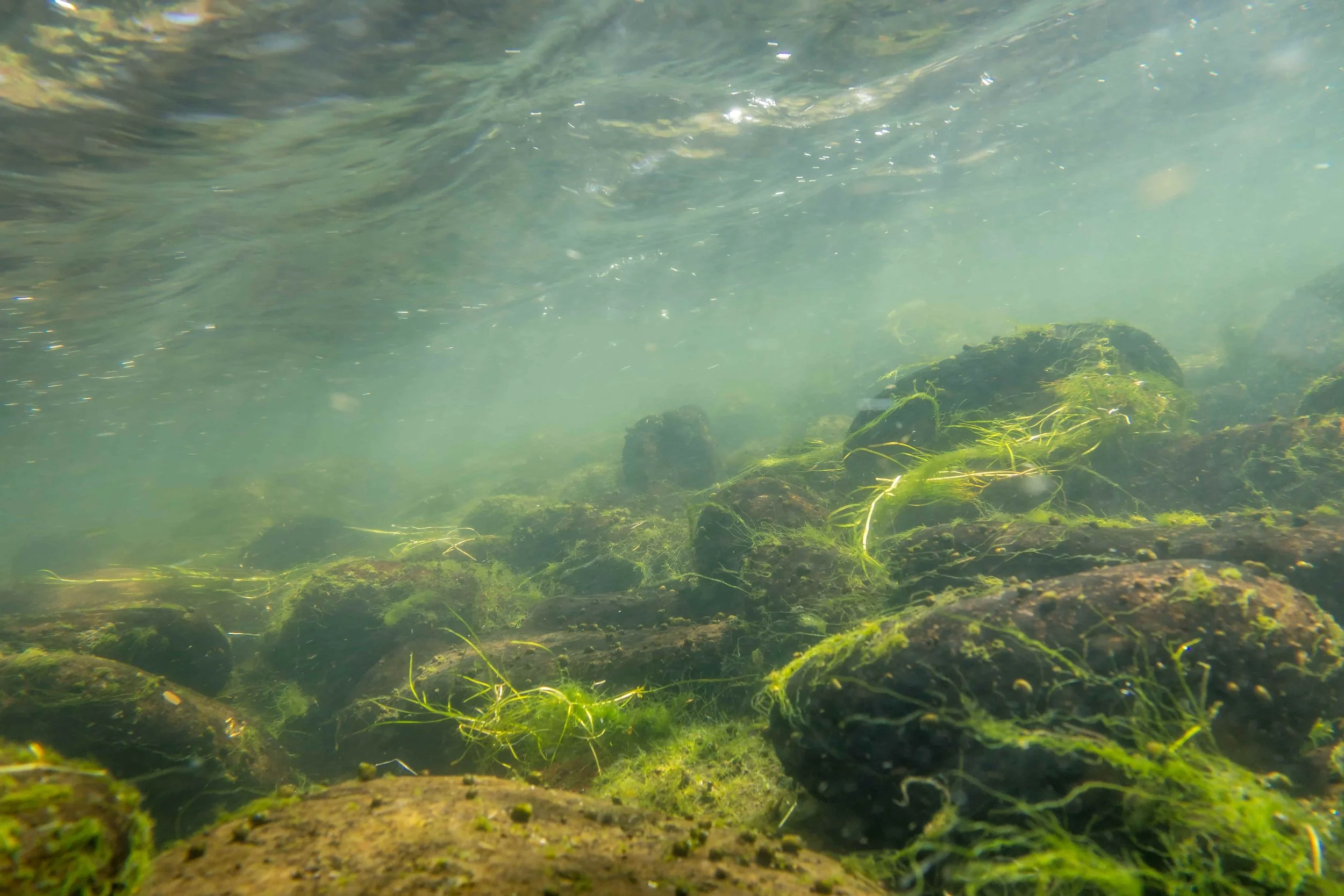
The Deschutes River Alliance (DRA) believes that the available data support the contention that operation of the Selective Water Withdrawal Tower (SWW) in Lake Billly Chinook has had an ongoing negative effect on lower Deschutes River wild spring Chinook. Increased nutrients transitioned into the lower Deschutes from SWW operation, in concert with increased water temperatures from SWW operation, have resulted in well-documented increases in a non-insect taxa that is the host organism for a fish parasite, Ceratonova shasta, that is known to cause mortality in both juvenile and adult spring Chinook. DRA further believes that maximum bottom water release through the SWW during all but the spring season could alleviate this nutrient load and temperature issue, much to the benefit of spring Chinook in the lower Deschutes.
More From The Blog
Subscribe the the DRA Newsletter
The Deschutes River Alliance is your focused voice to protect the lower Deschutes River, its cold water flows and the fish and wildlife that are sustained by them. We send regular emails with important data and news about the lower Deschutes River. We will not sell your contact information to others.
How to Support the DRA
Everyone wants clean, healthy water in the Deschutes River. Oregonians cherish our clean and healthy waterways to provide drinking water, wildlife habitat and recreational activities. The lower Deschutes River is a federally designated Wild & Scenic River, and a national treasure. It must be protected for the environmental and economic health of Central Oregon. By working together we can return the lower Deschutes River to full health.