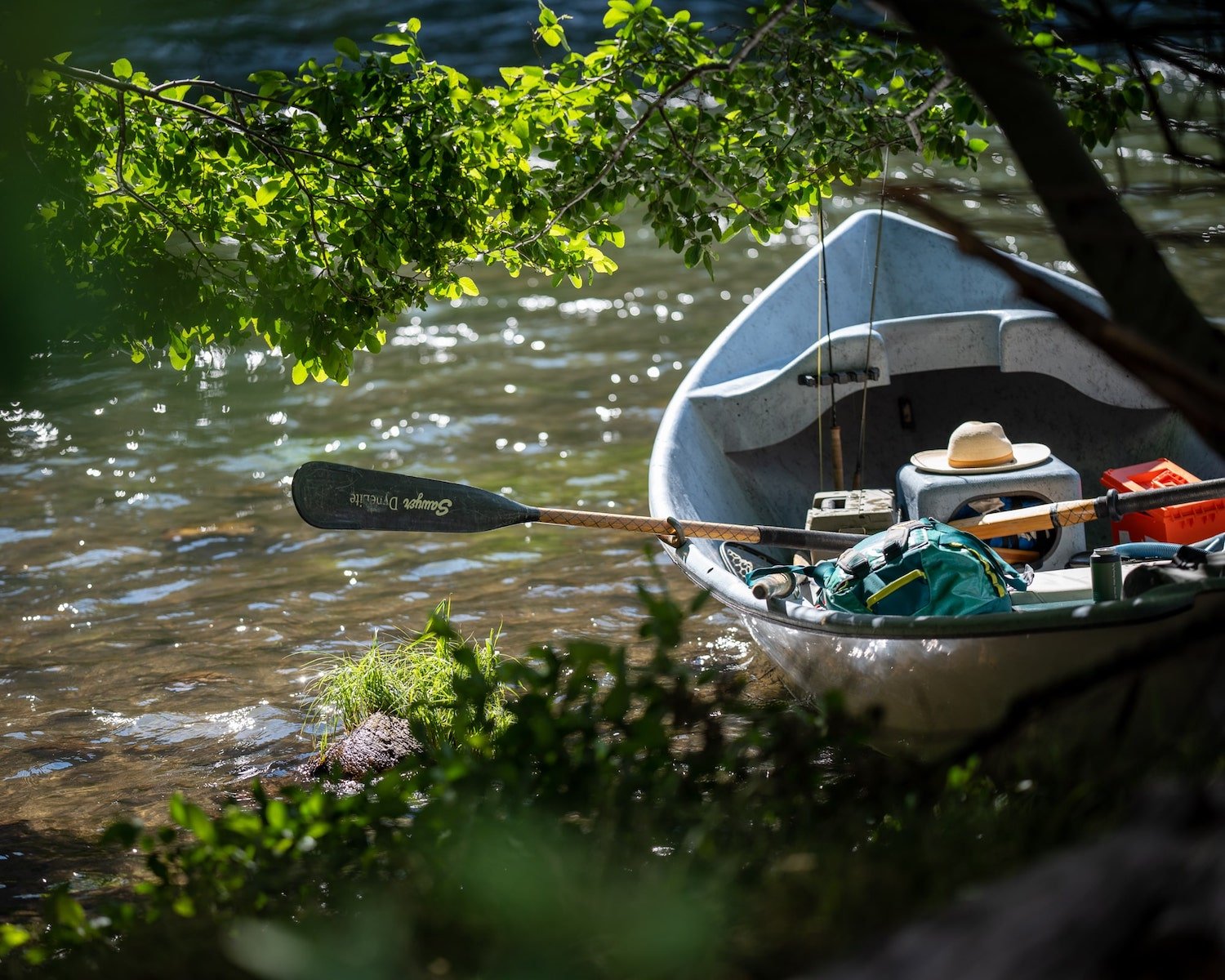
Bug-of-the Month: Saddle Case Caddis
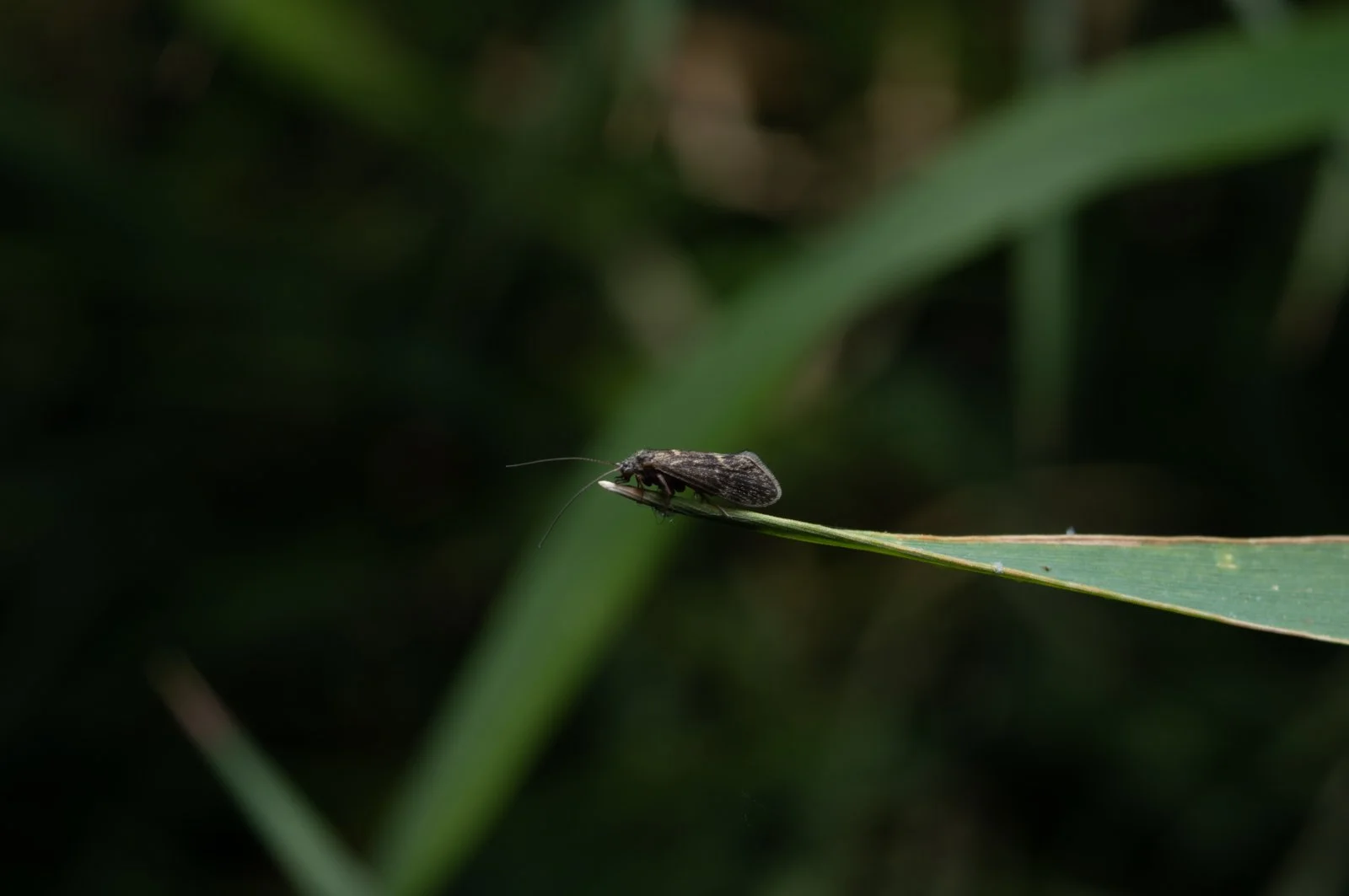
Saddle-case caddis are small, but to trout, tasty.
Small in Stature, Big in Bug Importance
By Rick Hafele
Bug of the Month: Saddle-case Caddis (Family Glossosomatidae, Genus, Glossosoma)
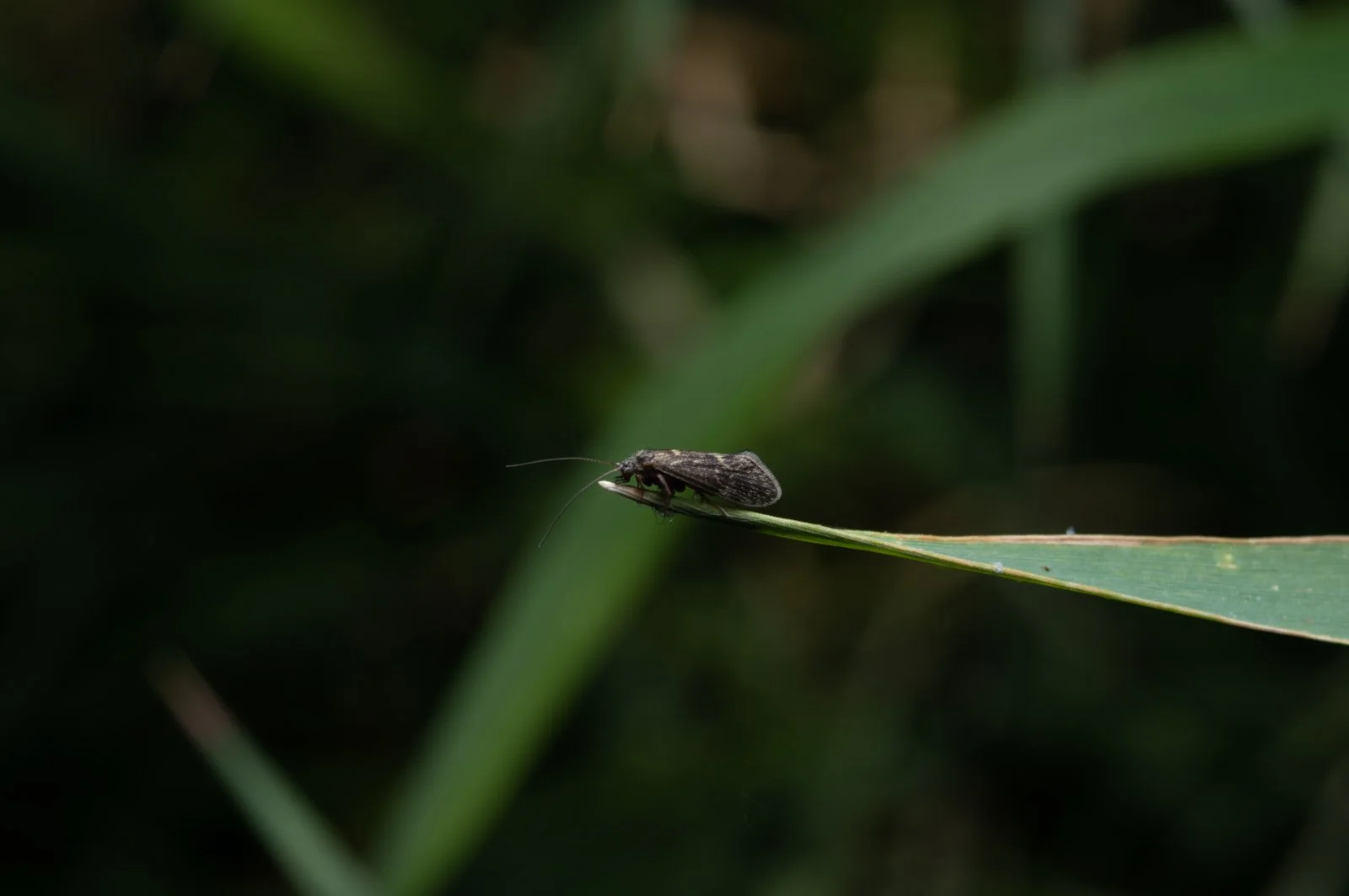
Welcome to another “Bug of the Month.” For September, we’re taking a deep dive into an insect small in stature but big in importance. Like the often abundant and important net-spinning caddis discussed in the July bug blog, this caddisfly is one of the most common aquatic insects found in the lower Deschutes. And come fall, when there are few mayflies and virtually no stoneflies on the water, this caddisfly can show up in large numbers. The problem is that it flies completely under the radar of many, if not most, anglers. This is the saddle-case caddis of the genus Glossosoma (adult Glossosoma are commonly called the little brown short-horned sedge).
Glossosoma is one of six genera in the family Glossosomatidae, and biologically is closely related to green rock worm caddisflies, family Rhyacophilidae. Both families are considered “primitive caddisflies” because they don’t build nice tubular cases like the majority of caddisflies. Green rock worm larvae build no cases and thus are completely free living during the larval stage. Glossosoma larvae build a case in their later instars (Instar is the period of growth between larval molts. Most caddis larvae go through five instars before becoming pupae.), but the case is a dome shaped turtle-shell like case made of sand and small gravel that covers both their head and rear ends completely concealing the larvae underneath. Across the underside of the case is a small saddle-like strap of silk, hence the common name saddle-case caddis. Each dome-shaped case is about the size of your little fingernail. While hidden under their case, the larvae crawl across the surface of cobble and and small boulder-size rocks in medium to fast riffles, scraping off diatoms and algae from the rock’s surface as they go.
A Creature of Western Trout Streams
Glossosoma is primarily a caddisfly of western trout streams. Of the 26 known species, 23 occur from the Rockies west to the Pacific, while only three species occur in midwestern and eastern streams. At least 14 species are known to occur in Oregon, and given that, even taxonomists have a hard time telling these species apart—it is not clear which species are found in the lower Deschutes. Whether or not anyone knows what specific scientific name to call them, this genus is a regular inhabitant of riffles throughout the entire lower 100 miles of the river.
When the larvae have completed their fifth and final instar, they firmly attach the case to the substrate and transition into the pupal stage by first covering themselves with a firm but permeable layer of fine silk. This silken cocoon is another primitive trait of saddle-case and green rock worm caddis that other caddisflies have left behind. While inside the cocoon the larvae molts into a pupa that remains safely sealed and hidden under its case for three to four weeks. When finally mature the pupa (now called a pharate adult, meaning the fully formed adult is hidden inside the pupal exoskeleton) cuts through the cocoon and case and swims to the surface where the adult quickly escapes from the pupal exoskeleton and flies off. It should be noted that the pupae are very good swimmers and their ascent to the surface is quick, but not so quick that trout don’t selectively feed on them. Also, while adults quickly escape from the pupal exoskeleton, they will often run rapidly across the surface trying to reach shoreline rocks or vegetation. And yes, trout don’t ignore such suicidal behavior.
Adults that make it safely off the water mate on stream-side foliage and prepare for the final act of their life cycle, laying eggs. This also occurs with a bit of a behavioral twist that creates opportunity for trout and anglers. When the females return to the stream to lay their eggs, they don’t just land on the surface to release them. Instead, they pierce the surface film and swim down to the steam bottom where they place their eggs on bottom rocks. After all eggs are laid, they let go and drift back towards the surface. Trout intercept them on both their way down and way back up.
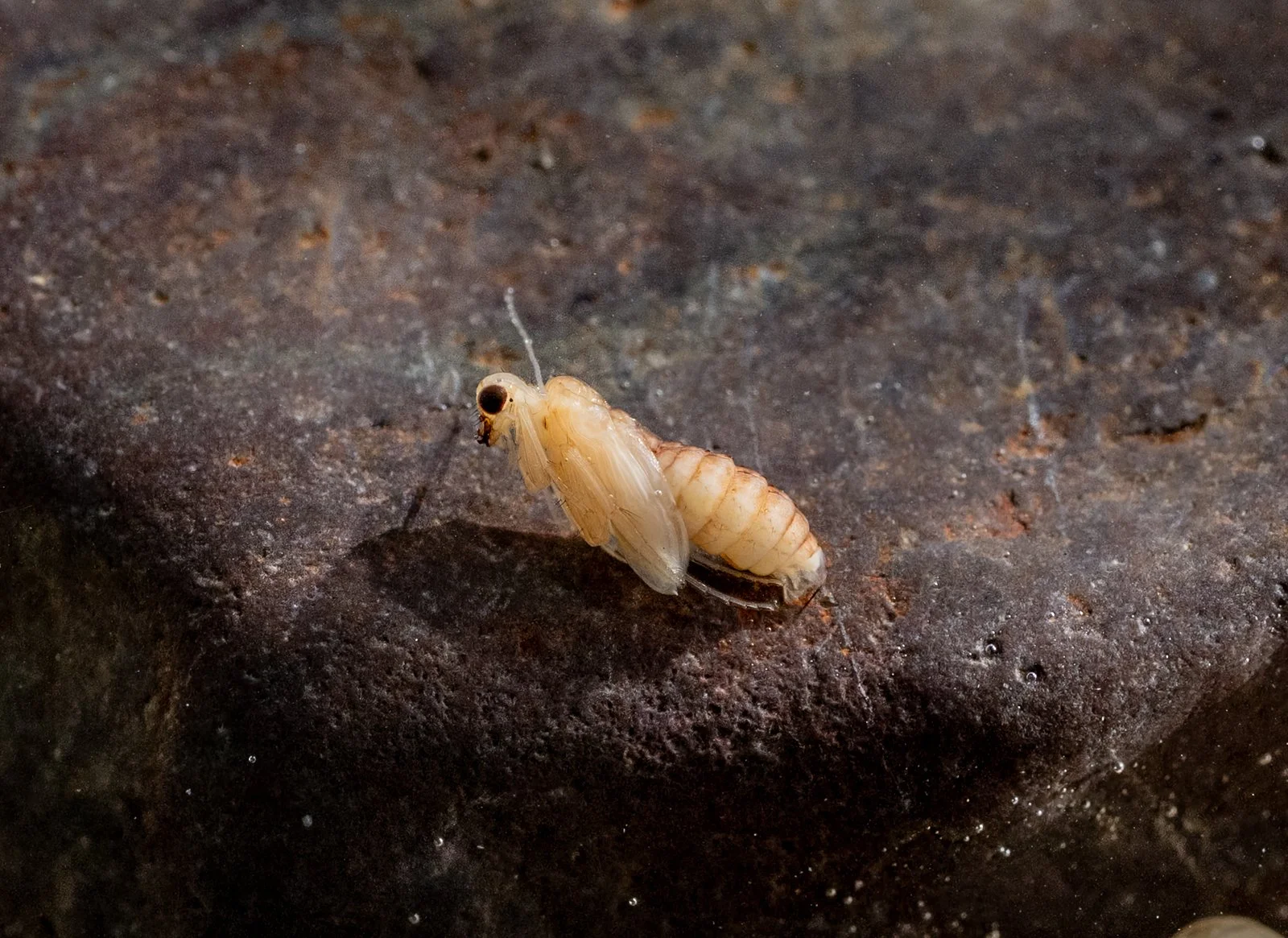
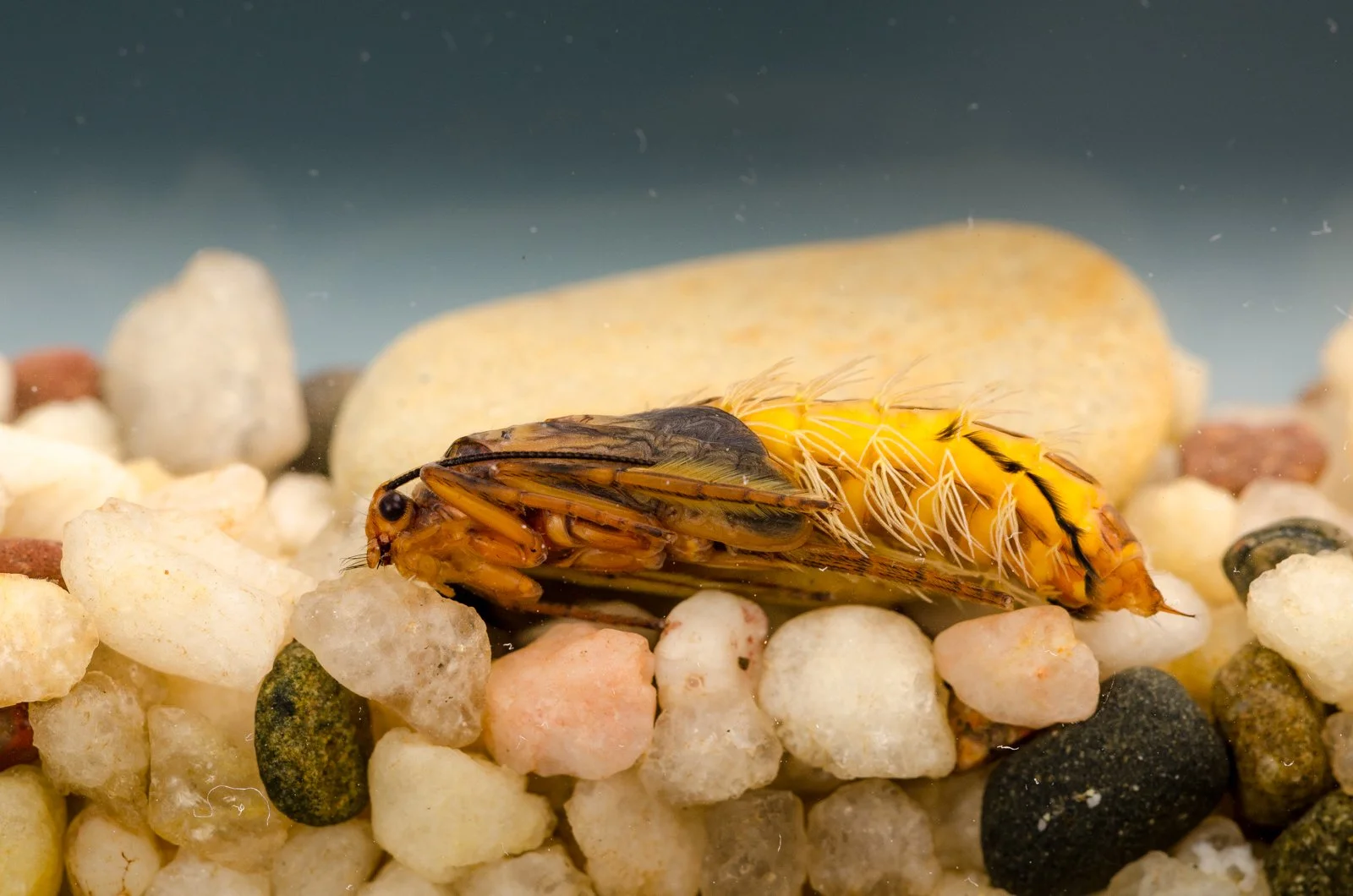
Apt pupa: removed from its silken cocoon; this one is immature. A mature pupa will have dark gray to brown wing pads.
The Case for Glossosoma: Get an Imitation in Your Fly Box
For anglers, the importance of Glossosoma lies in two things: one, their behavior as larvae, pupae and adults that make them readily available to trout, and two, their common occurrence and frequent abundance. The one, if only, downside is their size: they are small, typically maxing out as a size 18 and often closer to a size 20. This is why many anglers fail to notice them or see that trout are eating them. If these guys a were a size 10, they would generate more excitement and press than the famous salmonfly hatch.
As mentioned, all three life stages can be worth imitating. Of the three, the larvae are of least importance. However, at certain times during their development they leave their cases en masse to build new bigger ones. This creates an easy meal for trout, and if you know it’s happening, it’s a great time to drift a small sized 18 cream colored nymph pattern through good trout lies in riffle areas. The problem is knowing when it’s happening. The fall back is to just try fishing that little cream nymph pattern at times when other nymphs don’t seem to be working. Who knows, you might just hit pay dirt.
Pupa patterns, on the other hand, should be in everyone’s fly box. From early September through October look closely on streamside vegetation for the small dark colored adults. Maybe even shake some tree branches to see what flies out. If you see good numbers of the adults on shore, but not over the water, put on a pupa pattern. Something simple and sparse like a size 18 cream colored soft hackle or other favorite pupa pattern. Fish it in riffles with a down and across presentation and don’t worry about a little drag, these pupa swim pretty darn fast, so a moving fly can be better than one dead drifted. Adults clinging to streamside grasses indicates it might be a good time to fish a pupa pattern or dry fly on or below the surface.
For adults, the approach is much the same. When emerging, they will often run across the surface some distance so a small, dark grey dry caddis fly pattern skated on the surface may again be better than one dead drifted. And when females are laying eggs, usually in the late afternoon or evening, let your dry fly sink a few inches to a foot or more and once again induce a little movement.
How changes in water quality in the lower Deschutes have affected Glossosoma is difficult to pin down, largely because their abundance in benthic samples has varied widely from year to year and site to site, ranging from zero to just over 500 per square meter. However, because the larva’s prime food is diatoms growing on the surface of clean rocks, the increase in nuisance algae covering the substrate in many shallow riffle areas has diminished some of the habitat they prefer. Nonetheless, their hatches still occur and learning to see this small caddis and have the flies to imitate it can open up some great fishing opportunities over the next couple of months.
More From The Blog

Subscribe the the DRA Newsletter
The Deschutes River Alliance is your focused voice to protect the lower Deschutes River, its cold water flows and the fish and wildlife that are sustained by them. We send regular emails with important data and news about the lower Deschutes River. We will not sell your contact information to others.
How to Support the DRA
Everyone wants clean, healthy water in the Deschutes River. Oregonians cherish our clean and healthy waterways to provide drinking water, wildlife habitat and recreational activities. The lower Deschutes River is a federally designated Wild & Scenic River, and a national treasure. It must be protected for the environmental and economic health of Central Oregon. By working together we can return the lower Deschutes River to full health.