Searching for Consistency in Steelhead Regulations
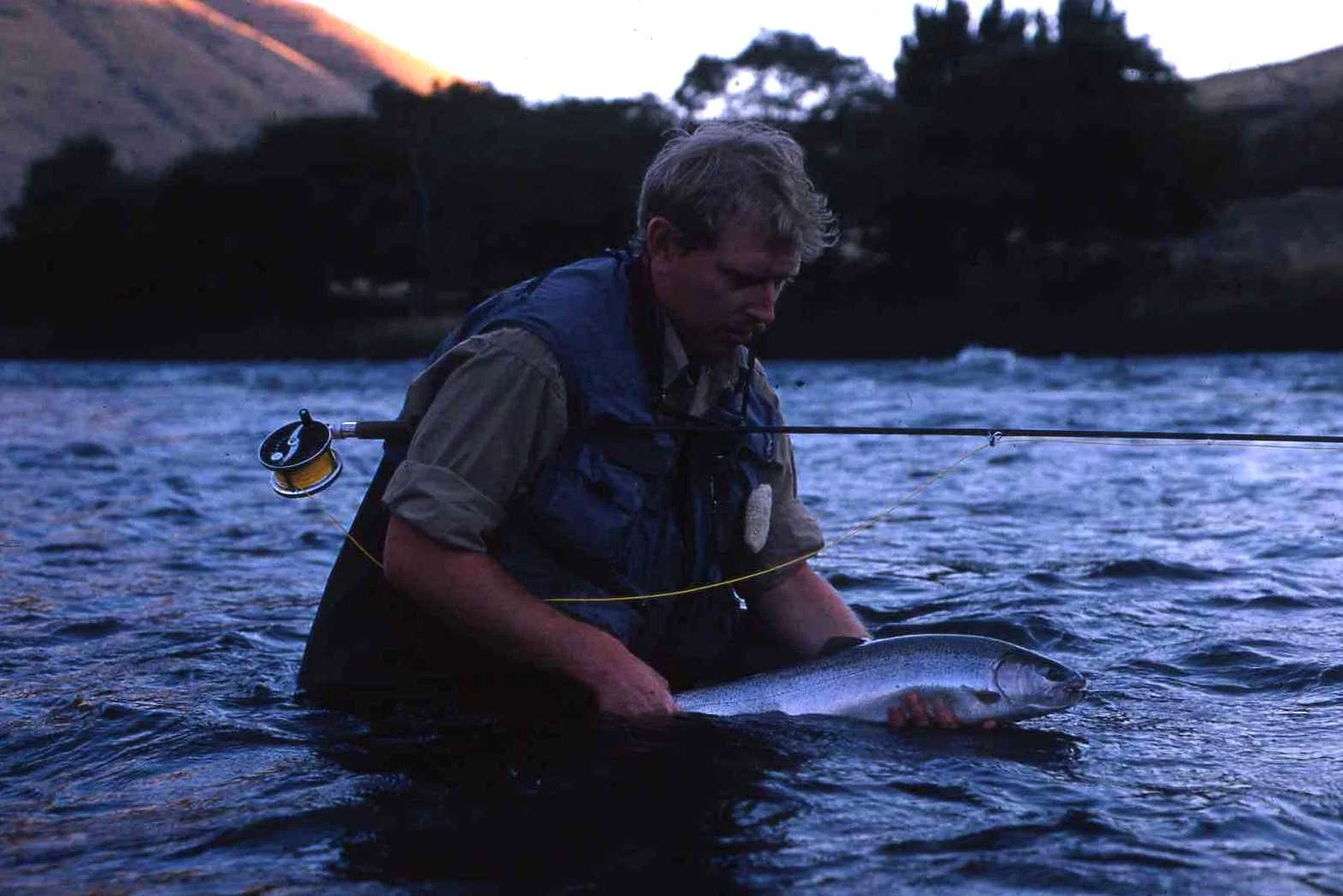
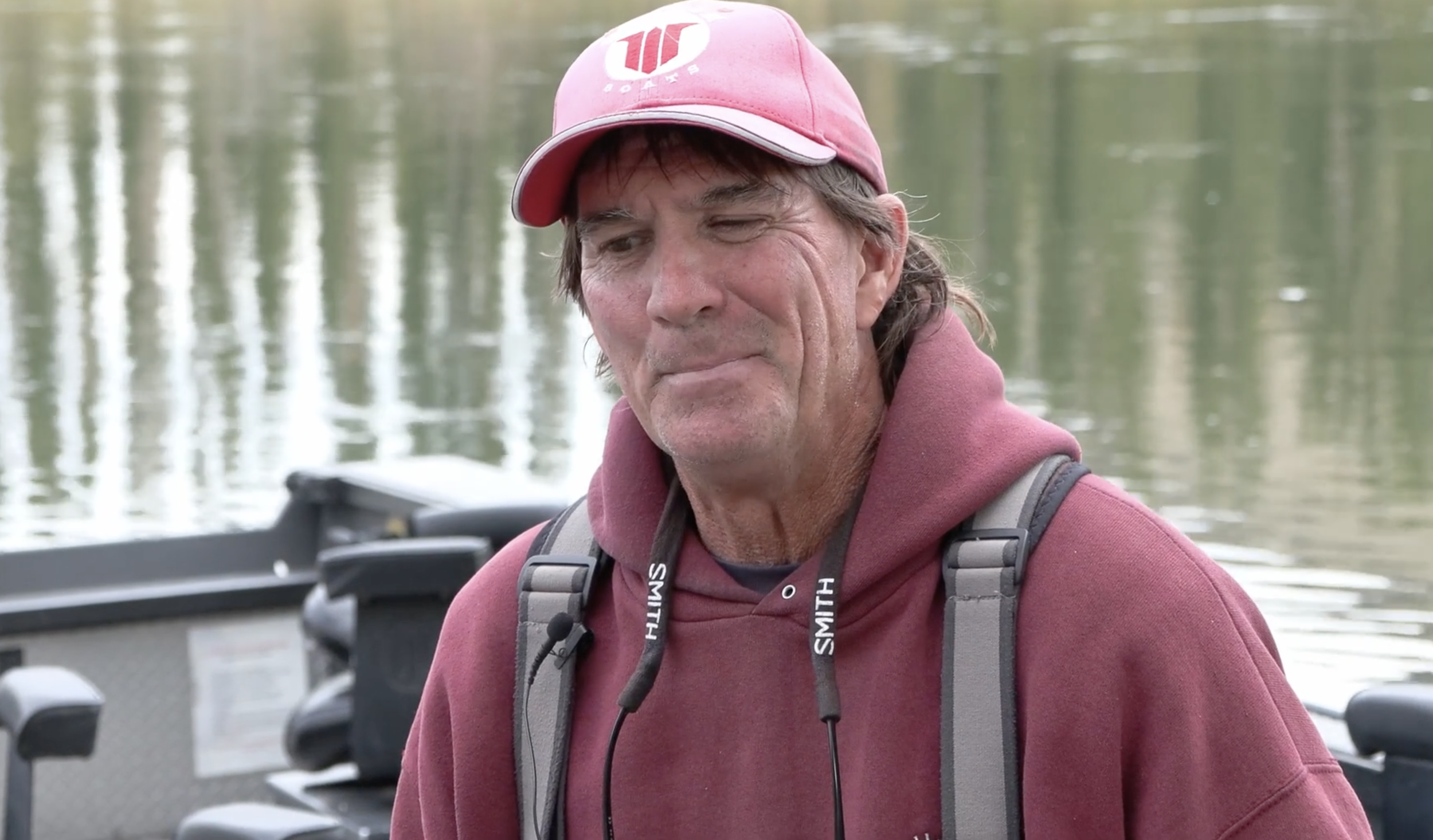
Better days: Randle Stetzer coaxes a Deschutes steelhead to hand.
Exceptions are the Rule in Mid-Columbia Steelhead Management
This year’s run of steelhead in the Columbia Basin is on track to be the lowest since counts began at Bonneville Dam in 1939. Just 62,955 steelhead have passed over Bonneville as of October 14th. The wild component is a paltry 21,859 as of the same date.
The dearth of steelhead prompted ODFW to close the Deschutes and John Day Rivers for the season. The closures are meant to protect wild steelhead, but for the households and businesses bearing the cost of these closures, management protocols in other mid-Columbia tributaries reveal a maddening inconsistency.
Most other tributaries in the mid-Columbia remain open for steelhead and salmon fishing, as does the mainstem Columbia for coho and fall Chinook. The result is a fisheries management policy that unfairly concentrates the economic burden of a lost season on Deschutes Basin communities. It also calls into question whether existing policies are doing enough to maintain or restore wild steelhead numbers.
The overall slim number of returning steelhead in 2026 prompted a reduction in bag limits for hatchery steelhead, and modified sport-fishing rules on several tributaries. But these restrictions were implemented weeks after the August 15th Deschutes closure, and commercial and tribal netting seasons continue unabated.
Incidental encounters with wild steelhead inevitably occur in all these fisheries–but for various reasons, precise data on how frequently this happens, much less the mortality rate that goes with it, are hard to come by.
Yet if the goal is to manage for the protection of wild steelhead, the precautionary principle, it seems, would dictate that restrictions on neighboring tributaries would look at least somewhat similar, and be implemented on the same timeline. This isn’t happening.
The Deschutes, John Day Rivers Singled Out for Closure
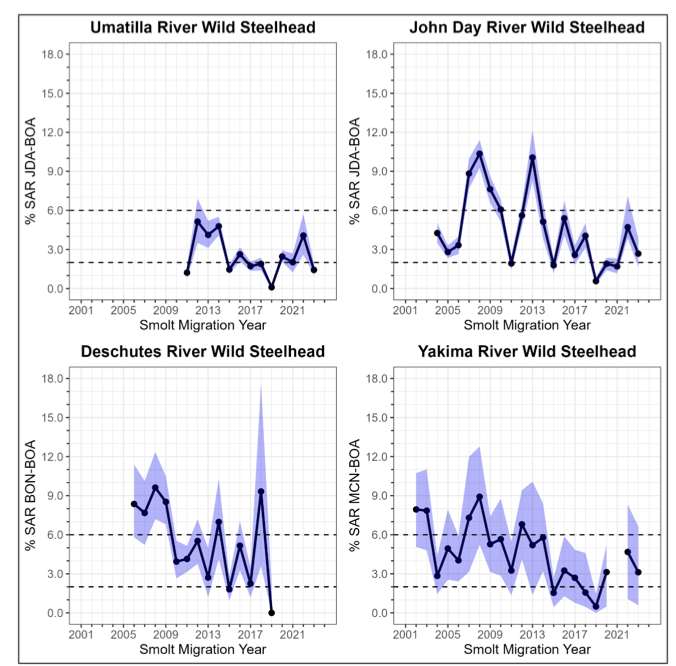
Mid-Columbia wild steelhead are recognized by NOAA-Fisheries as threatened under the Endangered Species Act. According to a NOAA-Fisheries status report from 2022, the population isn’t on the road to recovery.
The “Evolutionary Significant Unit” of mid-Columbia steelhead covers the mainstem Columbia River and its tributaries in Oregon and Washington, from the Hood River to the Umatilla, with the Deschutes and John Day in the midst of this area. If a primary goal of managing wild steelhead in the mid-Columbia is to rebuild dwindling wild fish numbers, outside the Deschutes and John Day closures, regulations in every other mid-Columbia tributary don’t seem to measure up. Here’s a look at regulations in every mid-Columbia trib, compared to the Deschutes and John Day:
The Deschutes River: Closed to all steelhead retention, closed to steelhead fishing since August 15th, 2026. Closed for the remainder of 2026, based on ODFW Deschutes River Steelhead Management Framework.
Regulations on the Deschutes in years steelhead fishing is open: season runs early July to December 31st. Closed to wild steelhead retention. Wade fishing only. No bait. Retention of 1 hatchery fish per day allowed.
The John Day River: The John Day River is closed to all steelhead fishing, and likely will remain so in 2026. Like the Deschutes, it is managed from an ODFW-written framework. It is a unique tributary in the mid-Columbia DPS, flowing undammed throughout its 250-mile length, and harboring a late arriving summer-run strain of steelhead that is predominately wild (non-hatchery.) The benchmark to open the John Day is 35,000 wild steelhead over Bonneville from July 1st to August 31st.
The White Salmon River: Closed to all steelhead retention, hatchery and wild. The rule has been in effect since Condit Dam was removed in late 2011.
The Wind River: Closed to wild steelhead retention. Bait allowed from the mouth at Highway 14 up to 400 feet below Shiperd Falls. Artificial lures and flies only above Shiperd Falls. Hatchery retention of up to two steelhead per day allowed March 1 to November 15. Because of class IV rapids throughout its lower reaches, the Wind is generally not fishable by boat.
The Klickitat River: Closed to wild steelhead retention. From the mouth at the BNSF railroad bridge to Lyle Falls (Mile 3): Open to hatchery steelhead retention from the Saturday before Memorial Day to June 30th. Bait is allowed. Retention of up to three hatchery fish per day is allowed. From Lyle Falls to the Salmon Creek Hatchery Boundary marker (40 miles of water): open from the Saturday before Memorial Day to November 30th. Fishing from a boat and fishing with bait is allowed. Retention of up to three hatchery fish per day is allowed.
The Yakima River: Closed to all steelhead retention.
The Hood River: Closed to wild steelhead retention. Open year-round for hatchery steelhead retention. Retention of up to two hatchery steelhead per day allowed. Bait allowed. Because of consistent class 3 plus whitewater, the Hood is generally not fishable by boat.
John Day River Regulations: Closed to wild steelhead retention. From Mainline Railroad Bridge to confluence with the North Fork (200 miles of water) open January 1st to April 30th, then September 1st to December 31st. Closed one quarter mile below and 200 feet above Tumwater Falls, which marks the end of the John Day Arm of the reservoir formed by John Day Dam. Retention of up to 3 hatchery steelhead per day allowed. Bait allowed. Fishing from a boat allowed.
The Umatilla River: Open January 1st to April 30th, then September 1st to December 31st. Closed to retention of wild steelhead. Bait allowed. Fishing from a boat allowed. In combination with coho or Chinook, retention of up to 3 hatchery steelhead allowed.
The Bait-Fishing Exception on the Deschutes: Beginning August 15th 2026, the entire lower 100 miles of the Deschutes River is closed to all salmon and steelhead fishing–except for a stretch from Sherar’s Falls to the railroad trestle three miles downstream. Within this section, fishing with bait is allowed, and the retention of fall Chinook is also allowed.
Sensible Changes
The consistent element in mid-Columbia steelhead management protocols is that all wild steelhead must be released. But is that enough? Given the 60 percent decline in wild steelhead numbers over the past decade, it’s high time that Oregon and Washington fisheries managers identify and implement regulations that are applied evenly and synchronize so that they go into effect the same day that restrictions or closures apply in the Deschutes and John Day.
The use of bait makes hooking mortality much more likely. At the very least, if Oregon and Washington fisheries managers are interested in successfully preserving wild steelhead throughout the Columbia Basin, bait in all its tributaries will become a thing of the past–hopefully as soon as next season.
The three-mile Sherar’s Bridge to railroad trestle bait-fishery on the Deschutes should also cease to exist.
In the mean time, the DRA, its supporters and partners, will be working toward a steelhead management plan that treats both steelhead and the economies that rely on them with a more even hand.
More From The Blog
Subscribe the the DRA Newsletter
The Deschutes River Alliance is your focused voice to protect the lower Deschutes River, its cold water flows and the fish and wildlife that are sustained by them. We send regular emails with important data and news about the lower Deschutes River. We will not sell your contact information to others.
How to Support the DRA
Everyone wants clean, healthy water in the Deschutes River. Oregonians cherish our clean and healthy waterways to provide drinking water, wildlife habitat and recreational activities. The lower Deschutes River is a federally designated Wild & Scenic River, and a national treasure. It must be protected for the environmental and economic health of Central Oregon. By working together we can return the lower Deschutes River to full health.