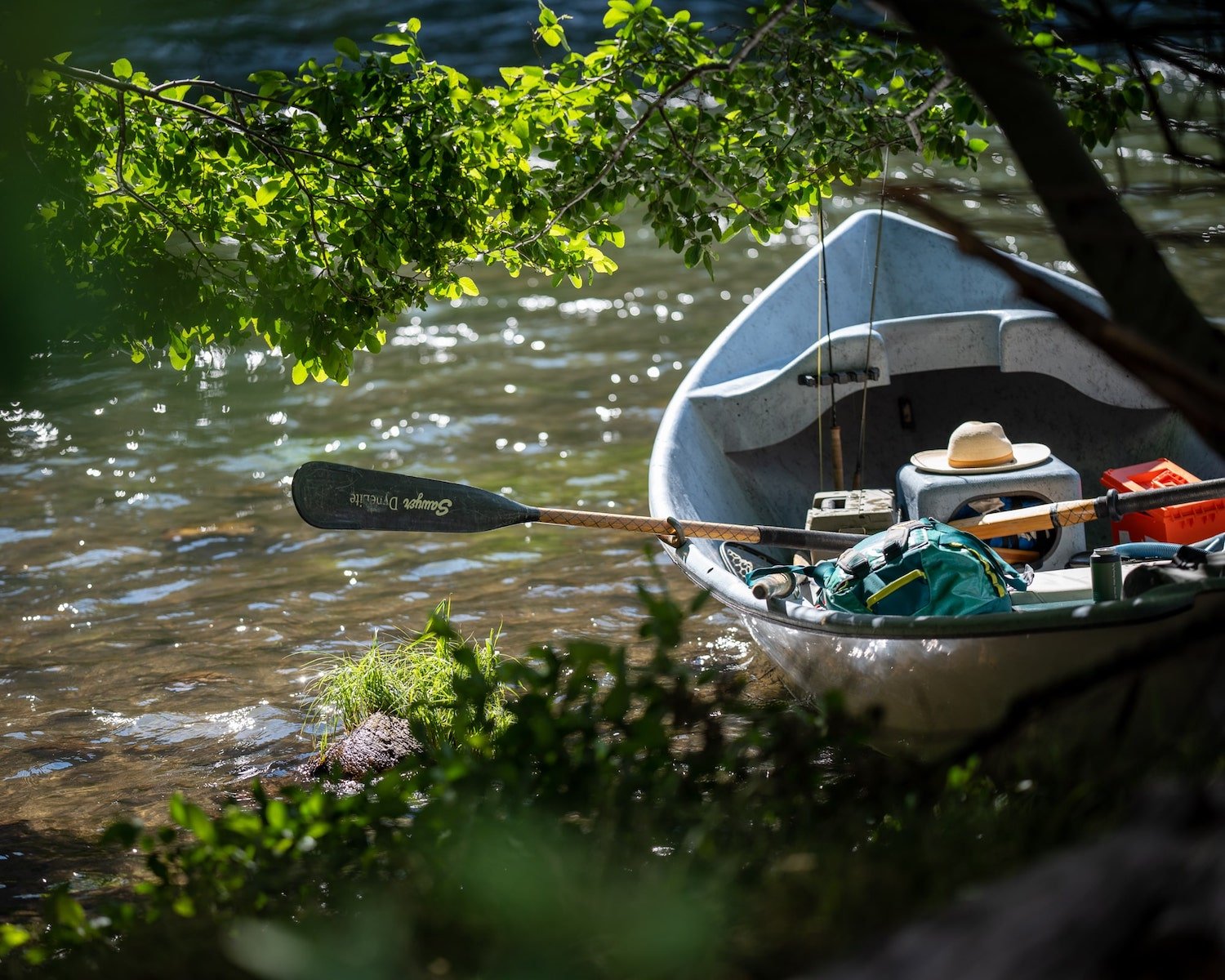
Imperiled Steelhead Season Prompts Efforts Toward a Better Path Forward
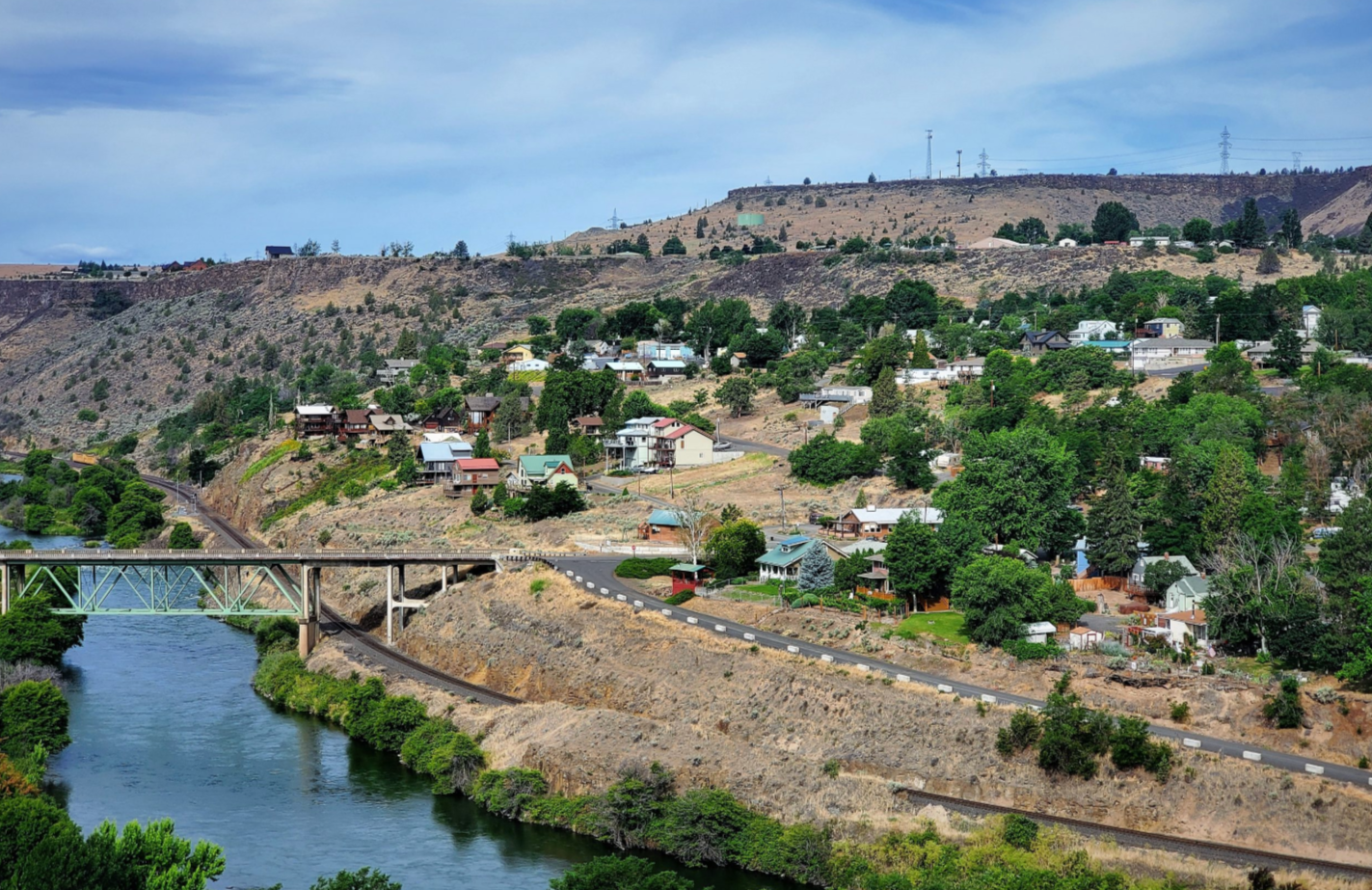
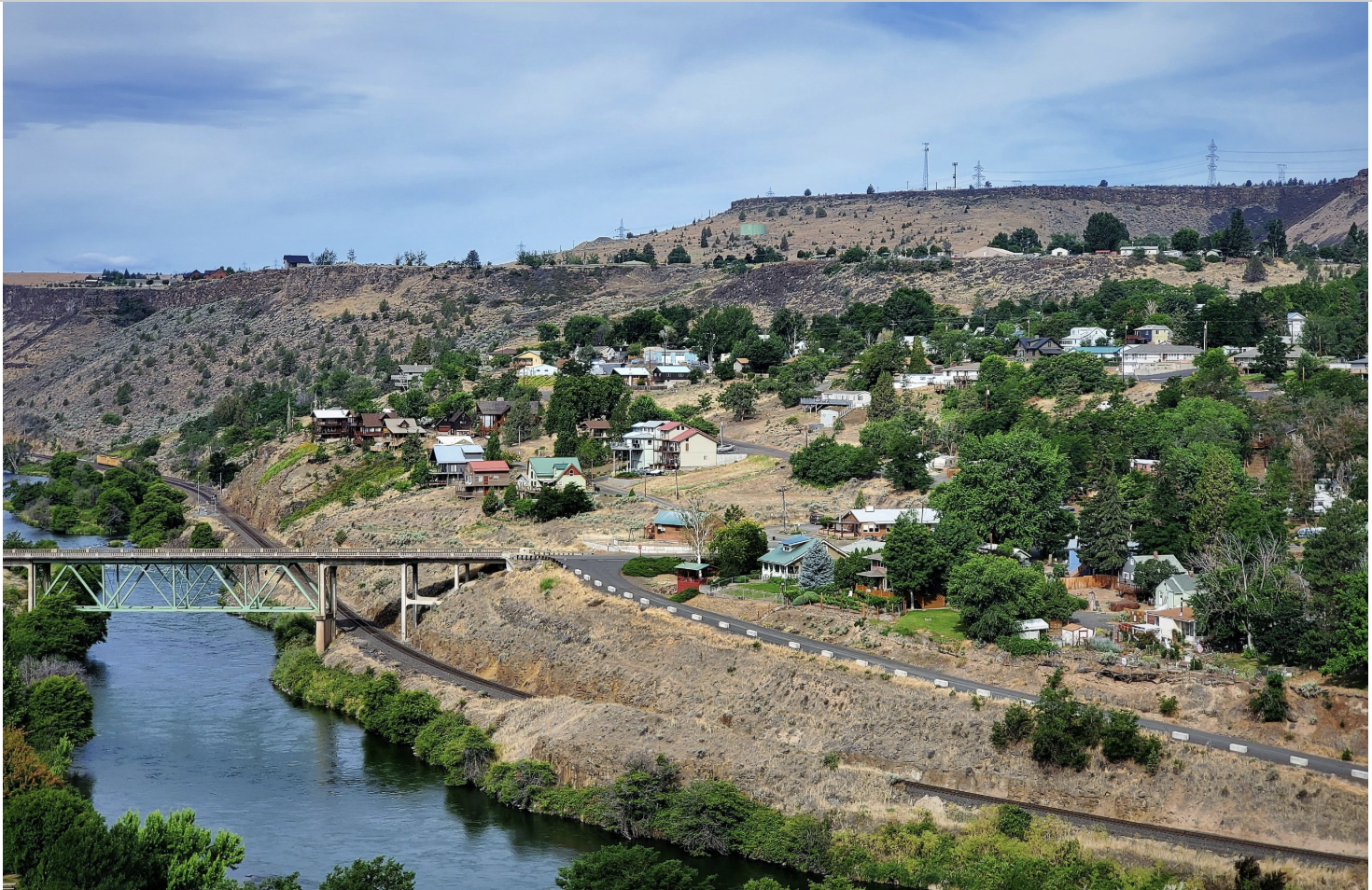
The scene around Maupin looks beautiful, as always—but quieter without the prospect of a steelhead season.
The Wrong Kind of Quiet on the River
It’s quiet–perhaps too quiet this week on the lower Deschutes River. The steelhead closure took effect on August 15th. A pall of wildfire smoke intermittently hovers over the canyon, lending the relative emptiness an air of alienating loneliness rather than soul-affirming, clear blue sky solitude. The river doesn’t require human companionship to continue its relentless good work–but people need to witness it, connect with the river and one another, and revel in its beauty as a necessary first step in the work to protect and restore it.
The steelhead closure revokes one avenue for that kind of vital connection. It hurts, certainly on an economic level, for guides losing some of the best weeks of their season, and especially for small towns like Maupin. But the pain goes deeper than money.
The better part of a century ago, Aldo Leopold wrote, “one of the penalties of an ecological education is that one lives alone in a world of wounds.” Ecology was not as widely taught or learned back then. A lot more is known, and a lot more people know the science behind what a river requires to be healthy. The world of wounds these days doesn’t derive as much from Leopold’s apparent loneliness of solitary knowing. The pain partly stems from the frustration of a more widely shared knowledge of what needs to be done, and seeing it remain undone, season after season, and witnessing ongoing deterioration rather than recovery. It turns out that river management policy, which on the surface seems simply a matter of implementing the best available science, is oftentimes more vexing than understanding the science.
Good Science, Sound Policy
Yet in crisis lies opportunity. First, the DRA is initiating communication with existing and potential coalition partners across the Columbia Basin. Keeping future steelhead seasons open on the Deschutes in future years compels us to do so. Steelhead migrate through a harrowing gauntlet of management jurisdictions. To arrive at any sensible, consistent, and ultimately effective management of them will require reaching out beyond the ridgetops that define the lower Deschutes watershed.
Next, the science already exists that should direct what policy changes should be implemented. The hope in reaching out Basin-wide will be to help create a critical mass of advocates that might affect policy change in a positive direction. There are examples in recent history of a diverse group of interests coming together for the sake of a river to do what’s right.
In 2017, The National Oceanic and Atmospheric Administration’s Marine Fisheries Advisory Committee convened the Columbia Basin Partnership, composed of commercial and sport fishers, agricultural and industrial river users, utilities, and watershed groups. The CBP collectively examined the history of salmon and steelhead runs in the Basin, arrived at a set of recovery goals, then commissioned NOAA to come up with a set of policy recommendations to meet those goals. In 2022, NOAA published these recommendations in a report simply titled “Rebuilding Interior Columbia Basin Salmon and Steelhead.” Remarkably slim and relatively easy to digest, a key part of the report comes down to five policy changes that science says will go a long way to creating runs of steelhead that can be fished for year after year. Here they are:
Significant reductions in direct and indirect mortality from mainstem dams, including restoration of the lower Snake River through dam breaching.
Management of predator and competitor numbers and feeding opportunities.
Focused tributary and estuarine habitat and water quality restoration and protection.
Passage and reintroduction into priority blocked areas.
Focused hatchery and harvest reform.
Recovery is Still Possible
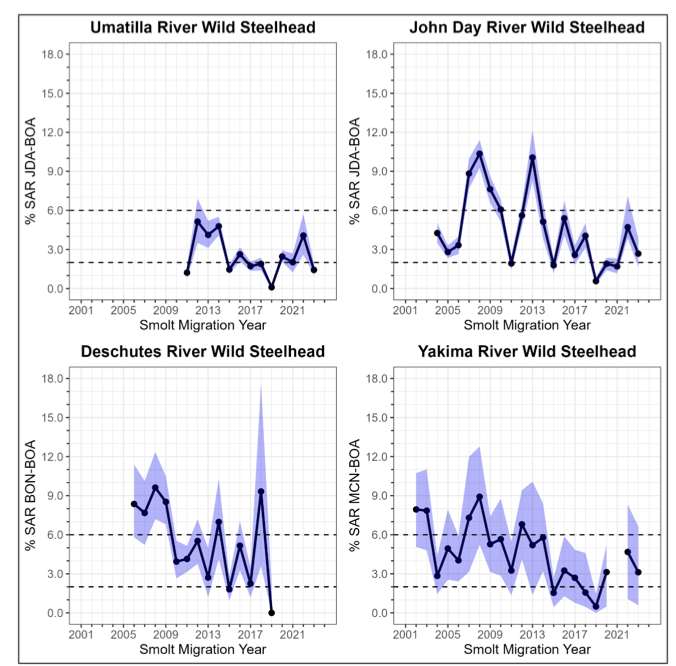
The report goes on to include specific recommendations for recovering mid-Columbia steelhead, urging an emphasis on water quality on key tributaries like the Deschutes, and improved passage and more effective reintroduction efforts where tributary dams are a barrier. Some good news: NOAA’s 2022 report concludes that for many Columbia Basin stocks of salmon and steelhead, including those in the Deschutes, it's not too late. Good science tells us implementing change will provide more fish.
Better water quality and improved fish passage are widely shared goals for the Deschutes Basin. What’s missing is an effective plan to get there. That’s why the DRA will continue to relentlessly pursue its primary goal of returning colder, cleaner water to the lower Deschutes River.
The DRA, along with our supporters, remain gravely concerned about the economic cost of the closure. ODFW and other relevant management agencies need a more coordinated, comprehensive set of policy options. At the very least, a better scenario for years of low returns will relieve the communities around the lower Deschutes from bearing a disproportionate burden of a closure. At best, a coordinated mid-Columbia steelhead management plan will do everything in its power to prevent future closures. Changing policy will require changing the politics around the way steelhead are managed, both in the Deschutes and in the Columbia Basin.
It’s a heavy lift to change any policy status quo for the better. But the brighter spots in the history of campaigns to preserve and protect wild places and things is instructive and inspiring.
These victories inform us it’s not too late, as Wallace Stegner, another scholar of western wild places wrote, to create in our cherished places “a politics that matches the scenery.”
More From The Blog
Subscribe the the DRA Newsletter
The Deschutes River Alliance is your focused voice to protect the lower Deschutes River, its cold water flows and the fish and wildlife that are sustained by them. We send regular emails with important data and news about the lower Deschutes River. We will not sell your contact information to others.
How to Support the DRA
Everyone wants clean, healthy water in the Deschutes River. Oregonians cherish our clean and healthy waterways to provide drinking water, wildlife habitat and recreational activities. The lower Deschutes River is a federally designated Wild & Scenic River, and a national treasure. It must be protected for the environmental and economic health of Central Oregon. By working together we can return the lower Deschutes River to full health.