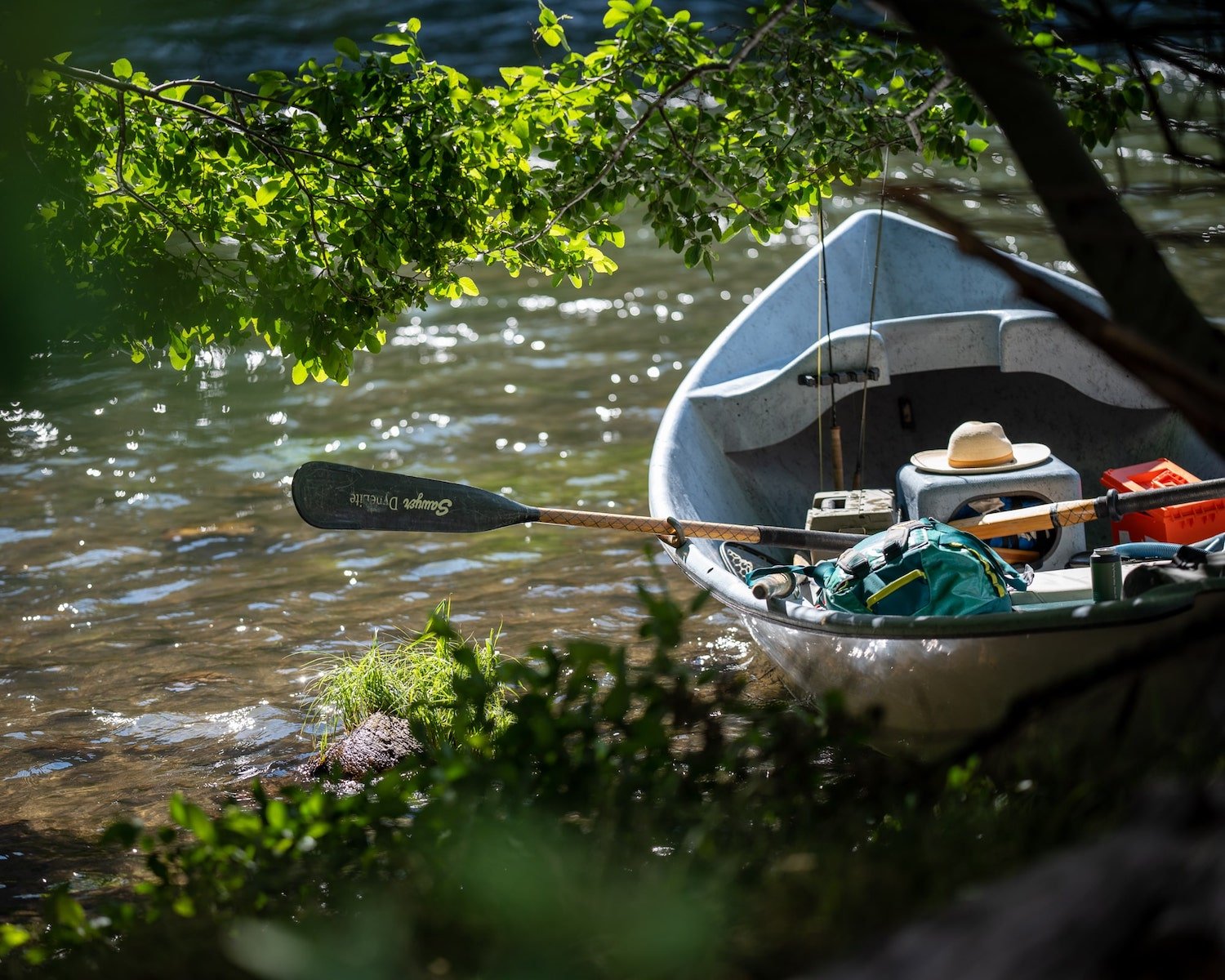
DRA Science Team Launches Algae Study
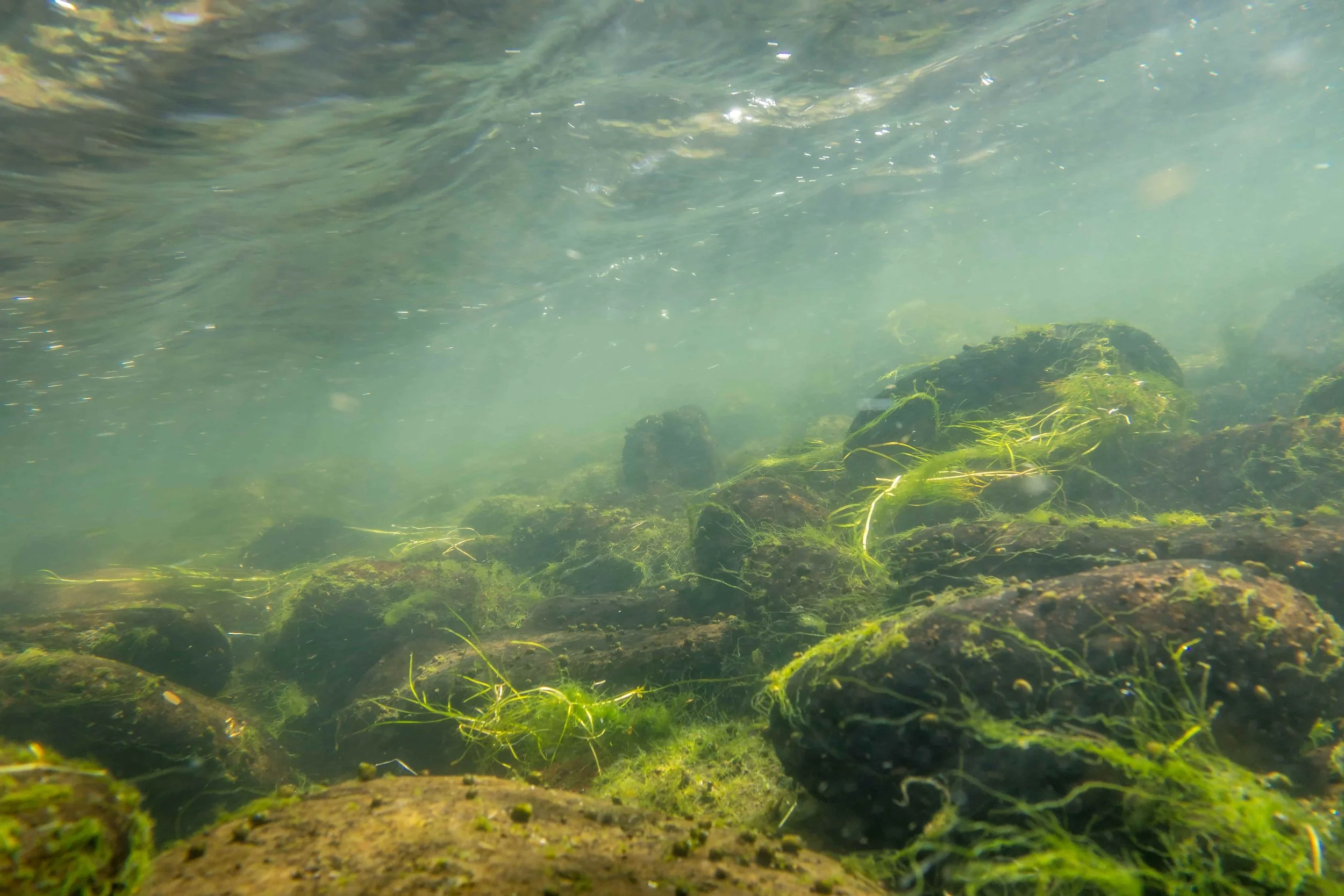
It’s everywhere, but do we know about it? The DRA aims to boost scientific knowledge of algae in the lower Deschutes River.
Signs of a Changing River
by Hannah Camel, DRA Science Team Lead
The Deschutes River Alliance is excited to announce the launch of an algae monitoring program on the lower Deschutes River.
For years, the DRA has monitored water quality and benthic macroinvertebrates throughout the lower Deschutes, building two robust, long-term data sets that have become essential to understanding the river's health. This summer, we're excited to expand that effort by adding annual monitoring of the river's algae communities.
Despite ongoing concerns about nutrient enrichment and water quality in the lower Deschutes, relatively little is known about the current algae community or how it responds to changing environmental conditions. This new initiative will establish a long-term baseline of algae abundance and community composition, helping us better understand how nutrients, water quality, and river management influence the health and productivity of the lower Deschutes.
Why Monitor Algae?
Algae may not be the first thing that comes to mind when you think about a healthy river, but they are one of its most important building blocks.
Known collectively as periphyton, when attached to rocks and other submerged surfaces, algae form the base of the aquatic food web. They provide the energy that supports aquatic insects, which in turn feed trout, steelhead, and many other fish and wildlife species. Because algae respond quickly to changes in nutrient availability, water temperature, light, and water quality, they are also among the best biological indicators of changing river conditions.
By monitoring algae over time, we can gain valuable insight into the productivity of the river, identify changes in biological communities, and improve our understanding of nutrient dynamics throughout the lower Deschutes.
What Will We Be Measuring?
Field sampling will begin this summer at four established monitoring locations that coincide with the DRA's long-term macroinvertebrate monitoring sites. Collecting algae samples alongside our existing water quality and macroinvertebrate monitoring allows us to build a more complete picture of river health by linking physical and chemical conditions with the organisms that form the foundation of the aquatic food web.
Sampling will follow the USGS National Water-Quality Assessment (NAWQA) protocols to ensure that data are collected consistently from year to year. At each site, we will collect samples for:
Taxonomic identification and community composition, allowing us to identify which algae species are present and how communities change over time.
Chlorophyll a, a pigment found in all photosynthetic algae that serves as an indicator of living algal biomass and overall productivity.
Ash-free dry mass (AFDM), a measure of total organic material attached to stream substrates, including algae, bacteria, fungi, and detritus.
Together, chlorophyll a and AFDM provide a more complete picture of the river's productivity. Comparing these two measurements helps distinguish whether attached material is dominated by living algae or by other forms of organic matter.
Building a Long-Term Data Set
This project is designed as a long-term monitoring effort. By collecting data consistently each year, we'll establish a baseline against which future conditions can be compared. Over time, this data set will help identify changes in algal biomass and community composition associated with nutrient inputs, hydrologic conditions, climate variability, and management actions.
The information gathered through this study will also complement the DRA's ongoing water quality and macroinvertebrate monitoring, creating one of the most comprehensive biological data sets available for the lower Deschutes River.
Following field collection, samples will be processed by a specialized aquatic ecology lab, with results expected later this year. Findings will be incorporated into the DRA's annual monitoring program and summarized in future technical reports.
We're excited to add algae sampling to our monitoring program and look forward to sharing what we learn. Stay tuned as we begin this new chapter in understanding - and protecting - the lower Deschutes River.
More From The Blog
Subscribe the the DRA Newsletter
The Deschutes River Alliance is your focused voice to protect the lower Deschutes River, its cold water flows and the fish and wildlife that are sustained by them. We send regular emails with important data and news about the lower Deschutes River. We will not sell your contact information to others.
How to Support the DRA
Everyone wants clean, healthy water in the Deschutes River. Oregonians cherish our clean and healthy waterways to provide drinking water, wildlife habitat and recreational activities. The lower Deschutes River is a federally designated Wild & Scenic River, and a national treasure. It must be protected for the environmental and economic health of Central Oregon. By working together we can return the lower Deschutes River to full health.