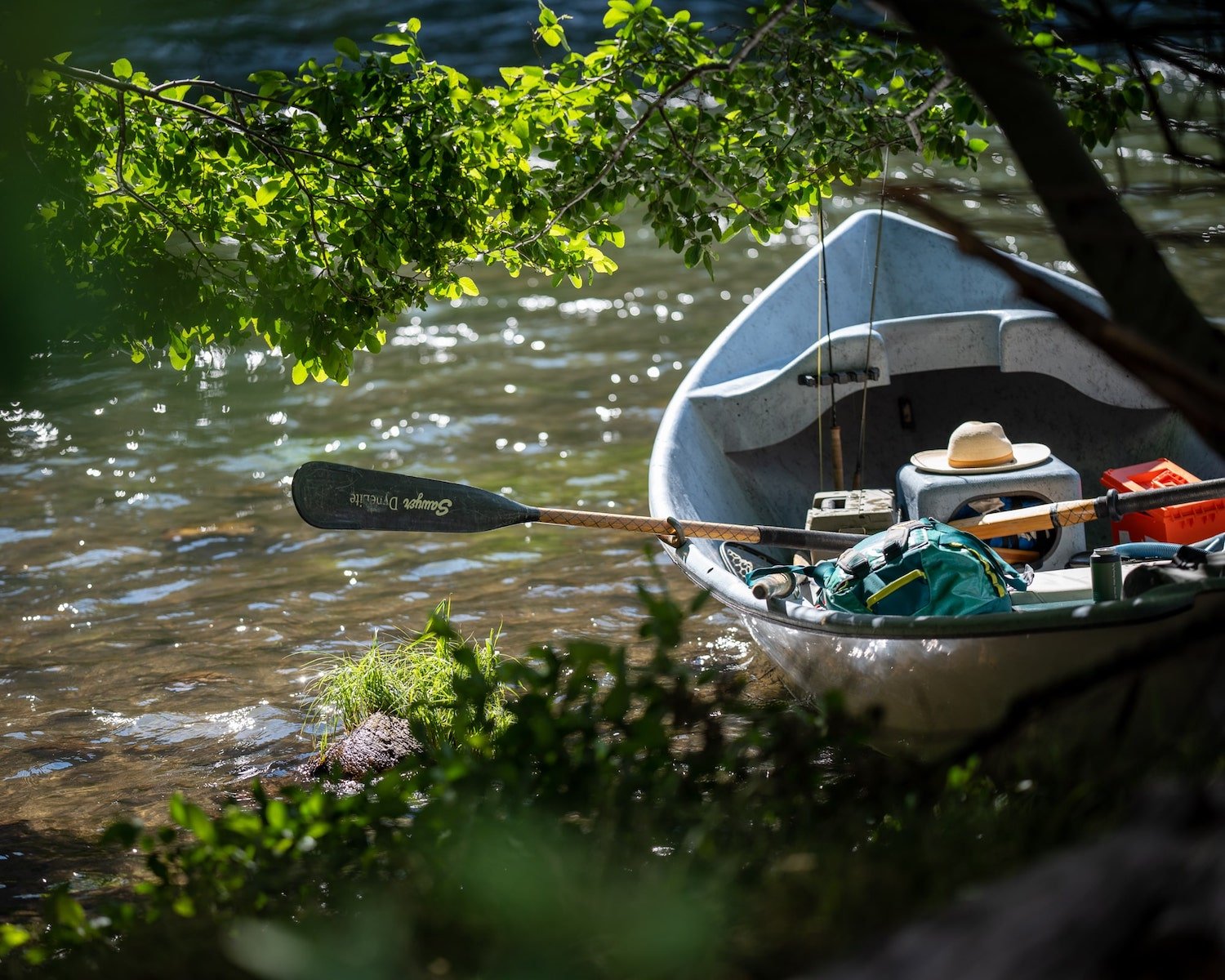
Bug of the Month: Pale Evening Dun
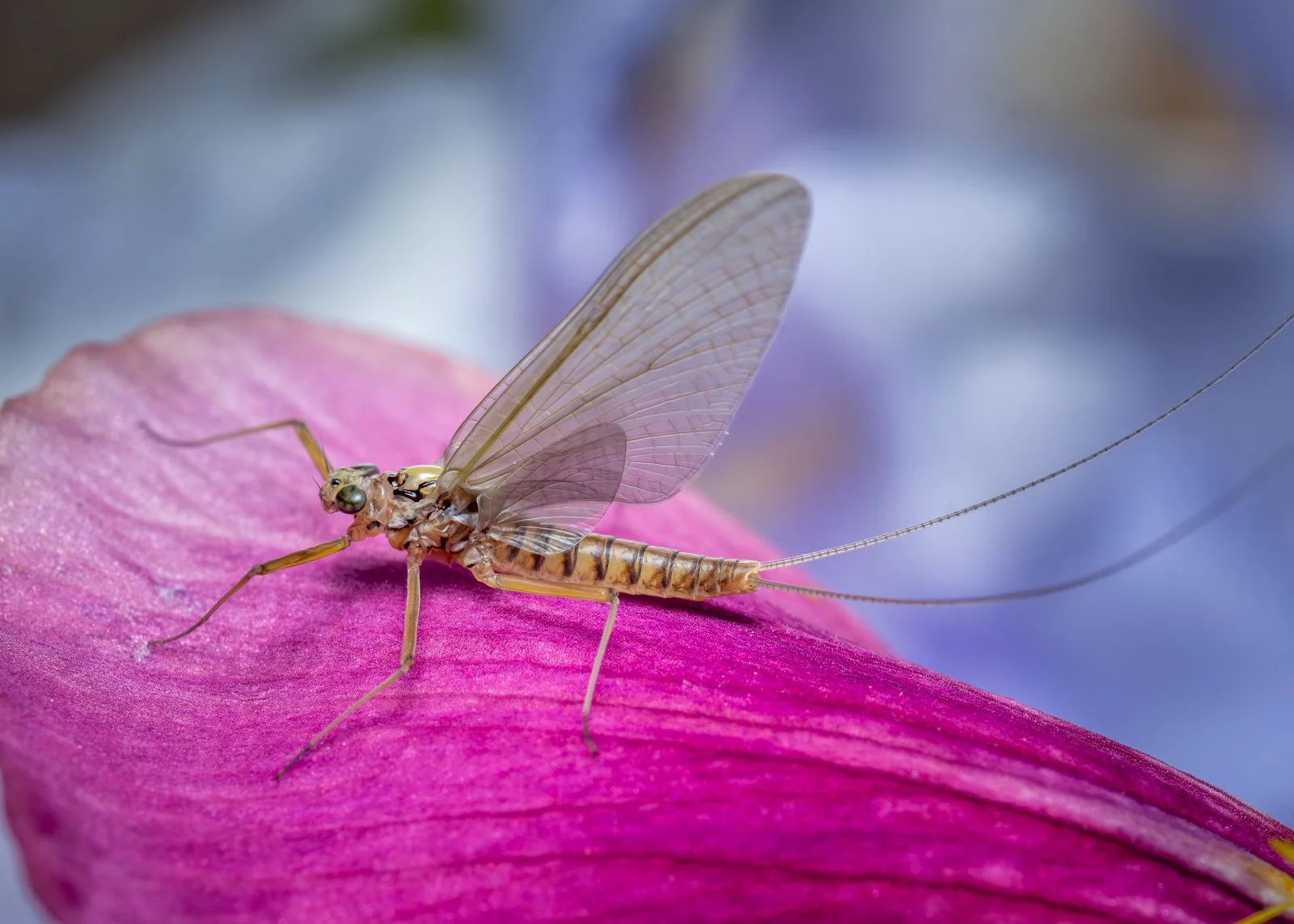
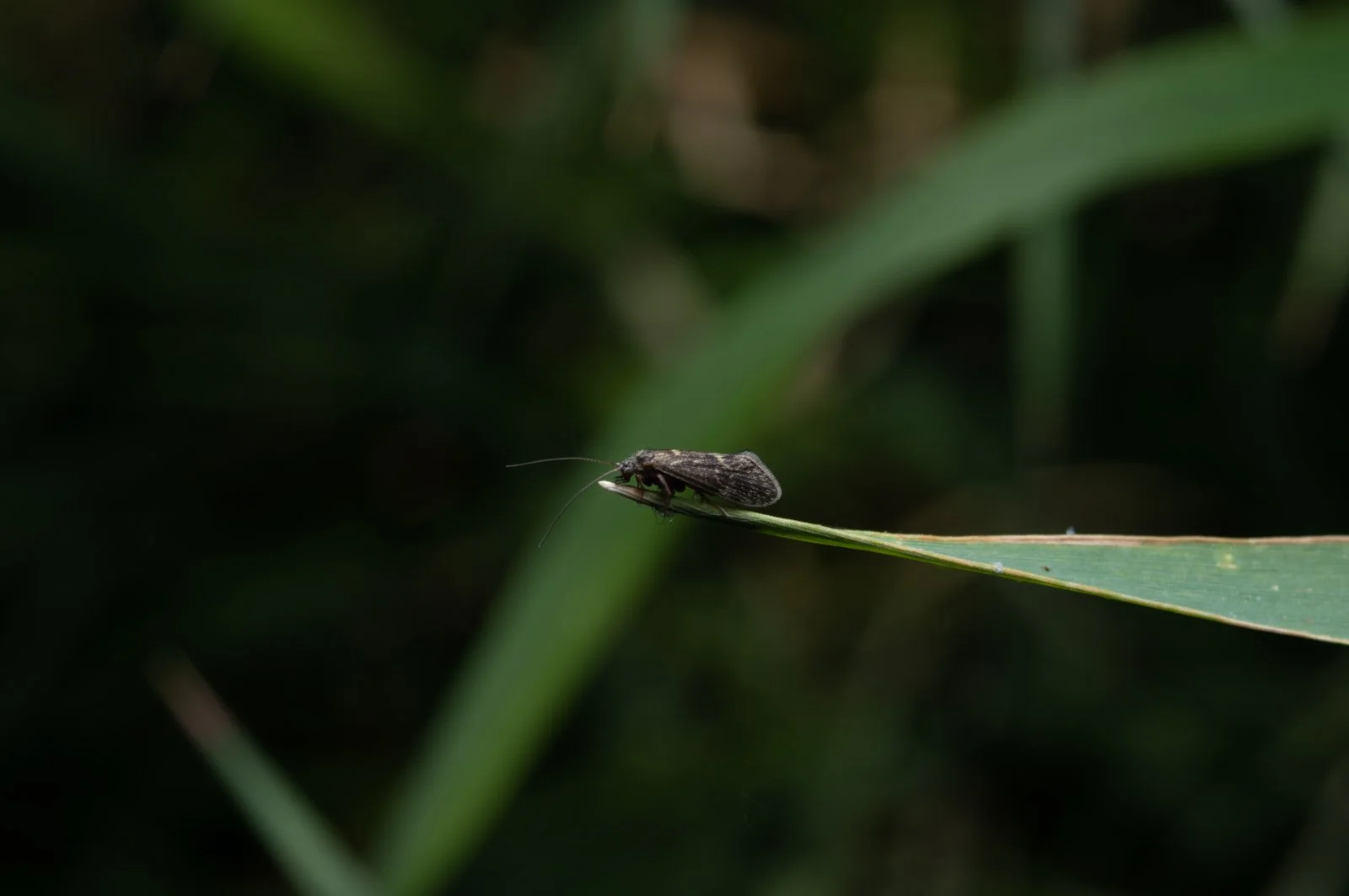
Heptagenia elegantula at rest. Photo courtesy of Rick Hafele.
PED Life History
By Hannah Camel, Science Program Lead, Deschutes River Alliance
We’re back with another installment of the Deschutes River Alliance’s Bug of the Month series. Throughout 2026, we’re highlighting the aquatic insects that play an essential role in the ecology of the lower Deschutes River. Each month, we explore a different species’ life history, habitat preferences, seasonal timing, and abundance, while incorporating insights from DRA’s water quality and macroinvertebrate monitoring efforts.
With the astronomical start of summer just around the corner, this month we’re taking a closer look at the Pale Evening Dun. Commonly referred to as a PED, this mayfly was once a summertime staple on the lower Deschutes and one of the river’s most dependable hatches, known for producing dense emergences and bringing trout confidently to the surface. Like other hatches today, PED emergence now happens earlier with strong hatches having occurred over the last month and continuing on so far this month. If you prefer late-day hatches, gentle rises, and technical dry-fly fishing, this is your bug.
The Pale Evening Dun (Heptagenia elegantula) belongs to the mayfly order Ephemeroptera and the family Heptageniidae, a group commonly known as the flatheaded mayflies. While the name "Pale Evening Dun" often refers to Heptagenia elegantula specifically, anglers frequently use the term more broadly to describe several closely related mayflies that hatch at similar times and look remarkably alike.
In fact, there are four genera within the Heptageniidae family that are commonly lumped together under the PED umbrella: Heptagenia (Pale Evening Dun, Gray Fox), Leucrocuta (Little Yellow Quill), Cinygma (Western Light Cahill), and Nixe (Western Ginger Quill and Little Slate-winged Dun). To make things even more confusing, most of these genera were once classified within Heptagenia before taxonomists began sorting them into separate groups based on subtle differences in their anatomy. For entomologists, these distinctions matter. To a feeding trout, these insects are simply dinner.
Because these mayflies share similar appearances, life histories, habitats, and hatch timing, anglers generally treat them as a single group. For the sake of simplicity, and to save everyone from carrying around a microscope, we'll refer to this collection of look-alike mayflies as the pale evening dun complex throughout the rest of this blog. Plus, on the lower Deschutes, Heptagenia, with rare exception, is the only genus of PEDs, so any PED you see should be Heptagenia elegantula.
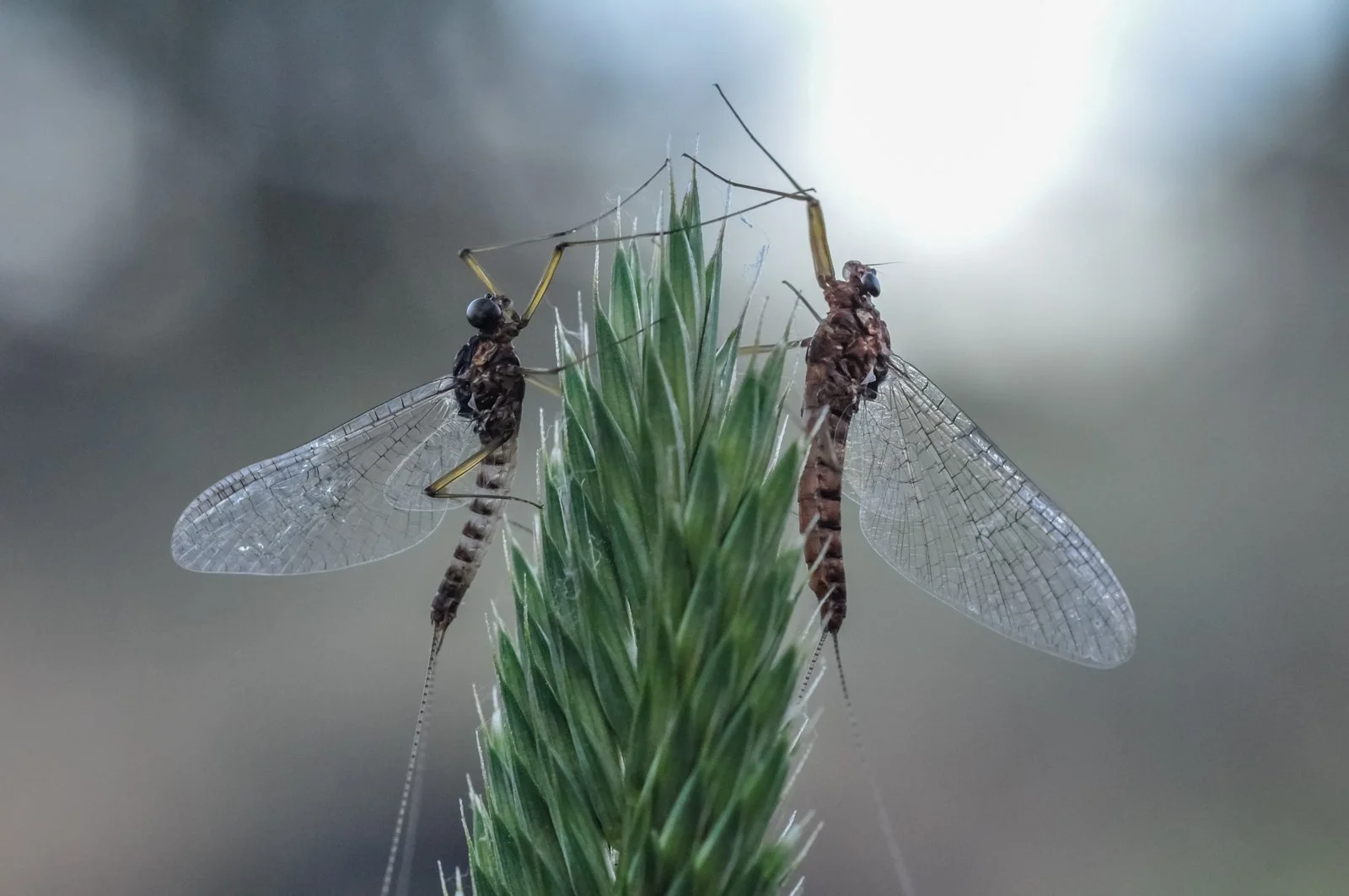
PED Spinners. Photo courtesy of Rick Hafele.
PED Emergence and Distribution
The most important hatches of the Pale Evening Dun complex occur during the summer months of June, July, and August. Across the West, timing varies with elevation and climate. Lower-elevation and coastal rivers may see the first hatches emerge as early as late May, while high-elevation systems around Yellowstone often don't reach peak activity until September. Here in Oregon, and especially on the lower Deschutes, you can typically expect the first PEDs to start appearing in early June, or like this year as early as mid-May.
Like many aquatic insects, the timing of emergence is closely tied to water temperature. Hatches generally begin once river temperatures reach the 50–55°F range and can continue steadily throughout the summer. True to their name, Pale Evening Duns are best known for their evening emergence, often appearing in impressive numbers as daylight begins to fade. However, don't let the name fool you. During cooler or overcast weather, hatches may begin much earlier in the day, so it pays to keep an eye on the water even during the afternoon hours. Members of the PED complex are found throughout much of the western United States and can thrive in nearly any river that offers clean, well-oxygenated water and a stable cobble or gravel bottom. Most species are especially abundant in rivers with brisk currents and moderate gradients, where the flattened nymphs are well adapted to life in fast water. That said, some members of the group—particularly those in the genus Leucrocuta—are equally comfortable in the lower reaches of large river systems where gradients flatten, currents slow, and trout still eagerly await the evening hatch.
PED Habitat and Behavior
Like all mayflies, members of the Pale Evening Dun complex pass through three distinct life stages: nymph, dun, and spinner. The nymph stage is by far the longest, often lasting months to more than a year, and it is during this stage that PEDs are most perfectly adapted to their environment.
PED nymphs belong to a group known as the clingers, a fitting name for insects that spend their lives in fast, turbulent water. Their flattened bodies and broad, shovel-shaped heads allow them to hug rocks, woody debris, and other streambed surfaces while avoiding the full force of the current. By staying within the thin boundary layer of slower-moving water that forms along the streambed, they can thrive in riffles and runs that might otherwise wash them downstream. While they are most abundant in faster water, it is not uncommon to find them in slower runs and moderate-flow habitats as well.
Recognizing a member of the Pale Evening Dun complex can be both easy and surprisingly difficult. At first glance, most are classic flatheaded mayflies: small nymphs measuring roughly ¼ to ½ inch long, with broad heads, flattened bodies, and three tails about as long as the body itself. Their coloration ranges from light olive-brown and amber to darker shades of brown. Identifying them to the species or even genus level, however, requires a much closer look.
Regardless of which genus they belong to, PED nymphs are strong clingers and poor swimmers. They will rarely be found in the drift during most of their lives. That changes as the hatch approaches. In the days leading up to emergence, nymphs begin migrating toward shallower water, side channels, eddies, and gentle runs where they will emerge. During this migration, many are swept into the current and become easy targets for hungry trout. Although they can swim, their efforts are best described as frantic. They move by rapidly flipping their abdomen up and down, a technique that creates plenty of motion but not much forward progress.
When it is finally time to emerge, those same abdominal flips serve a more important purpose. Some nymphs use them to propel themselves all the way to the surface, where they emerge directly in the surface film. Others take a more leisurely approach, rising only partway before splitting their nymphal shuck and allowing trapped gases within their developing wings to carry them the rest of the way upward. Either way, the result is the same: the insect enters its next life stage as a dun.
Compared to many mayflies, PED duns are relatively efficient at escaping their nymphal shucks, which means cripples are less common than during some other hatches. On warm evenings, newly emerged duns often leave the water quickly. Cooler temperatures, however, can slow the process considerably. During these conditions, duns may drift for long distances along soft seams, side currents, and shoreline eddies before finally taking flight. This creates some excellent feeding opportunities for trout. Because the water where PEDs emerge is often slow moving, trout frequently move to intercept the insects rather than simply waiting for the current to deliver them. The result can be some of the most deliberate and selective surface feeding you'll encounter all summer.
PED duns are fairly distinctive in appearance. They have two tails approximately equal to their body length, pale cream to grayish wings with prominent venation, and bodies that range from creamy white to reddish-brown. Most measure between ¼ and ⅝ inch long.
Roughly 12 to 24 hours after emerging, the dun molts into its final stage: the spinner. Spinners can be recognized by their clear, glasslike wings and slightly longer tails. Males have noticeably larger eyes than females, often so large that they nearly meet on top of the head. In Cinygma and Leucrocuta, however, the eyes remain widely separated.
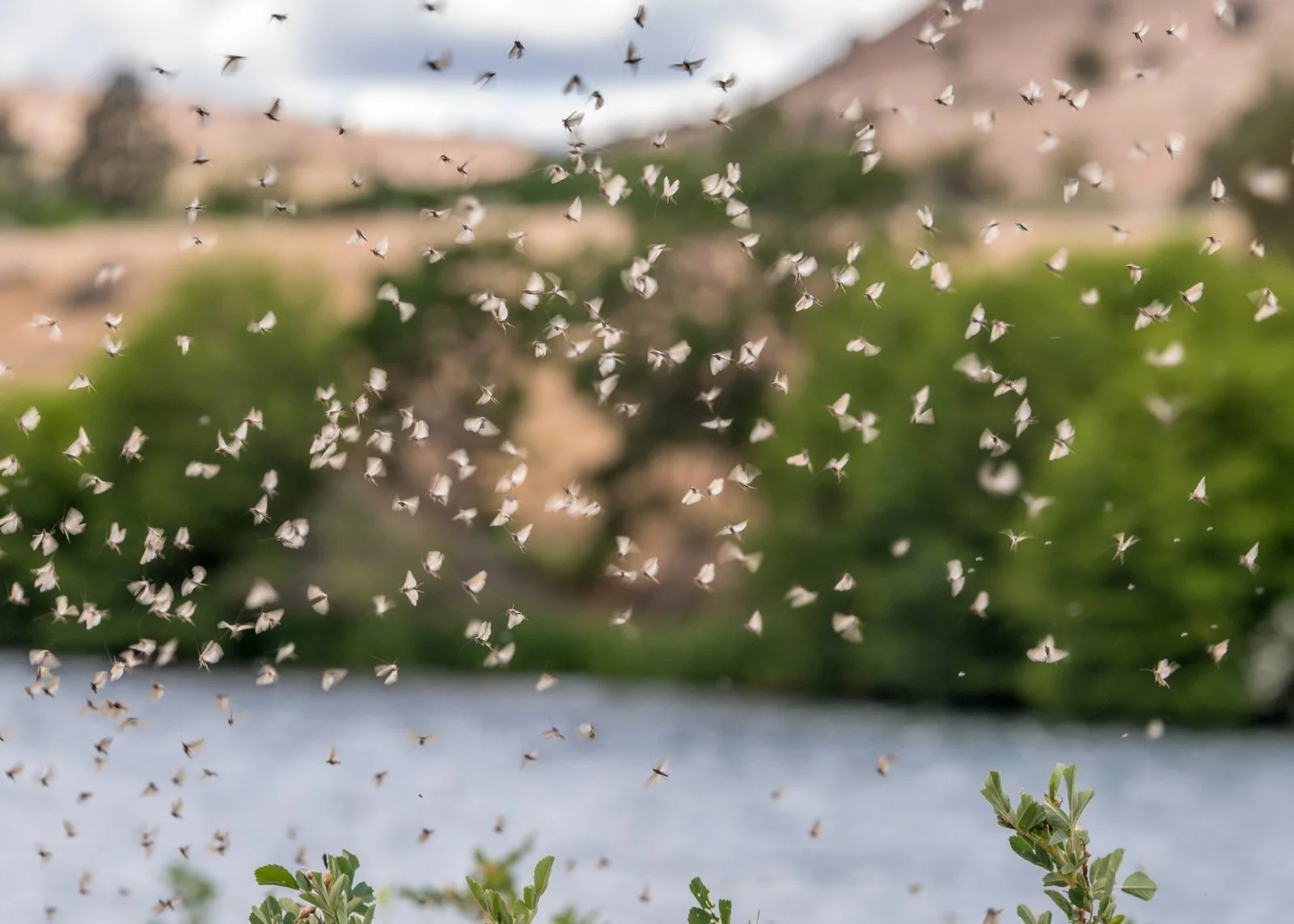
Once they have completed this final molt, the insects have a single purpose left: reproduction. During the late afternoon and evening, male spinners gather in mating swarms above streamside vegetation and riverbanks. When females arrive, mating occurs in flight. The females then retreat briefly to nearby vegetation before returning to the river to lay their eggs.
Egg-laying females generally show up at the end of the day when daylight is fading. They typically hover above riffles and gently dip their abdomen to the water's surface, releasing small batches of eggs with each touch. Once their work is complete, the exhausted females fall onto the water and drift downstream as spent spinners. While it may be the end of the road for the mayfly, it marks the beginning of one of the most productive feeding opportunities of the hatch for trout; and for observant anglers wise enough to be there when it happens.
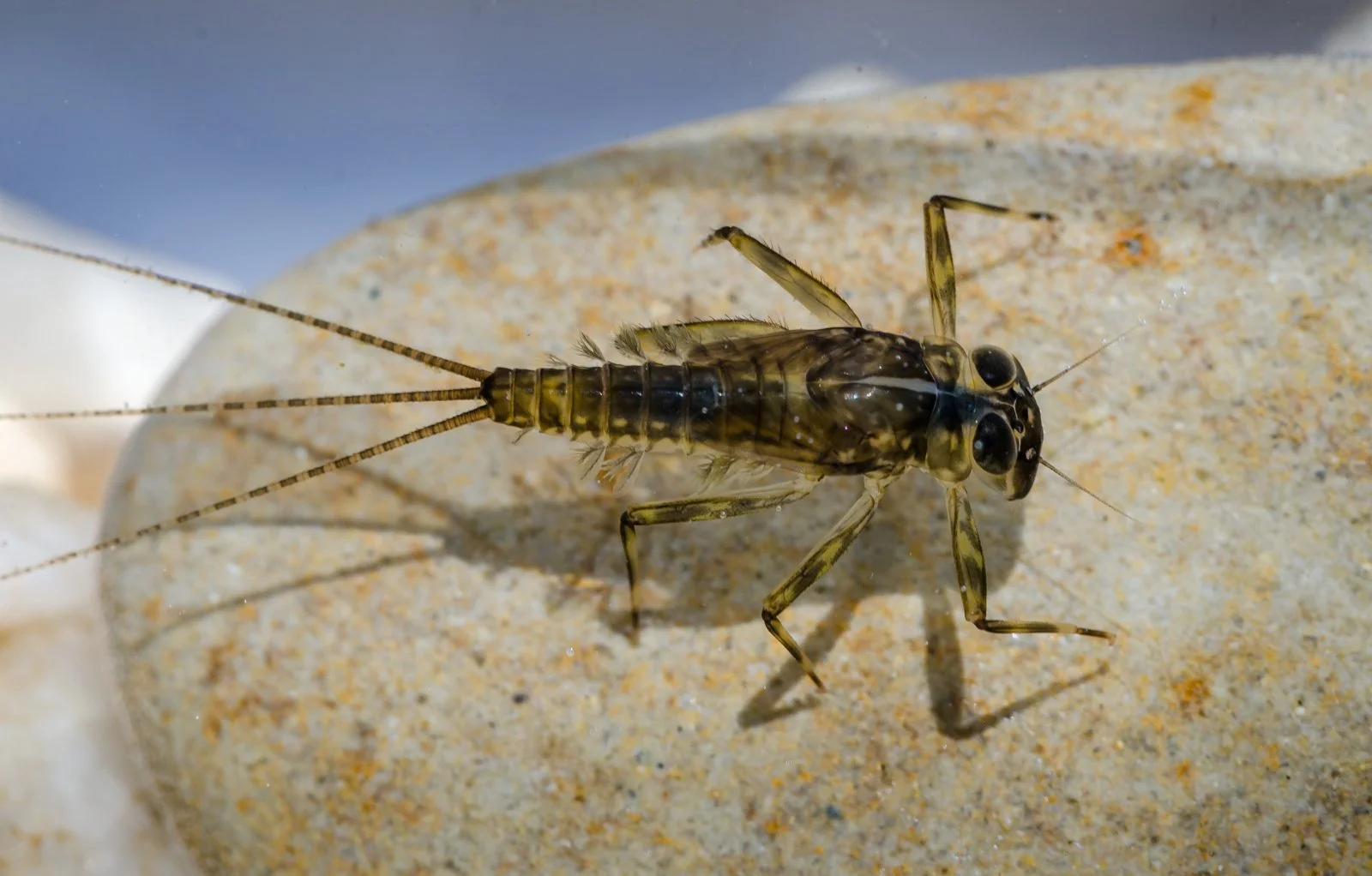
PED nymph. Photo courtesy of Rick Hafele
Digging Into the Data: DRA Macroinvertebrate Monitoring
Although the Pale Evening Dun (Heptagenia elegantula) is likely the species present in the lower Deschutes River, identifying individual species within the PED complex is challenging. As a result, laboratory identifications are typically made at the genus level, meaning abundance estimates combine several closely related species rather than tracking Heptagenia elegantula alone. This makes it difficult to determine long-term population trends for any single PED species. Combined with the limited macroinvertebrate data available from before the construction of the Selective Water Withdrawal Tower, understanding how individual species have changed over time on the lower Deschutes remains a challenge.
Fortunately, we can still learn a great deal by examining broader community patterns.
Members of the Pale Evening Dun complex belong to a group of aquatic insects known as the EPT taxa, which stands for Ephemeroptera (mayflies), Plecoptera (stoneflies), and Trichoptera (caddisflies). These insects are among the most sensitive aquatic organisms to changes in water quality and habitat conditions, making them valuable biological indicators of river health.
One of the most widely used indicators of biological health is the relative abundance of EPT taxa compared to more pollution-tolerant organisms such as worms and snails. In general, healthy river systems tend to support a high percentage of EPT taxa and a relatively low percentage of tolerant non-insect groups. DRA's macroinvertebrate monitoring has found that EPT taxa comprise between 6% and 40% of the community at our upstream sampling sites, averaging approximately 22%. Further downstream, EPT abundance is generally higher, ranging from 30% to 55% with an average of approximately 45%.
To put these numbers into context, state and federal agencies often classify biological condition using broad EPT-based categories:
Tier 1 (Natural/Native Condition): Greater than 50% EPT abundance, with highly sensitive and endemic taxa present.
Tier 2 (Minimal Disturbance): 35–50% EPT abundance, with only minor changes in community structure.
Tier 3 (Evident Changes): 20–35% EPT abundance, where some of the most sensitive species may be reduced or absent.
Tier 4 (Significant Disturbance): Less than 20% EPT abundance, indicating substantial ecological stress and a community increasingly dominated by tolerant organisms.
Based on these general benchmarks, the lower Deschutes River today falls somewhere between Tier 2 and Tier 4 conditions, depending on location and year. While many sensitive species remain present, including Pale Evening Duns, caddisflies, and several stonefly species, the river also supports a high abundance of more tolerant taxa. This pattern suggests that ecological pressures, including elevated temperatures, nutrient enrichment, and associated water quality concerns, are influencing the composition of the aquatic insect community.
For anglers, Pale Evening Duns represent an exciting hatch and a chance to watch trout feed on the surface. For scientists, they tell a much bigger story. Changes in the abundance and diversity of these sensitive insects can serve as an early warning sign that environmental conditions are shifting and that the health of the lower Deschutes River may be under increasing stress.
More From The Blog


Subscribe the the DRA Newsletter
The Deschutes River Alliance is your focused voice to protect the lower Deschutes River, its cold water flows and the fish and wildlife that are sustained by them. We send regular emails with important data and news about the lower Deschutes River. We will not sell your contact information to others.
How to Support the DRA
Everyone wants clean, healthy water in the Deschutes River. Oregonians cherish our clean and healthy waterways to provide drinking water, wildlife habitat and recreational activities. The lower Deschutes River is a federally designated Wild & Scenic River, and a national treasure. It must be protected for the environmental and economic health of Central Oregon. By working together we can return the lower Deschutes River to full health.