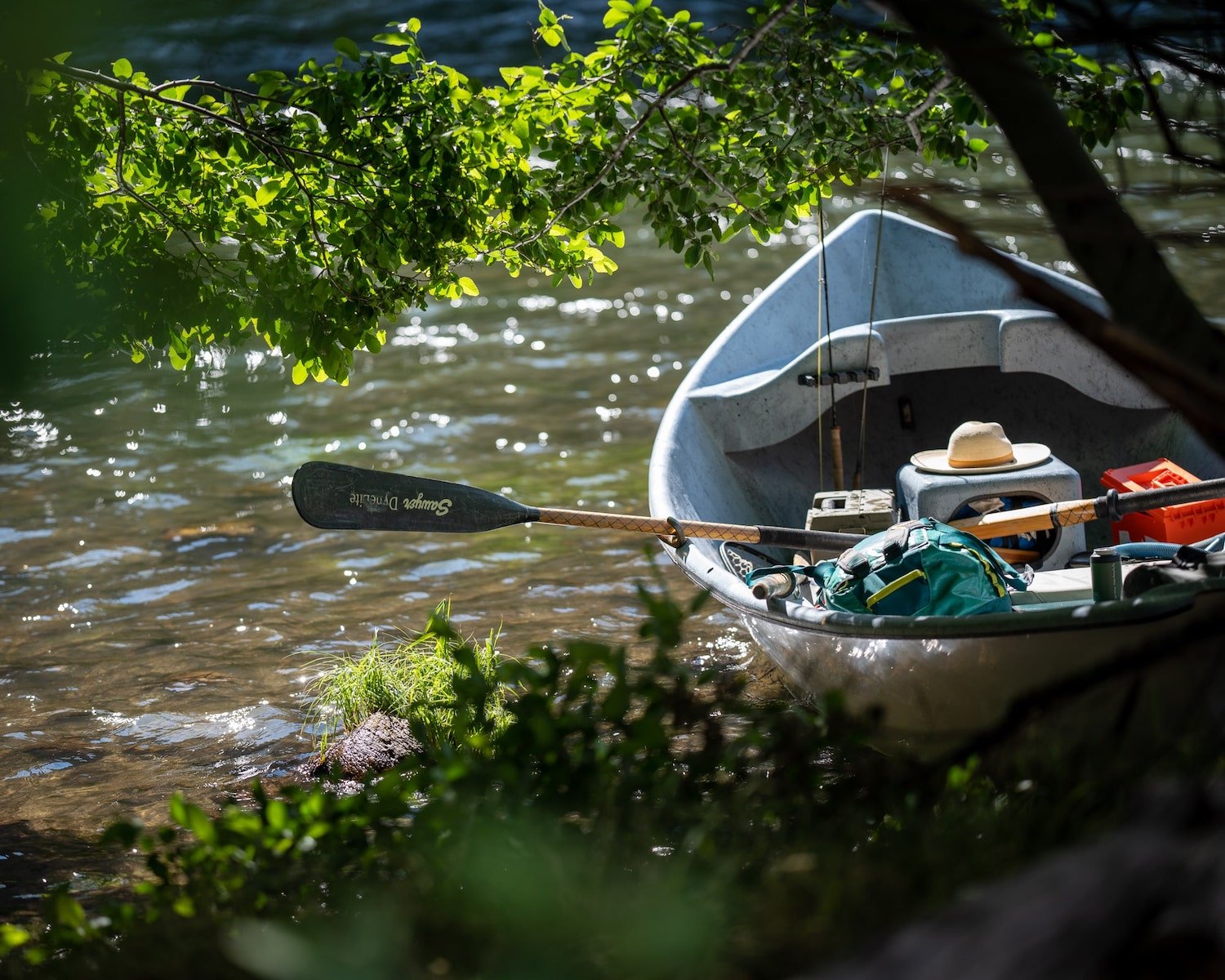
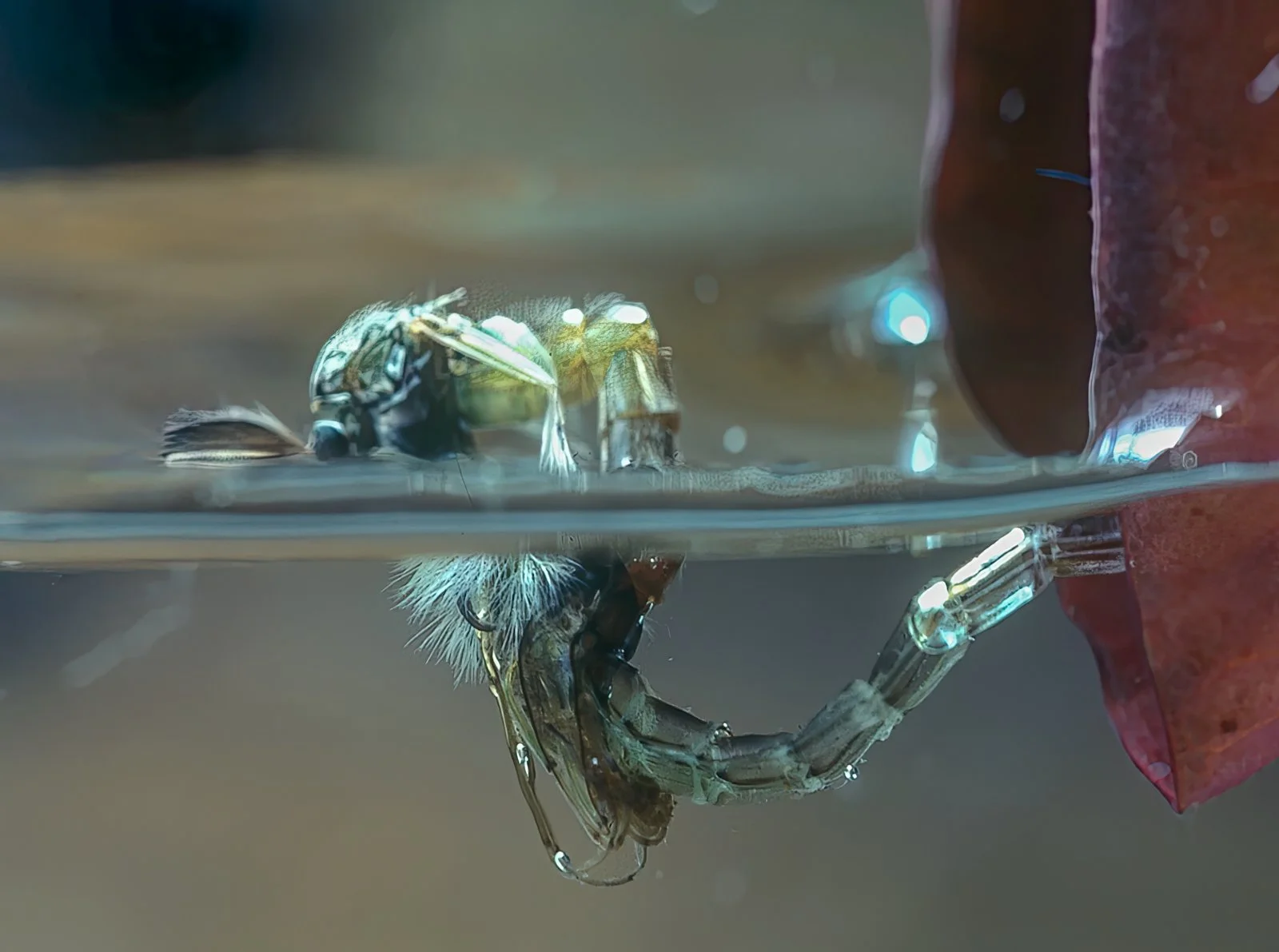
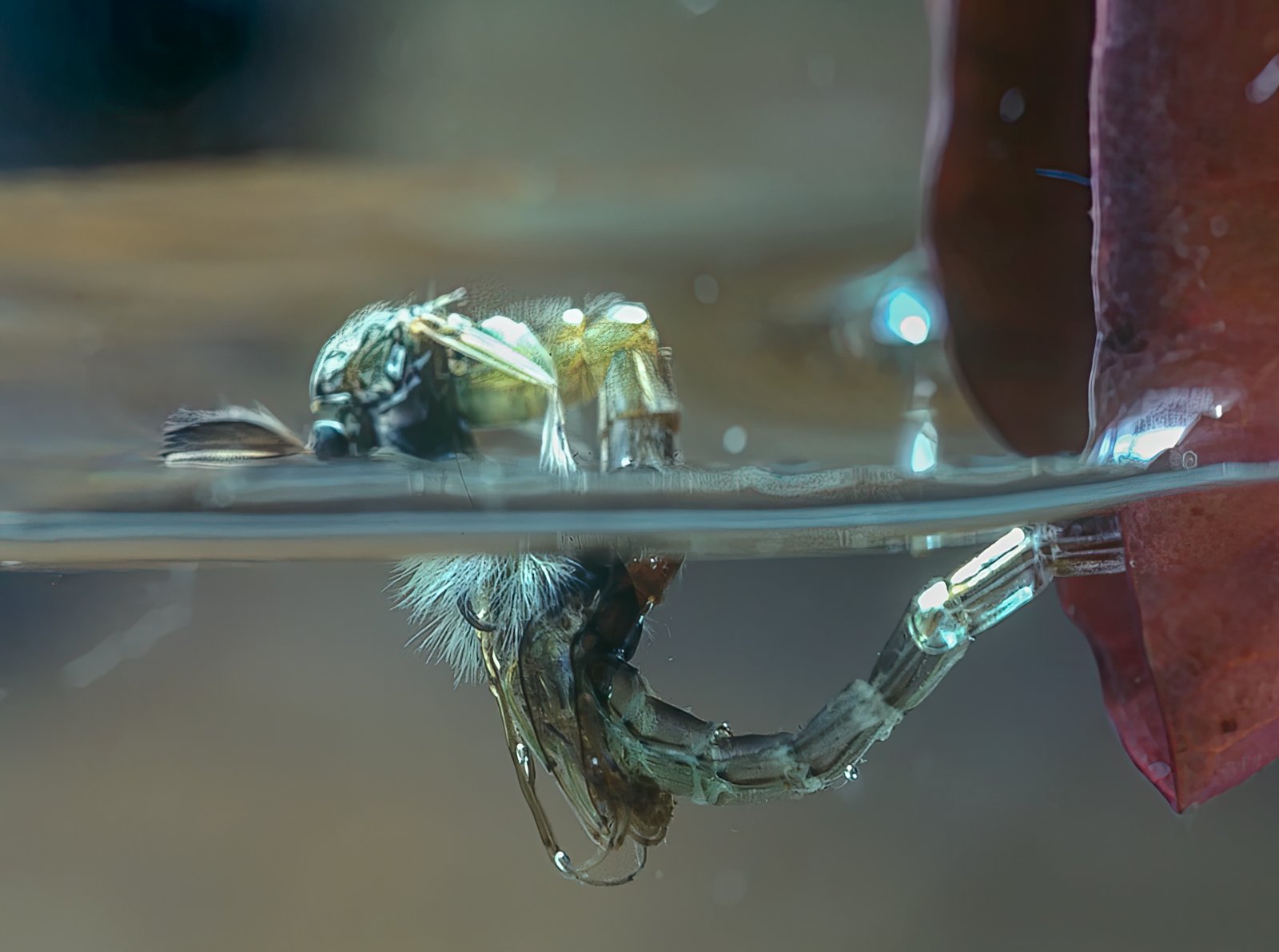
A midge emerging in the surface film, where trout love to see them. Photo courtesy of Dave Hughes.
Tiny, but Everywhere: Meet the Family Chironomidae
By Aliza Watt, DRA Science Intern
Welcome back to the Deschutes River Alliance’s Bug of the Month blog series. Each month throughout 2026, we’re spotlighting an aquatic insect that plays a critical role in the lower Deschutes River ecosystem. Every feature explores the insect’s life history, preferred habitat, seasonal timing, and abundance, alongside insights from DRA’s water quality and macroinvertebrate monitoring data.
This month, we’re highlighting midges. Often overlooked because of their small size, these mosquito-like insects play an outsized role in the lower Deschutes River ecosystem. Midges spend much of their lives hidden among the rocks and sediment of the riverbed before emerging as winged adults for a brief appearance above the water. Despite their small stature, they are an important part of the aquatic food web, providing a reliable, year-round food source for trout and other aquatic organisms. Their abundance and distribution can also offer valuable insights into water quality and overall river health, making them an important component of DRA’s macroinvertebrate monitoring efforts. They may not have the star power of a salmonfly or golden stone, but these little bugs certainly deserve their moment in the spotlight!
Life History and Habitat
Midges are a large and diverse family of flies known as Chironomidae, and fall within the order Diptera. There are over 1,200 known species and roughly 189 genera of non-biting midges documented in North America. Midges thrive in every imaginable aquatic habitat from small cold mountain streams to large warm polluted rivers and every kind of stillwater. Midges are exceptionally abundant along the Deschutes River year-round, making up a substantial portion of the benthic macroinvertebrate community. In fact, DRA’s monitoring efforts have identified at least 48 genera within the Chironomidae family alone, highlighting the remarkable diversity of these tiny insects.
Like many other species along the lower Deschutes the non-biting midge goes through complete metamorphosis consisting of four distinct stages: egg, larva, pupal, and adult. In temperate regions like the Pacific Northwest female midges lay their eggs primarily from spring through late summer, however hatches can occur throughout the year including winter when other hatches are absent. The females deposit eggs in gelatinous masses or strings, and depending on the species, these egg masses can be found attached to submerged plants, rocks, and sticks, or scattered on the surface of the water. The eggs generally hatch within 2 to 7 days.
The longest phase in the midge’s life cycle is the larval stage, lasting anywhere from a couple weeks in ideal warm weather conditions to several months for species that overwinter. During this stage, most species in the Chironomidae family pass through four developmental stages, known as instars, shedding their exoskeleton and growing larger with each molt. First-instar larvae are often planktonic, drifting through the water column before transitioning to a benthic lifestyle along the riverbed as they mature. As they progress through their second, third, and fourth instars, the remarkable diversity of midges becomes increasingly apparent. Some species, commonly known as “bloodworms,” develop a bright red coloration due to the presence of hemoglobin, an oxygen-binding pigment that allows them to survive in low-oxygen environments where many other aquatic insects would struggle. This adaptation even allows certain species to thrive in polluted waters, making them particularly interesting indicators of water quality.
In the pupal phase, midges begin preparing for emergence into the adult stage. This phase is brief, lasting only a few days to a few weeks. Pupation occurs within a protective tube or shuck, with the pupa themselves featuring a distinct, curved body shape with a segmented abdomen, an enlarged thorax, and prominent feathery respiratory structures (gills) on its head. During most of this time they are hidden in the streambed and relatively safe from fish, but mature pupae must leave the streambed and rise to the surface for emergence, at which time they are highly vulnerable to feeding trout due to their movement and visibility within the water. Mature pupae develop a small air bubble under their cuticle, allowing them to move from the bottom to the surface. Upon reaching the surface film, the pupal skin splits along the thorax, and the midge emerges into its final adult phase.
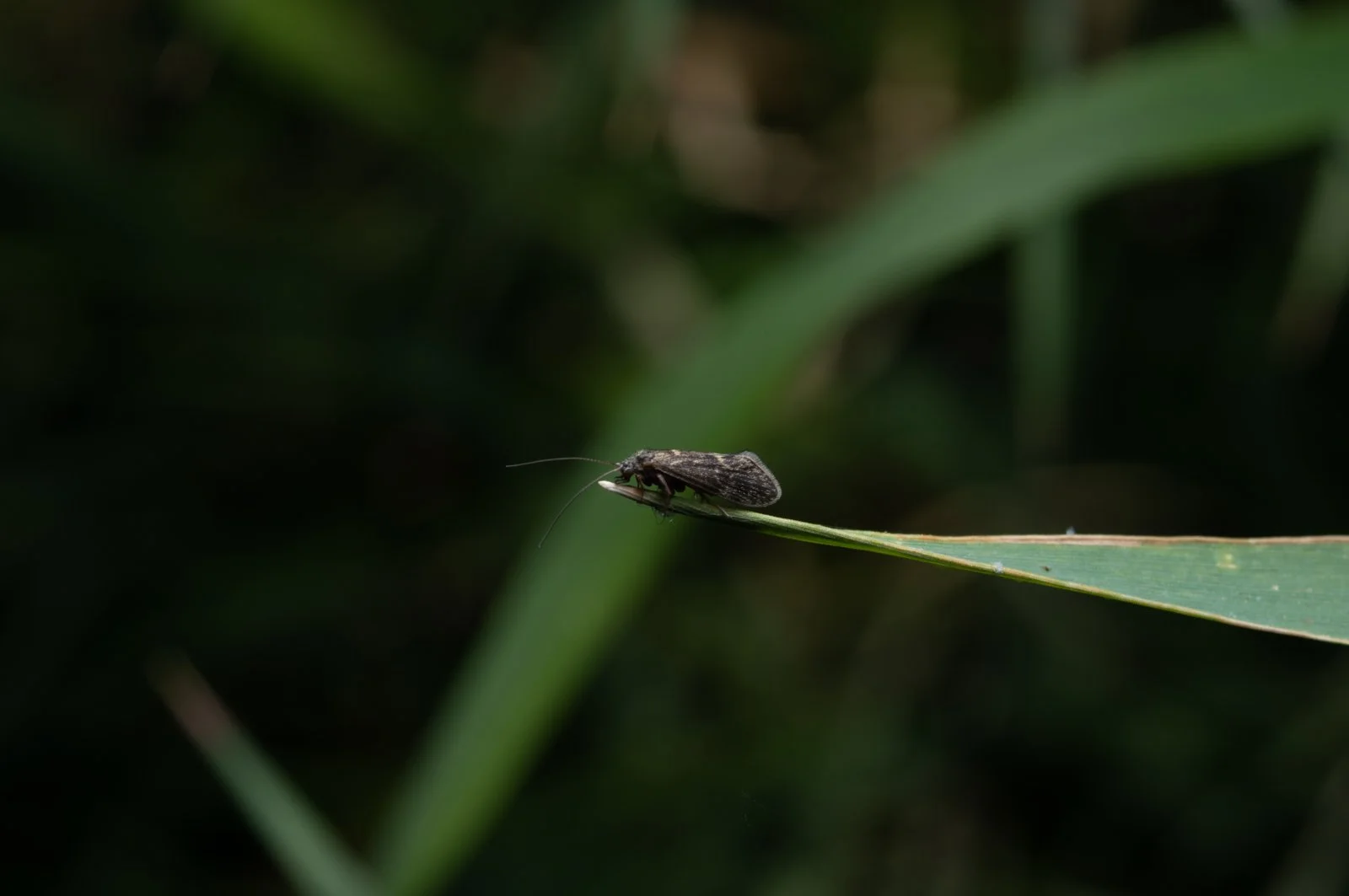
As an adult, midges can closely resemble mosquitoes. A frustrating trait to anglers is their small size, some being too small to even imitate, and they come in a range of colors with grey and black being most common. Their lifespan is short in this phase and adult midges usually only live for about 1 to 7 days. During this time their focus remains solely on swarming, mating, and laying eggs. Adult midges can often be seen swarming just above the surface of the water and are most noticeable early in the morning or around dusk.
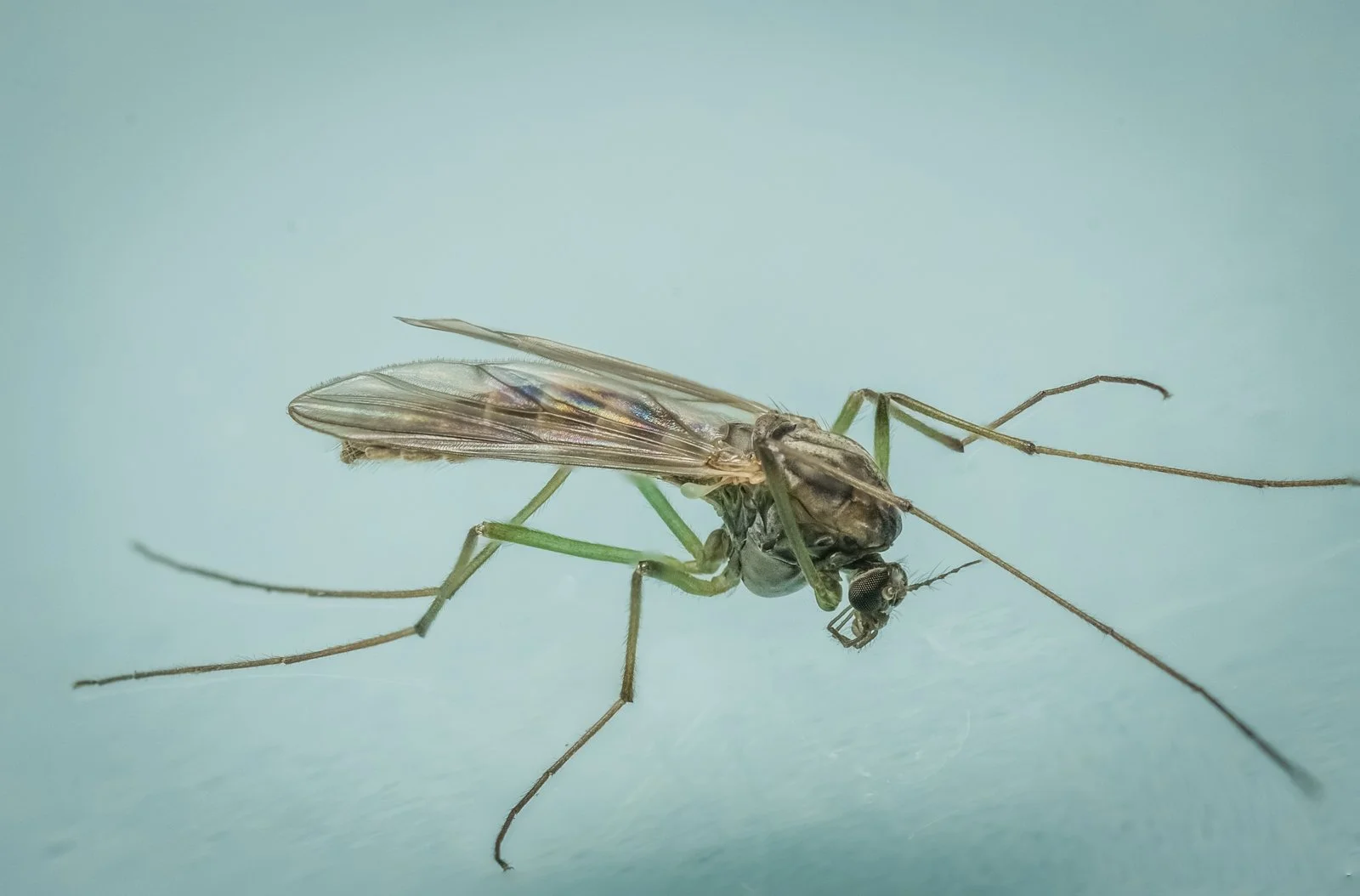
All out of instars: close-up of a midge adult. Photo courtesy of Rick Hafele.
Digging Into the Data: DRA Midge Monitoring
Now that we have covered the basics of midges and their life history, let’s examine what DRA’s macroinvertebrate monitoring has revealed about their presence and abundance in the lower Deschutes River.
Midges are a vital benthic insect group found in the Pacific Northwest and can, in fact, be one the most abundant and widespread macroinvertebrates in the lower Deschutes River. Midges are a critical year-round food source for trout across all stages of their life cycle. A variety of midge genera have been sampled and collected by the DRA. In 2025 the two most prevalent genera seen were Polypedilum and Orthocladius, both of which are considered large and widespread genera in the Chironomidae family and have appeared in sampling since 2016.
During spring 2025, midges accounted for an estimated 17% of all insects observed during sampling. Sampling was conducted at four different sites along the lower Deschutes River. The highest relative abundance was seen below Rattlesnake Campground (RM 30), where midges represented an estimated 19.9% of the macroinvertebrates sampled at this site. These findings suggest that midges make up a notable portion of the macroinvertebrate community, although their relative abundance varies between sampling sites.
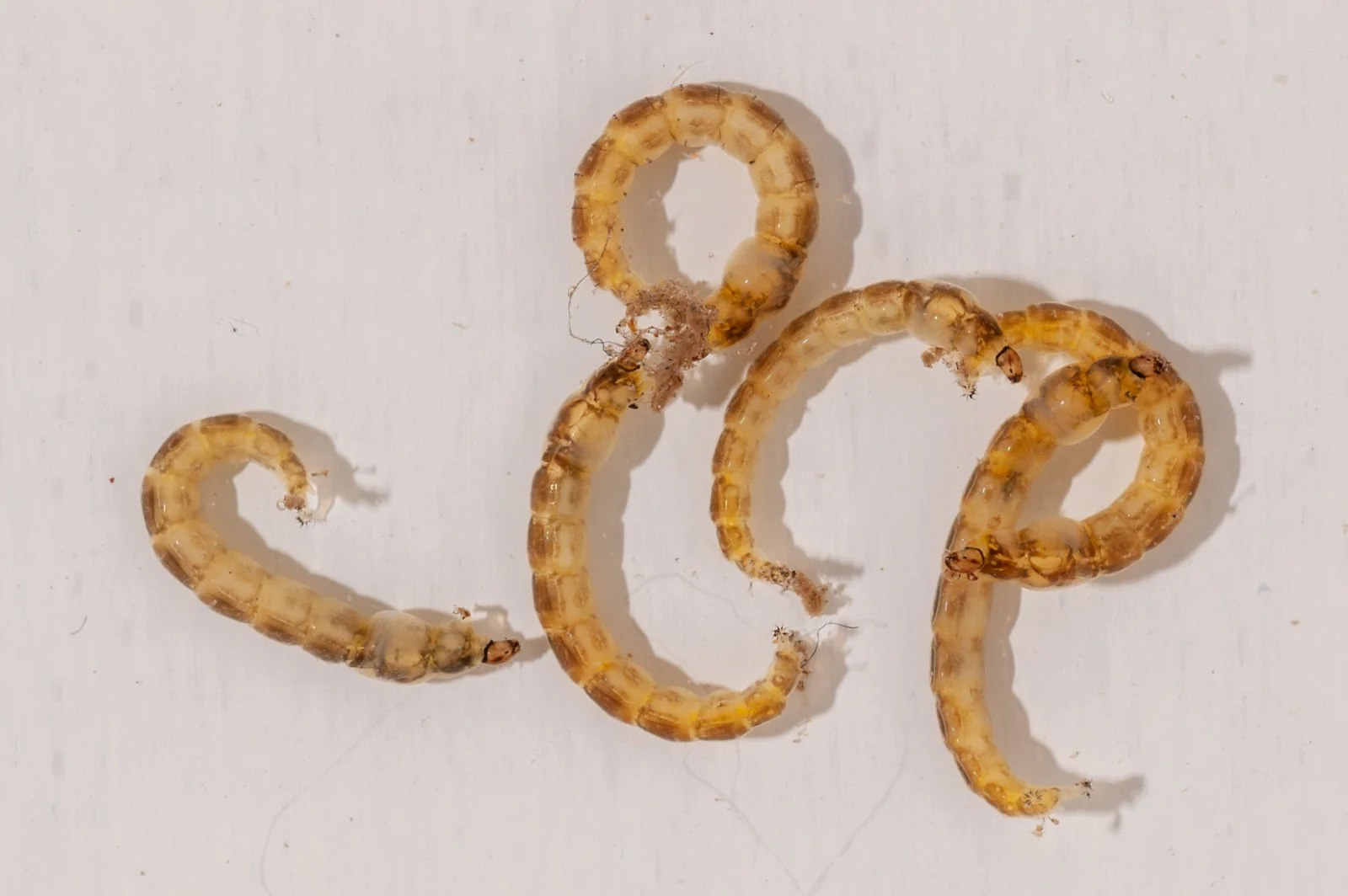
Midge larvae, photo Courtesy of Rick Hafele.
Fly Patterns and Fishing Tips
Understanding the life cycle and behavior of midges is key to successfully imitating these tiny insects on the water. While they may lack the excitement of a giant salmonfly crashing onto the surface, midges provide a reliable food source for trout throughout the year, making them well worth a spot in your fly box. And when other hatches are few and far between, these little bugs can be the key to catching feeding fish.
Pupa Imitations
Although trout feed on midges throughout their aquatic life cycle, the pupal stage is where anglers will find the most success. As midge pupae rise through the water column toward the surface to emerge, they become easy targets for hungry trout. Unlike the quick, powerful movements of some aquatic insects, midge pupae are relatively slow swimmers, making them particularly vulnerable during their journey to the surface.
When fishing midge pupae, think small! Patterns typically range from sizes 18–24, although larger or smaller sizes may be appropriate depending on the species. The Zebra Midge is a classic and reliable choice, with its slender body and simple design making it an effective imitation of both midge larvae and pupae. Black, red, and olive are all good colors to have on hand.
Midge pupae can be fished beneath a strike indicator, either near the bottom or suspended higher in the water column when fish are actively feeding on emerging insects. During a hatch, try fishing a lightly weighted or unweighted pupa just below the surface, allowing it to drift naturally with the current. A dry-dropper setup can also be particularly effective, using a small dry fly as an indicator with a midge pupa suspended beneath it. Because these flies are so small, lighter tippet, typically 5X or 6X, can help achieve a more natural presentation.
Adult Imitations
While adult midges are certainly on the menu for trout, their incredibly small size makes them less practical to imitate with dry flies, especially on a large, fast-moving river like the lower Deschutes. That doesn't mean it can't be done, though! When trout are consistently sipping tiny insects from the surface, a well-presented midge dry fly can sometimes be just what they're looking for.
Patterns like the Griffith’s Gnat or a small CDC Midge are excellent choices, typically in sizes 20–24. The Griffith’s Gnat is particularly useful because, rather than imitating a single insect, it represents a cluster of midges gathered on the water’s surface. Tied with peacock herl and grizzly hackle, this classic pattern creates the impression of a small group of midges, making it an attractive target for feeding trout. And let’s face it, fishing a single midge is challenging enough, let alone trying to keep track of a fly that’s practically invisible to the naked eye. Focus on slower water, back eddies, and gentle seams where emerging adults tend to accumulate and trout have time to pick them off the surface. As always, a delicate presentation and drag-free drift are essential for fooling these selective feeders.
Midges may not inspire anglers to plan their vacations around like salmonflies or October caddis, but their year-round presence makes them an important part of the lower Deschutes trout's diet. So, the next time the fishing slows down and nothing seems to be working, don't overlook the smallest bugs in your fly box. Sometimes, the tiniest flies can make the biggest difference.
More From The Blog
Subscribe the the DRA Newsletter
The Deschutes River Alliance is your focused voice to protect the lower Deschutes River, its cold water flows and the fish and wildlife that are sustained by them. We send regular emails with important data and news about the lower Deschutes River. We will not sell your contact information to others.
How to Support the DRA
Everyone wants clean, healthy water in the Deschutes River. Oregonians cherish our clean and healthy waterways to provide drinking water, wildlife habitat and recreational activities. The lower Deschutes River is a federally designated Wild & Scenic River, and a national treasure. It must be protected for the environmental and economic health of Central Oregon. By working together we can return the lower Deschutes River to full health.