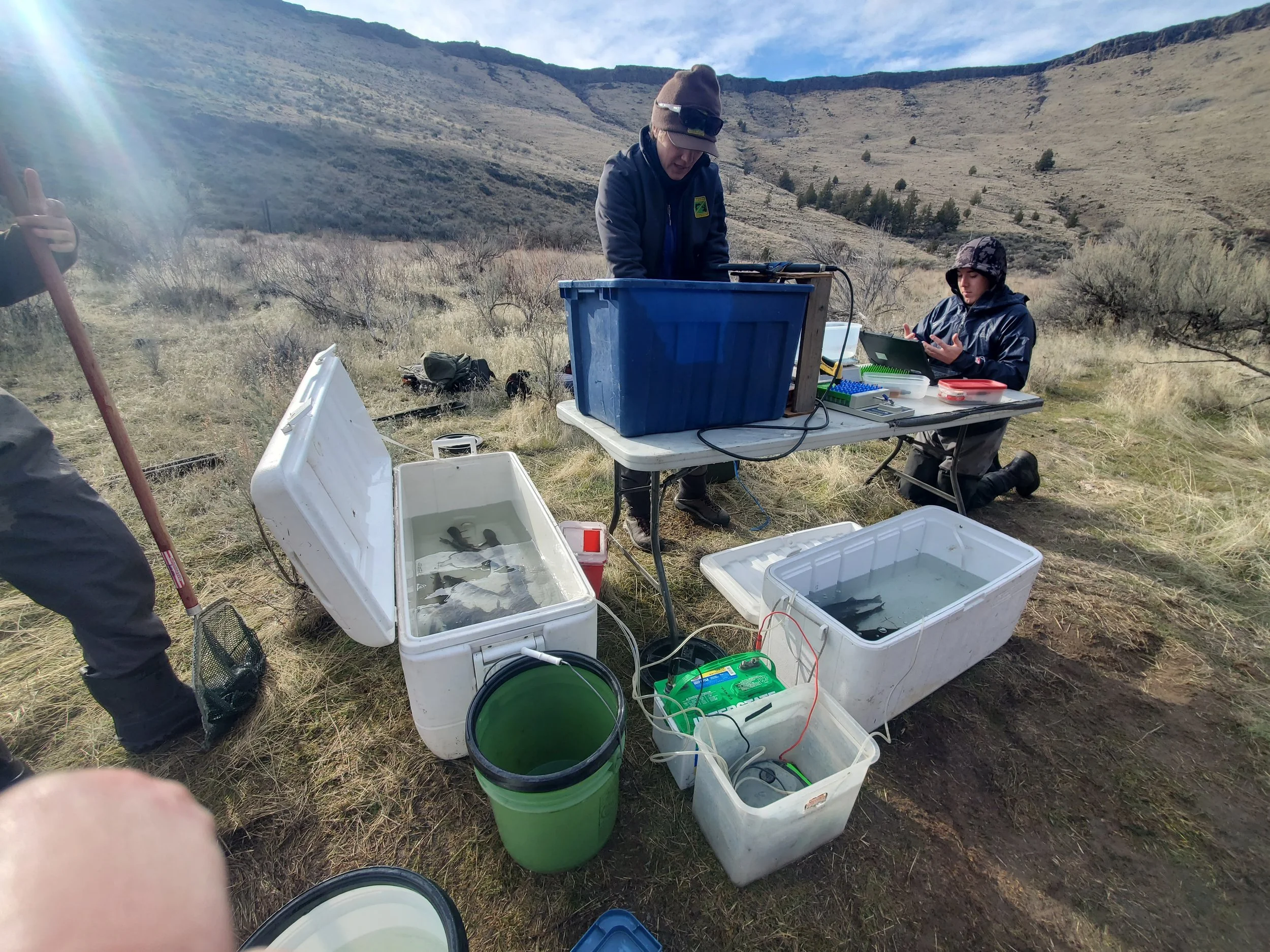
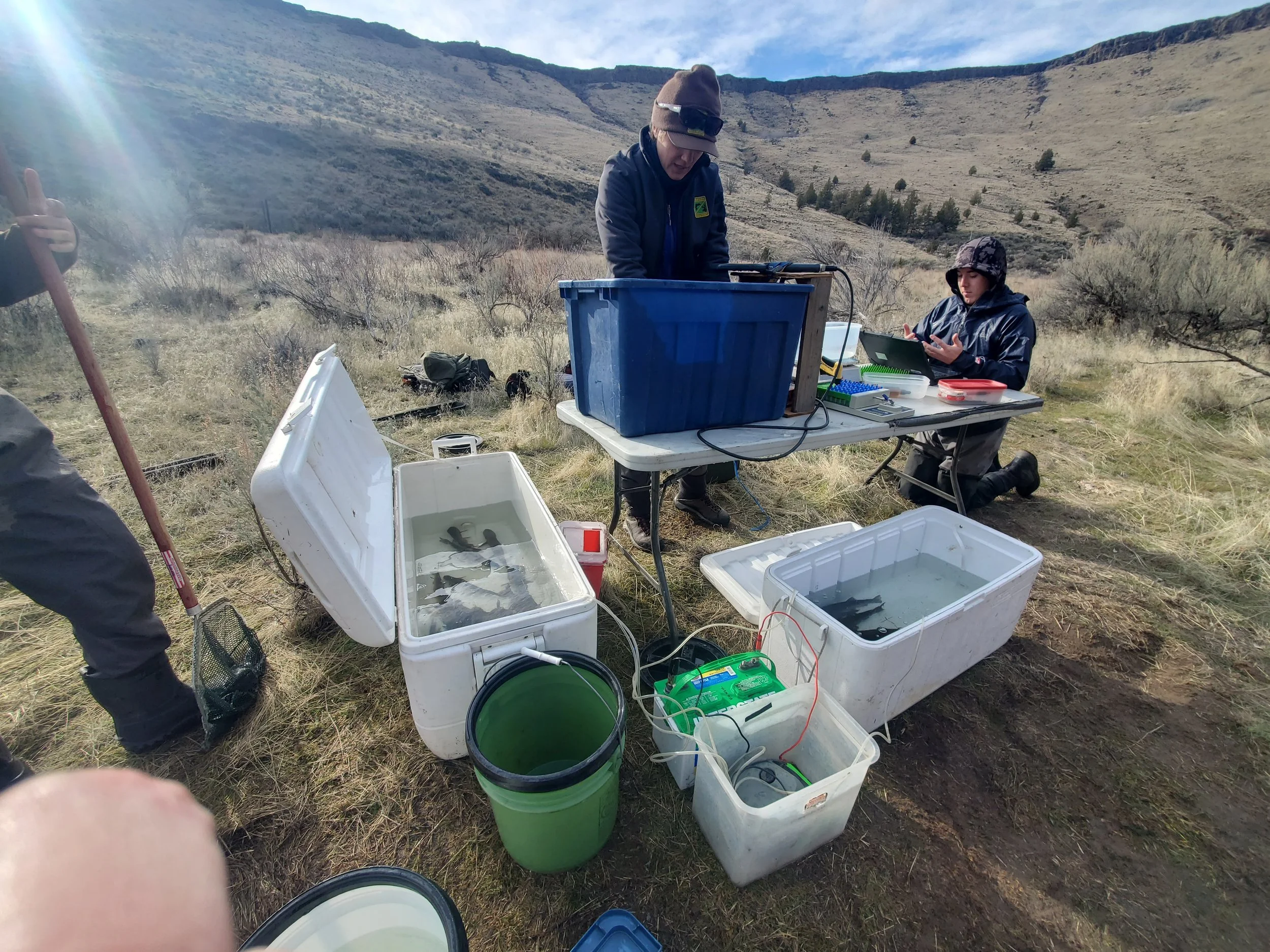
ODFW Fisheries staff at work on the lower Deschutes River. Photo courtesy of ODFW.
Steelhead Quandary: It’s Not Just a Deschutes Problem
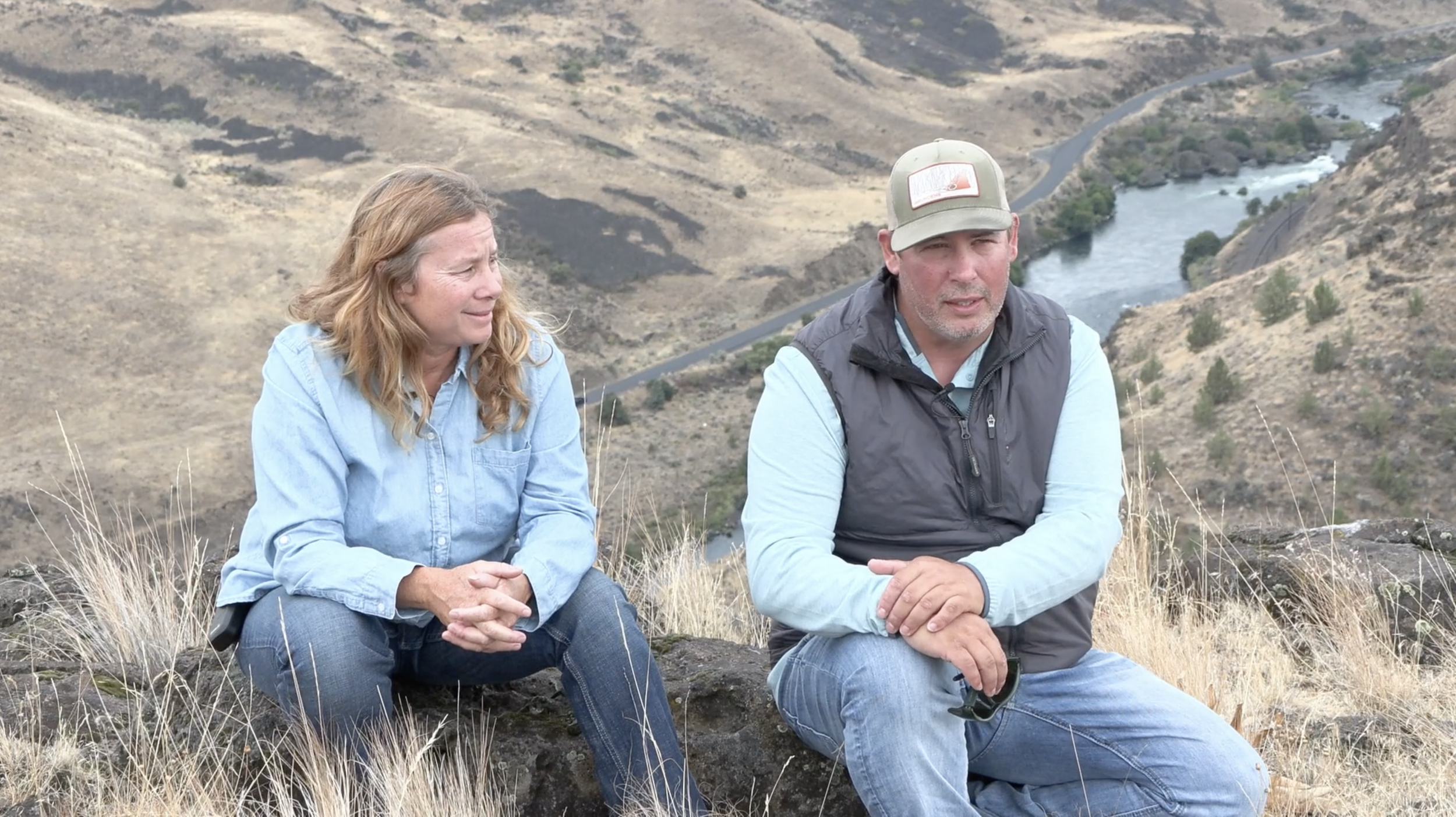
ODFW District Biologist for the Mid-Columbia, Jason Seals, recently took the time to sit down with the DRA to address this year’s steelhead closure. His answers to our questions are thorough, thought-provoking, and reflect a level of concern shared by those who care about the Deschutes. Since the interview is long, this week will be part one of a three-part series.
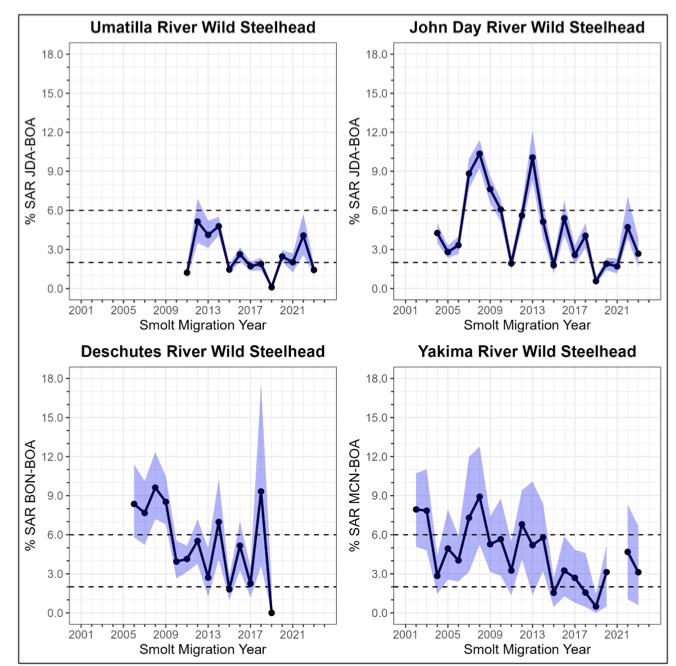
Deschutes River Alliance (DRA): It's been a tough decade for wild steelhead. What's the cause(s) of the decline? What are the challenges to maintaining, and hopefully restoring wild steelhead, both in the Deschutes and more broadly, the Columbia Basin?
Jason Seals (J.S.): Obviously, it’s not a secret that wild steelhead are not doing well, not just in the Columbia Basin but also other places throughout their North American range from California to Alaska. While the various regions and watersheds within steelhead habitat each have different stories or nuances as to what is impacting these populations, the common thread for all steelhead is that they are sharing the same ocean for survival to adulthood.
The Pacific Ocean does not have an endless abundance of food for steelhead and the amount of food that is available is being greatly affected by changing ocean conditions. Thus, in years when ocean productivity is reduced due to altered ocean surface temperatures and food webs, steelhead are competing in their ocean feeding grounds for that capacity of food with high volumes of other steelhead and pink salmon.
Some recent research from Archival GPS Tags of adult steelhead in the Pacific has shown that steelhead do not sound deep during their entire ocean life and stay within the top 15 meters of the ocean’s surface, which likely makes them very susceptible to warming ocean surface temperatures and poor feeding conditions. As the location of suitable temperature and food in the North Pacific Ocean changes, steelhead as a species will have to track those changes. It’s possible that there is heritable control over the migratory behavior and routes of steelhead in the ocean; and hence, the steelhead returning this year can potentially pass on a ‘migration map’ which was more successful in very poor ocean conditions.
Within the Columbia Basin, there are many factors influencing steelhead, but the largest impact on freshwater success is the hydro system(s). These hydro systems and associated reservoirs greatly affect survival and passage of steelhead both as migrant juveniles and as adults returning. Mortality of juvenile smolts through reservoirs and dam turbines has been studied and documented for many decades.
Thermal loading during the summer months in the Columbia reservoirs continues to be concerning for returning summer steelhead adults. While the Deschutes stays below the functional temperature threshold (71o F) for upstream migration of steelhead, the Columbia frequently exceeds 71o F during summer in critical migration periods, creating thermal blocks, passage impediments, and low conversion rates (adult upstream survival through the hydro system dams and reservoirs).
Wild Deschutes River steelhead are being impacted by numerous freshwater factors. The most notable within basin are probably drought and effects from stray out of basin hatchery steelhead spawning with wild steelhead (more on stray steelhead later). The basin’s capacity to produce higher levels of juvenile steelhead are impacted when spawning tributaries such as Trout, Bakeoven, Buckhollow, Ferry, Jones, Oak, and Eagle are dry or very low during the spawning and rearing seasons, which has been the case since about 2015.
Balancing Act: Hatchery and Wild Steelhead on the lower Deschutes
DRA: The Deschutes needs more wild steelhead. What is ODFW doing to help conserve and restore wild steelhead in the Deschutes and more broadly in the Columbia River?
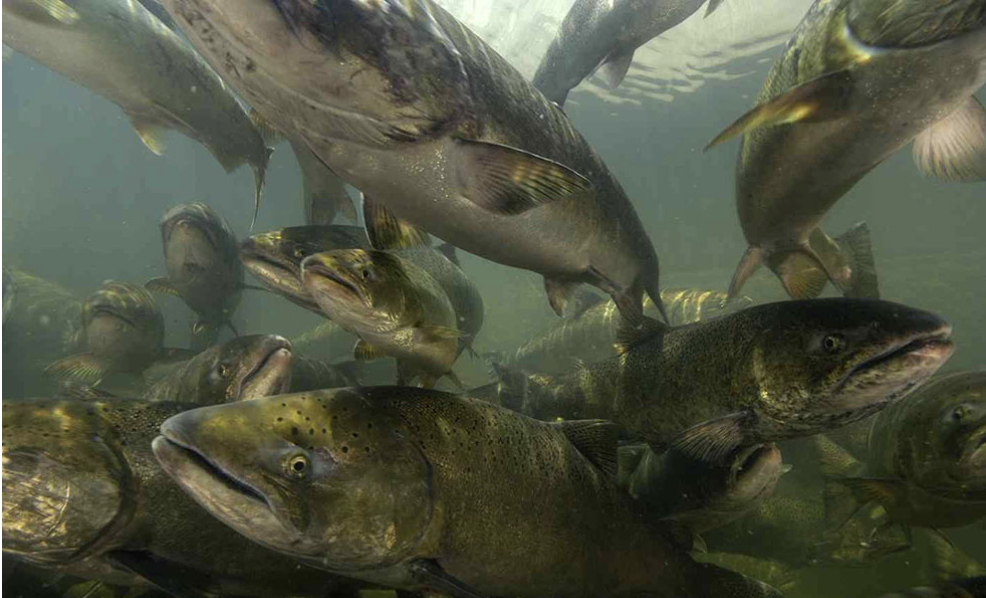
JS: Maximizing the number of wild steelhead that survive to spawn via careful fishery management is a step to help steelhead populations track the shifting ocean conditions and persist during poor freshwater conditions. Most steelhead (both wild and hatchery) caught by anglers in the Deschutes River downstream from Sherar’s Falls are ‘temporary strays’; which are steelhead that were born in and are returning to other tributaries of the Columbia but hold in the Deschutes for a portion of summer-fall before resuming migration upstream. Some steelhead born in other tributaries ultimately remain in-basin through the spawning period and become ‘permanent strays.’ Given the contribution of stray steelhead (temporary and permanent) to the Deschutes River fishery, conservation and recovery of steelhead throughout the Columbia River basin and working toward “broad sense recovery” is needed to increase wild steelhead abundance in the Deschutes River.
Out of basin stray adult hatchery steelhead have been great for angler success in the Lower Deschutes for the last 30 years. However, these hatchery stray steelhead pose real risk to the reproductive success of wild steelhead in the Deschutes through loss of hereditary adaptations. So, reducing the number of out-of-basin hatchery stray steelhead is a bit of a double edge sword.
While wild steelhead certainly benefit from a reduction of hatchery steelhead on the spawning grounds, anglers have fewer fish in the fishery to target and harvest due to less straying. We encourage anglers to harvest the hatchery steelhead that you capture in the Deschutes to help reduce the genetic and reproductive risks these fish pose to wild steelhead.
Reducing the number and proportion of permanent out of basin hatchery stray steelhead on the spawning grounds will help the reproductive success of wild steelhead in the Deschutes Basin. These permanent strays are from hatchery programs throughout the Columbia and Snake basins and for most of the previous 30 years have outnumbered spawning wild steelhead (described beginning at 1:42:00 here:)
https://nwcouncil.app.box.com/s/fticzme3q93vkdsiosox5rzczjyudlno/file/1756598300608
These out of basin hatchery stray steelhead pose great risk to spawning wild steelhead in these basins due to lower relative reproductive success and potential loss of local adaptations.
ODFW (as the State of Oregon) has been an active party in the Columbia River hydro system Biological Opinion and associated litigation that has been ongoing for a couple of decades. We have been a staunch advocate in the reduction in smolt barging on the Columbia River which has dramatically reduced the number of hatchery steelhead spawning in the Deschutes and John Day basins.
These legal actions, such as the reduction in barging and increase of instream smolt migrants are helping steelhead survival and homing. We continue working to understand and improve survival of steelhead through these hydro systems, both as juveniles and adults, via science-based adaptive management of the Columbia and Snake Rivers.
ODFW has received Sport Fish Restoration funding from U.S. Fish and Wildlife Service to estimate abundance and monitor associated sport fisheries of steelhead, Fall Chinook, Coho, and Redband Trout in the Deschutes basin since 1977. This work has been critical both in-basin and more broadly in monitoring change, status, inform decisions, and management approach to native migratory fish. We will continue this work to approach and make decisions based on facts and conclusions from these data.
There is no single action, alone, that will achieve broad recovery of steelhead in the Columbia River basin. We are always working on issues and projects to help all native migratory and resident fish in our watersheds. ODFW biologists are routinely commenting on land-use planning, fill and removal issues, water allocation and conservation, passage improvement, fish screening, habitat restoration planning, research and monitoring, hatcheries, harvest, habitat, etc. Obviously, there are big issues impacting fish in our watersheds, but there are also many other issues we work on throughout the year.
More From The Blog
Subscribe the the DRA Newsletter
The Deschutes River Alliance is your focused voice to protect the lower Deschutes River, its cold water flows and the fish and wildlife that are sustained by them. We send regular emails with important data and news about the lower Deschutes River. We will not sell your contact information to others.
How to Support the DRA
Everyone wants clean, healthy water in the Deschutes River. Oregonians cherish our clean and healthy waterways to provide drinking water, wildlife habitat and recreational activities. The lower Deschutes River is a federally designated Wild & Scenic River, and a national treasure. It must be protected for the environmental and economic health of Central Oregon. By working together we can return the lower Deschutes River to full health.